“Expect prejudice, but never accept it”
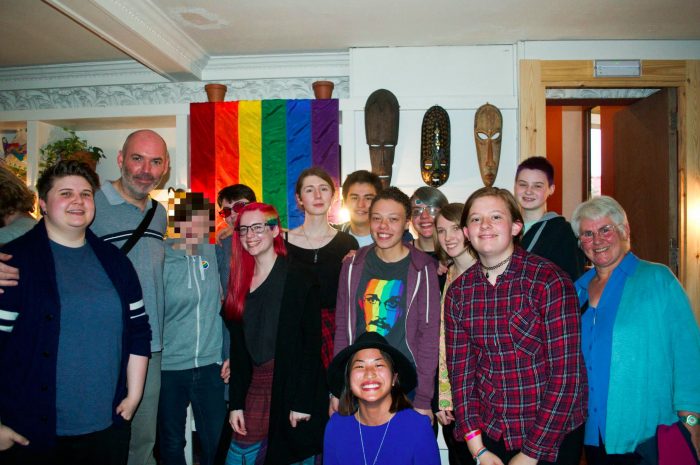

The landscape is changing for Bristol’s LGBT+ kids, but they need support
Words: Mariangela Veronesi
Photo: Thanh Luu
‘Free To Be Me’. We all want that right, and many of us have not had it. It’s also the name of a book that charts these struggles, through the 21-year history of an organisation supporting Bristol’s young LGBT+[1] people – Freedom.
There have been turbulent times in those two decades. Lori Streich, one of the book’s authors, gave a powerful speech at the launch, recalling threats against the community, describing an occasion when Freedom colleagues had to barricade themselves inside a building to hide from aggressive journalists.
The city has come a long way since then. A group called OutStories Bristol finds, records and shares LGBT+ experiences in Bristol throughout time. Trans activist Cheryl works for them, and describes a sense of awe at the opportunities there are today to explore one’s identity at a young age. In contrast, when she was younger, “it was illegal to talk about LGBT issues in schools, and trans people had no civil rights at all.”
Progressive legislation and changes in attitudes have significantly increased feelings of safety, and there seems to be a consensus that today’s Bristol is mostly an accepting, welcoming place for LGBT+ people, with a supportive City Council and a good activist network. The sheer numbers of people who attended the city’s Pride parade this year speaks volumes about attitudes here.
“If it wasn’t for Freedom, I wonder who I would be now.”
However it’s important to remember that things are still difficult. 14-year-old B. – a young person involved with Freedom – talked to me about the challenges of the school environment, where those with diverse sexuality or gender identities still face prejudice. “Are you an alien?”, a classmate once asked him.
Cheryl reflected on the broader challenges ahead. Brexit is a source of concern, as the EU has historically pushed for better LGBT+ rights, and leaving could mean less pressure on governments to pass protective legislation.
Ongoing cuts in the third sector mean that LGBT+ organisations compete for the same rapidly diminishing pot of money. Other issues include ensuring that all ethnic and religious groups feel welcome in the LGBT+ community, and able to create their own groups, as today’s organisations remain disproportionately white.
Supportive groups like Freedom remain essential. Teenager B. identifies as ‘demi-boy’[2], and says that joining Freedom has allowed him to explore and understand his identity. He says, simply and powerfully,
“If it wasn’t for Freedom, I wonder who I would be now.”
19-year-old Bex says they found “the best friends [they’ve] ever met” through Freedom.
“It’s like a huge family. There are many like-minded people that are interested in activism, and want to change the world.”
Being part of a supportive community has empowered these young people to help others in return. Bex has started a confidential group at their school for LGBT+ youth, and anyone questioning their identity and sexuality. They has also delivered training to school staff on LGBT+ issues.
B. argues that “prejudice all comes down to ignorance”, and tells us that being part of Freedom has taught him to how to respond to negative comments, and spread awareness and understanding. He wears LGBT+ badges at school, and while hurtful remarks are still common, some of his peers have approached him to learn more. He says,
“Expect prejudice but never accept prejudice.”
With struggles still ahead, veteran groups like Freedom and community projects like OutStories Bristol continue to make a difference in creating connections and safe spaces in our city. It is these strong links that can empower the next generation with the confidence to fight for change, and face the obstacles to come.



Report a comment. Comments are moderated according to our Comment Policy.
Acceptance is in you DNA…. Be true to yourself… Everything else will follow, proud to be an LGTB Mom x