Methodology: Calculating Ward-Level Turnout – WoE Mayoral Election 2017
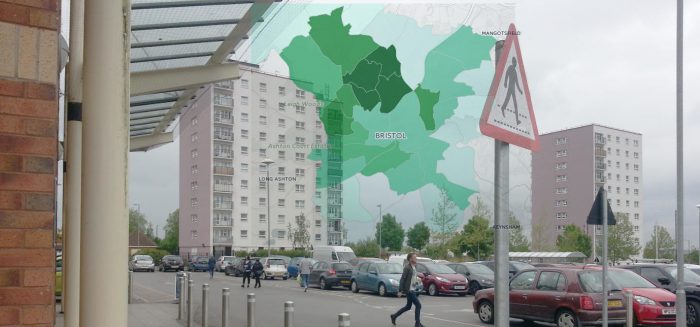

Words: Lucas Batt
The turnout data is taken from the Bristol verification totals for the West of England Mayoral Election 2017 (bottom of the page). The data appears in four separate pdfs, and was collated to verify the number of ballot papers issued and collected per polling station. The results data for each candidate was not released at the same level of detail.
Each verification statement is a page containing the turnout results for polling districts in a particular ward. These ward-level counts also include a number of centralised postal votes. In the tables, an eligible electorate is given, and as well as a corresponding turnout percentage, which is worked out, per polling station, by dividing the “number of papers found in box” with the eligible electorate.
A ward-level turnout can be calculated by adding the turnout for each polling station in a given ward and dividing that by the ward’s total eligible electorate. However this gives a misleading turnout percentage, as it excludes the eligible electorate who chose to submit a postal vote instead of going to vote on the day of the election.
Data:
WoE Mayoral Election 2017 – Turnout Bristol Wards – Google sheets (online)
WoE Mayoral Election 2017 – Turnout Bristol Wards – as an ODS
WoE Mayoral Election 2017 – Turnout Bristol Wards as an XLSX
Nonetheless, a good go of working out the actual ward-level turnout can be made. The West of England Combined Authority website released turnout by region, with Bristol’s results being broken down into its four parliamentary constituencies: Bristol East, Bristol South, Bristol West, and Bristol North-West. These regional results of verified votes turn out to match perfectly with the results from the polling station data, when including the polling districts. Additionally, the eligible electorate matches perfectly, which is significant as there is no eligible electorate stated for the postal votes, which shows the polling station counts to not show the full turnout picture.
So, the postal vote for each region (such as Bristol East) can fairly confidently be divided proportionately by each ward in that region in order to work out a more accurate turnout per ward. For example, Bristol East has 7,199 postal votes out of 21,092 total votes. The eligible electorate figure for each ward is divided by the total eligible electorate for Bristol East, which gives a figure showing the percent of the constituency eligible electorate per ward. The Bristol East postal vote figure is then multi
plied by each one of those figures, giving an estimated proportion of the postal votes per ward. That figure is added to the original ‘number of papers found in box’ figure to give the estimated total votes in that ward. And that can be divided by the ward eligible electorate figure for the estimated turnout percentage.
It’s not perfect, as certain wards may have more or fewer than the average number of postal voters in that constituency, however it’s the best that can be done with the available data, and a pretty decent estimated turnout at the ward level.











Report a comment. Comments are moderated according to our Comment Policy.