How to win over the masses: what next for Extinction Rebellion Bristol?

Activist Graham McGrath reflects on the movement’s need to diversify its tactics and reach new people.
Photos: Colin Moody
Extinction Rebellion has truly sounded the alarm, and called many to action. Yet, I fear, for those of us involved, we run the risk of ‘when you have a hammer, everything looks like a nail’.
I struggle to think of another climate crisis movement – or perhaps any civil disobedience movement in recent UK history – that has made such measurable and tangible progress towards its aims in as short a window as Extinction Rebellion has with the three demands it set out when it was formed in October 2018.
Those were that first, the government must tell the truth by declaring a climate emergency. Second, the government must act now to halt biodiversity loss and reduce greenhouse gas emissions to net zero by 2025. And third, the government must create and be led by the decisions of a citizens assembly.
In May this year, after ten days of nonviolent civil disobedience by Extinction Rebellion activists in London, parliament unanimously declared a climate emergency. In doing so, the government joined hundreds of local councils who had already done the same. Then in June, six House of Commons select committees announced that a citizens assembly on the climate emergency will take place this autumn.
Less than a year after forming Extinction Rebellion appears to be on the cusp of achieving two of its three demands.
It is yet to be seen whether these are empty promises from the government, but it is clear from this initial success that the actions of Extinction Rebellion have the potential to kick start local and national action on the climate crisis in a manner that no other campaign group or organisation has yet been able. This effectiveness demonstrates that Extinction Rebellion and mass civil disobedience is vitally important for shaping how and when the United Kingdom and the international community respond to the climate crisis in the short 11 year window of time that the planet has left.
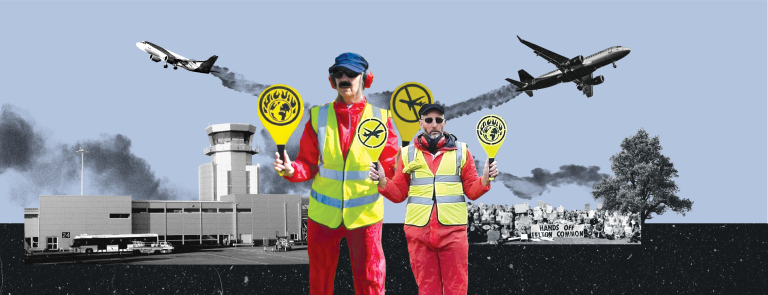
So after these latest round of actions in Bristol and other major cities where does the movement go next? Activists must hold hypocrisy and inaction to account, like Bristol Mayor Marvin Rees’ spectacular display of cognitive dissonance, in his inexcusable choice to continue backing Bristol Airport expansion with the same breath as he has used to declare a ‘climate emergency’.
But, we must also recognise that Bristol City Council – with its obvious failings aside – is one of the most progressive local councils out of 346 in England and that all local councils are hamstrung by the combined belts of austerity and the Westminster set framework within which they operate.
Extinction Rebellion now need to ensure that Bristol City Council begin – as environmental campaigners have already been doing – to communicate the urgency of the climate crisis with Bristol residents. The council also need to engage with residents in a direct and meaningful way – especially those hardest to reach – so as to ensure it is democratically possible to make the changes to the city we so desperately need.
We, as environmentalists, need to convince those in Bristol yet unconvinced. With continuing political polarisation across all spectrums of society, the manner in which we communicate needs the combined attention and consideration of everyone involved, at every level. This is perhaps especially true for a decentralised, non-hierarchical organisation like Extinction Rebellion.
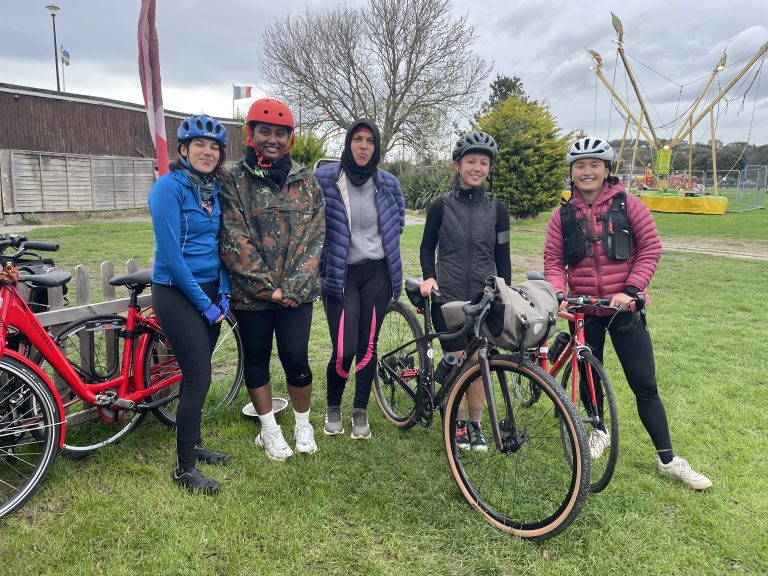
The M32 blockade this past week was a powerful action, sending a clear message about Bristol’s car dependency, and the Critical Mass bike ride was – for me, a joyous celebration of what Bristol might feel like if the streets were given over to people and life rather than metal and air pollution. But – did the message get through to those we need most to convince? Did they understand the link to the climate crisis and how it will affect them in their daily lives? And did we risk alienating the convincible, with the festival-like atmosphere at Castle Park and Bristol Bridge?
To be relatable, convincing, and legitimate we must convey the seriousness of the situation that we find ourselves in, and the urgency with which society needs to change. This may require that we communicate in ways which align with the values of those we need to convince, and not necessarily project our own values onto those who do not share them – no matter how deeply they are held.
Can we evolve to communicate in a nuanced manner which appeals to the values of those who we so desperately need to win over? Can we call out the hypocrisy of our local council, while still working with them effectively? And can we build a movement that is truly inclusive, and truly representative? All this still waits to be seen, but without it I fear that we are sunk.
Graham McGrath is involved with climate change planning, policy, and campaigning in his role at Bristol’s Centre for Sustainable Energy.