‘Academic and support staff are suffering – it’s time for universities to dip into their rainy day funds’
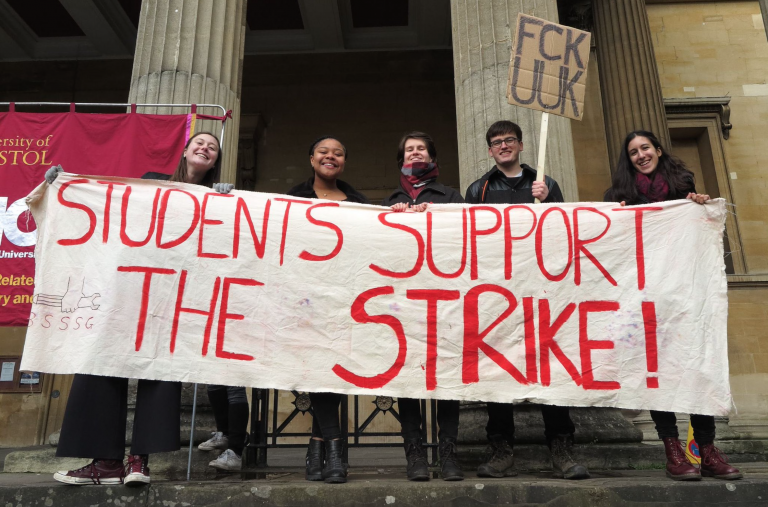
Branches of the University and College Union, including Bristol’s, have been taking three further days of strike action in November 2022, having done so repeatedly since 2018.
In the sector, real wages have fallen 25% since 2009 and pensions have been cut by 35% or more. Casualised, precarious contracts are rife and unmanageable workloads are forcing staff to quit.
It is no coincidence that the university sector has seen staff go on strike almost yearly in the aftermath of the coalition government’s reforms to the sector.
In 2010, the coalition hiked student fees and lifted caps on student numbers. This shifted university income from being mainly state-funded to mainly student fee-funded. It created a new competition between universities, leaving less popular institutions in less popular places facing financial strife while places like Bristol, with its two popular universities, will grow and grow.
We all suffer from this growth. Overworked and underpaid staff. Indebted students who increasingly become consumers rather than learners. Students who see their lecturers and support staff stretched between ever larger numbers of students. And Bristolians priced out of housing.
Intertwined with the city
It is fair to say that Bristol and its universities are inextricably linked. As two of the biggest employers, the universities have a huge impact on the city’s fortunes, built environment, housing and reputation.
Many Bristol University staff on strike this month are struggling to make ends meet. Thousands of casualised and temporary Bristol University staff, disproportionately women, people who are Black and from other ethnic minorities, and others from the LGBTQ+ community, are finding the current economic downturn especially difficult. So difficult has it been that some are having to choose between heating and eating, and are making use of food and warm banks.
This wage suppression is both by design and by choice. Richer universities like Bristol blame poorer ones close to bankruptcy for not being able to afford higher wages. The marketisation of universities created the conditions for this race to the bottom, which top leaders are happy to exploit.
Bristol University, and others like it, say they simply cannot afford to pay their staff any more. They say that any spare funds available must go towards growth – in student numbers, the staff required to teach and support them, and the university estate, such as the Temple Quarter project.
A university such as Bristol, we are told also, must be able to overcome fluctuations in student numbers with a ‘rainy-day’ fund. A further response is that university hands are tied by national pay agreements.
But these types of responses are weak. The university runs a handsome, multi-million pound surplus every year, £55.3 million in 2022 (after adjustment following a one-off pensions cost) and £66.1 million in 2021.
It’s a rainy day – time to spend
So why does it not reinvest it in higher salaries?
The money should not be going towards expanding the university estate. We’ve reached a peak in university growth.
Bristol has a severe shortage of housing, forcing local people, staff and students out of the city. The university is also running out of space for teaching and research, which the new Temple Quarter Enterprise Campus project will not solve.
How much more scope for expansion is there in a city with such an acute housing shortage and lack of university facilities, as well as constant traffic jams and a public transport network under immense strain?
Stopping real-terms pay cuts of university workers will make it possible for more to heat and eat, and for more to avoid the ignominy of going to a food or warm bank.
As importantly, some of this extra money will also go straight into the local economy and so give a welcome boost to local businesses and people and their families at this incredibly difficult time.
So, in short, Bristol University should dip into its surplus and pay its staff a higher salary. This salary hike should take into account the added costs of living and working in Bristol, and must enable its lowest-paid staff to pay their bills.
A higher salary will also provide local businesses and people relying on them for employment and trade with a much-needed boost during this unprecedented cost-of-living crisis. That ‘rainy day’ for spending its surplus is now, in other words.
Jeff Pocock is University of Bristol UCU Branch anti-casualisation officer and tutor in academic language and literacy.