Doubts over delayed work parking charge plan to raise cash for city’s struggling public transport
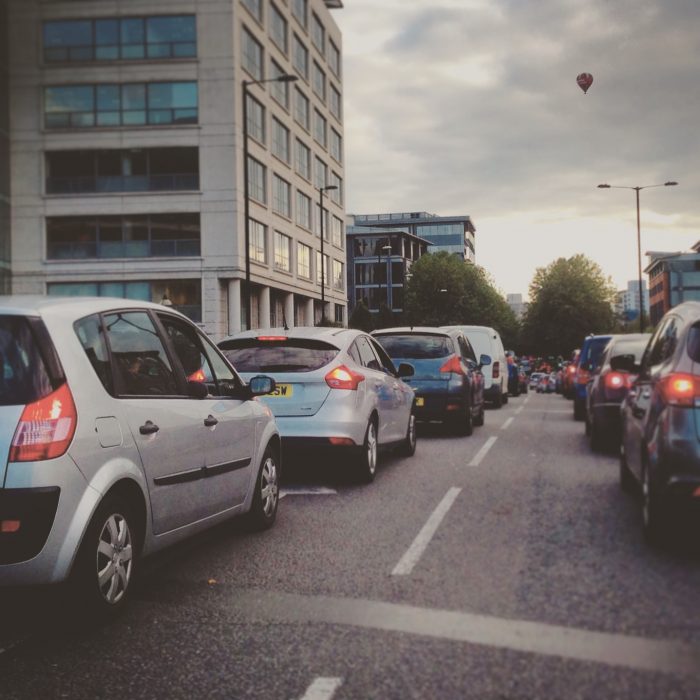

Doubts have been cast over a long-delayed plan to charge businesses for drivers parking at work in Bristol.
A key £30,000 council-commissioned report looking into a workplace parking levy has been kept secret, with Labour saying the levy “would burden residents with extra taxes”.
Plans for a workplace parking levy in Bristol have been discussed for more than a decade, with recent estimates claiming a levy could raise over £12 million every year to improve the city’s struggling public transport.
Advocates also say it would cut congestion and pollution, and a similar scheme has raised almost £90 million in Nottingham to invest in transport.
But Bristol City Council has so far refused to publish a feasibility report into the workplace parking levy, which it commissioned years ago, as other work on the policy still “isn’t complete”.
One Labour councillor has also suggested that high inflation and the Clean Air Zone were new factors.
Key details remain unclear
A workplace parking levy could see businesses in Bristol charged about £300 a year for every employee who parks their car at work, with exemptions for small businesses, disabled drivers, and deliveries.
But many details about the scheme remain unclear, and Green councillors who are pushing for the scheme have criticised the secrecy around reports.
During a full council meeting on 10 January, Green councillor Ed Plowden said: “Just a few months ago, councillor Don Alexander [cabinet member for transport] stood up in this chamber and argued that the workplace parking levy report should be shared, because it’s such an important decision. And what’s happened? I’ve had two freedom of information requests for that report turned down. I believe that’s treating this chamber with disrespect.”
The feasibility report is expected to be published at some point in the future, when the cabinet decides whether to carry on with the levy plan or scrap it. But it’s unclear when that will happen, and Labour has now hinted that extra recent pressure on drivers, like the cost of living crisis, could mean the levy is more likely to be scrapped.
Labour councillor Tim Rippington said work around the workplace parking levy isn’t complete.
He added: “At least two recent developments, the Clean Air Zone and the worsening cost of living crisis, need to be factored into the report before it’s ready. Leicester recently dropped its plans to implement a workplace parking levy in the current economic climate.
“Leicester City Council found the tax would be passed on to motorists. Teachers, hospital workers and care home staff would all have to pay more tax during a cost of living crisis. We need to make a fully considered decision before burdening our residents with extra taxes at this time.”
Leicester announced last November it was dropping its plan to bring in a workplace parking levy. The plan would have seen businesses with more than 10 employee parking spaces charged £550 a year per space, with the decision left to employers whether to pass that charge onto staff. This money would have been spent on public transport.
Key details of how a levy would work in Bristol remain unclear, despite freedom of information requests and questions put to the mayor.
Transparency and accountability
Green councillor Plowden asked the council to publish the feasibility report under freedom of information laws, but these requests were refused.
He then appealed to the Information Commissioner, which turned down his appeal.
In September last year, the Information Commissioner ruled that the council was right to keep the report secret, as it would eventually be published in cabinet papers.
The council told the commissioner it needs “a safe space away from external commentary” before deciding whether to press ahead with bringing in the levy or scrapping the plan.
The Information Commissioner said: “The council argued that it needs a safe space away from external commentary to develop proposals, formulate policy or reach decisions. In this case, the proposed workplace parking levy scheme is likely to attract controversy, and disclosing the report ahead of the publication date will attract premature scrutiny of what the council intends to do.
“This will have the effect of interfering with and interrupting the live ongoing work to prepare the proposal, of which the report forms a part. It is the council’s view that it is in the public interest to ensure that such disruption to public resources does not occur.”
The following month, in a member forum meeting in October last year, Plowden pressed the mayor Marvin Rees on why the feasibility study had not yet been published. Rees responded that his question was “not worth answering” and “just political posturing”.
Plowden said: “In your submission to the Information Commissioner you said it was not in the public interest for this to be in the public domain, but that’s entirely opposite to the line that your cabinet member took in the council chamber. When you were elected, you committed to making the mayoral system more transparent and accountable – what went wrong?”
Mr Rees replied: “I don’t think that question is worth answering. It’s just political posturing as usual. If you come with a collaborative spirit and work to get stuff done, then we would work with you.”
Plowden said: “It’s exactly that collaboration that I would like to be able to exercise by looking at the report.”
Fears were raised in November 2021 that Labour were delaying a decision on a workplace parking levy and “kicking the idea into the long grass”. Green councillors had put forward a motion pushing for a levy, and for the council to introduce one if the feasibility report came out in favour of the scheme.
During that motion debate, Lib Dem councillor Andrew Brown warned: “Labour’s response is not so much to kick the idea into the long grass, but to check it into a long-haul flight with no return ticket.”










Report a comment. Comments are moderated according to our Comment Policy.
A real shame. Nottingham’s public transport is probably the best in the UK (bar London), and a lot of this is down to the money gained from the parking levy. It is well known that parking availability is a huge pull factor of people getting into cars instead of public transport or active travel. This is one of the ‘sticks’ that is vital to creating a real modal shift in Bristol.