Protest outside Bristol arms firm as major prison hunger strike continues


Photos: Jamie Bellinger
Bobby Sands died in May 1981 after more than two months on hunger strike in a Northern Ireland prison hospital. A member of the Provisional IRA, he starved himself in protest at the British state’s refusal to recognise Irish republican prisoners as political detainees.
His words — “Our revenge will be the laughter of our children” — now appear on the separation barrier in the West Bank, half a world away. There are over 10,000 Palestinians in Israeli jails, roughly a third held without charge. Palestinians have long used hunger strikes as one of the few tools to show defiance against their conditions.
Here in the UK, a new hunger strike is unfolding. Six prisoners aged 20 to 30 — all held in British prisons for direct action linked to the now-proscribed organisation Palestine Action— have been refusing food since November.
Kamran Ahmed, Jon Cink, Amu Gib, Teuta Hoxha, Heba Muraisi and Qesser Zuhrah were joined more recently by Muhammed Umer Khalid. An eighth prisoner, Lewie Chiaramello, who is diabetic, is fasting every other day in solidarity.
Some have already been hospitalised. Emergency NHS doctor, Dr. James Smith, in contact with their families, has warned: “This is a trajectory that ends with death.”
This is the most significant prison hunger strike for a generation. And yet, despite this, the British government has barely acknowledged it and media coverage has been scant.
In Bristol, however, protesters refuse to stay silent. A series of solidarity actions, running from Thursday to Saturday, includes letter-writing, demonstrations outside the BBC, and emergency meetings, all organised by Prisoners for Palestine.
A cold day in Filton
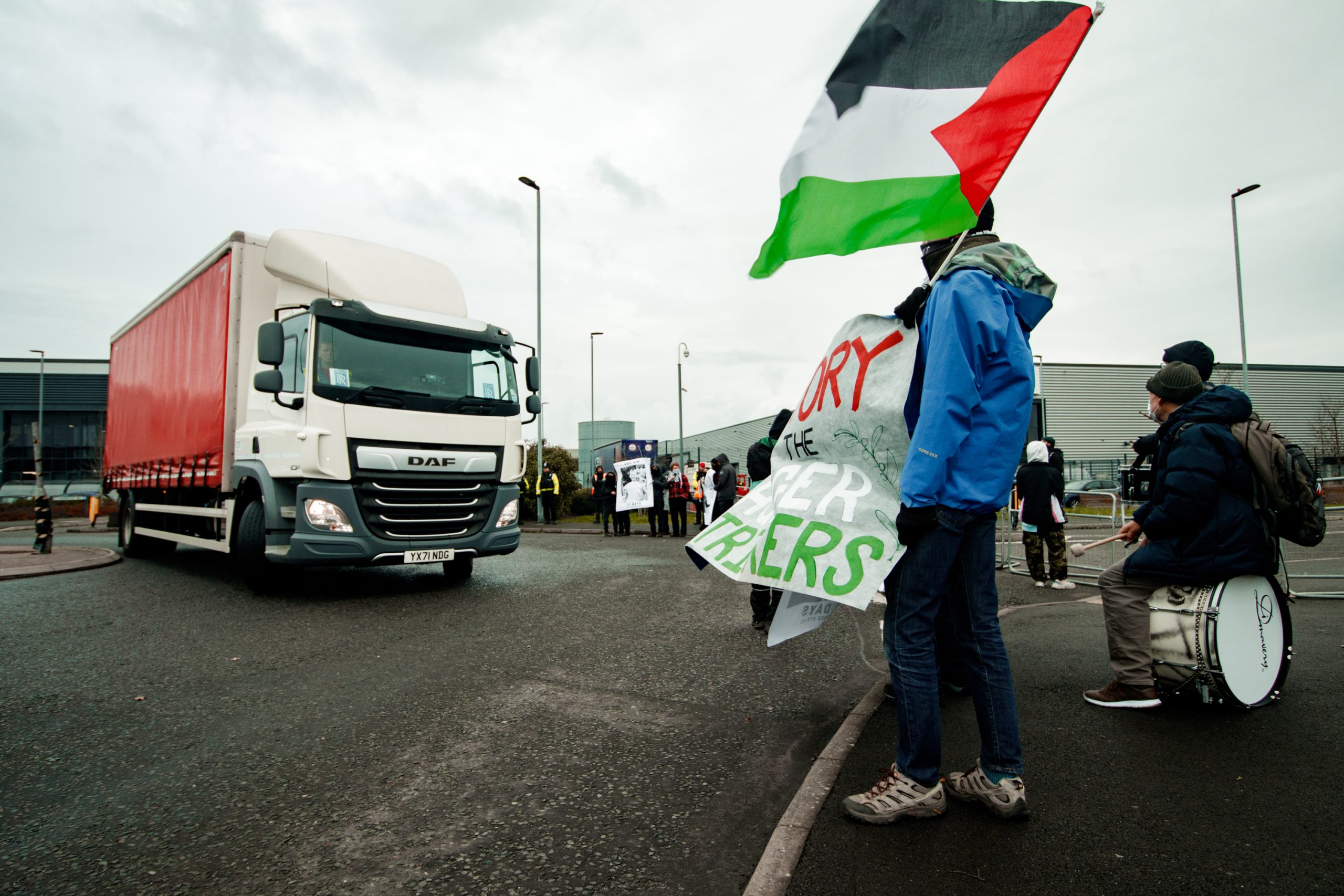
On Friday 5 December, around 30 protesters gathered outside Elbit Systems UK, tucked away on a nondescript industrial estate in Filton — the heart of north Bristol’s cluster of aerospace and defence companies.
Wrapped up in winter coats and keffiyehs against a bitterly cold wind, the protesters held Palestinian flags and photos of the hunger strikers. Chants ricocheted off surrounding warehouse walls.
Elbit Systems UK, a subsidiary of one Israel’s largest arms companies, manufactures the majority of drones and UAVs (unmanned aerial vehicles) used by the Israeli military. Activists have repeatedly targeted the site for its role in producing weapons used in Gaza.
Passing drivers had mixed responses: some beeped in support, others yelled abuse. A lone man holding a St George’s Cross arrived to heckle the protesters. He left after a short conversation with police.
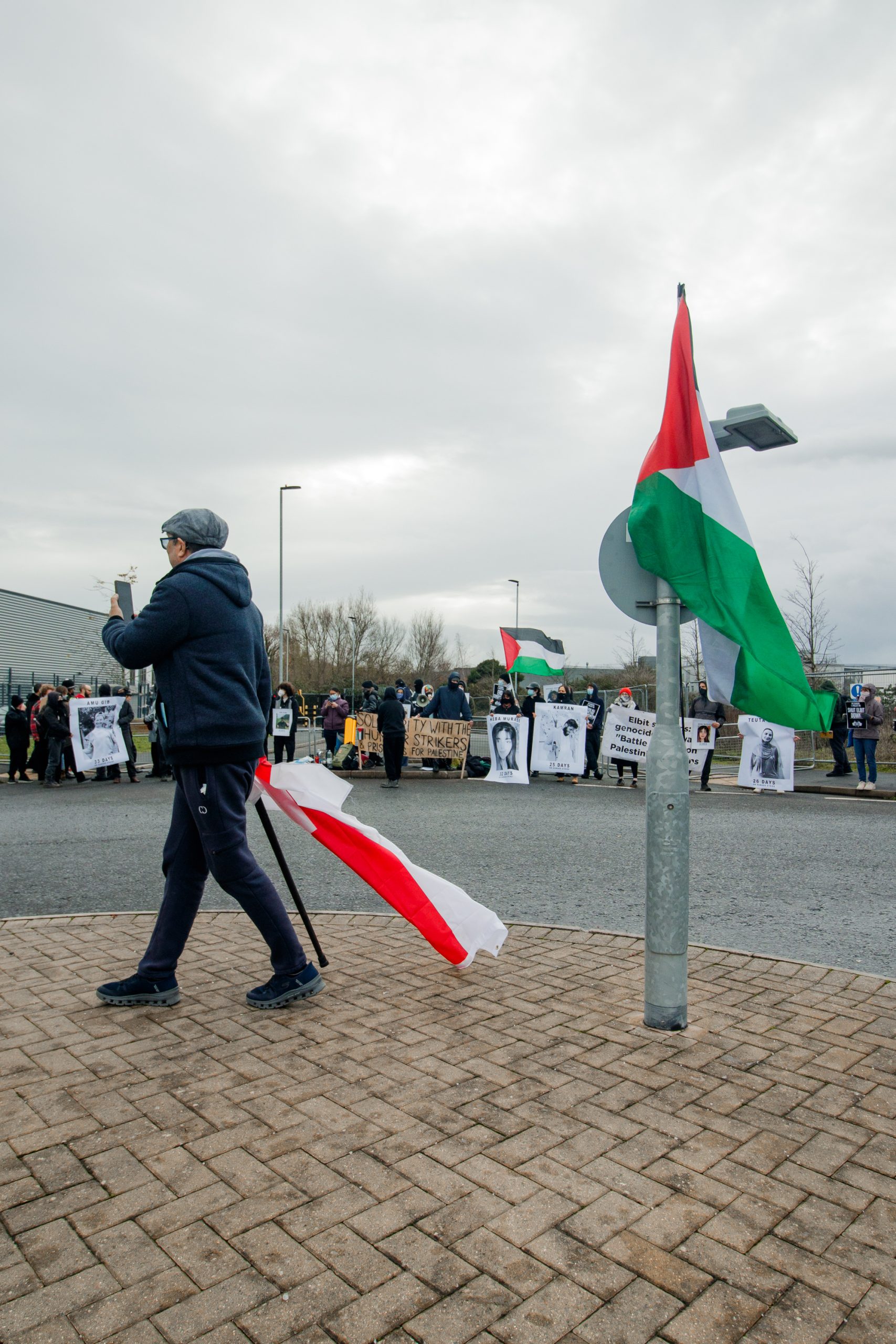
Many attendees, most of whom had their faces covered, were reluctant to speak to journalists, understandably wary. “There’s so much arms production in Bristol. I’ve been involved in a lot of Palestine activism, but I’ve never been to this site before,” said one woman, who asked to remain anonymous.
“I’m infuriated by the fact that there’s a factory in Bristol that’s actively participating in genocide,” said another. “More people need to be aware of the factory and the political prisoners currently on hunger strike. We have to make it as difficult as possible for [Elbit] to operate,” she continued.
Around ten police officers watched on. Several times, protesters tried to block vehicles entering or leaving the site. Police threatened at least one person with arrest, but the vehicles eventually passed.
Next to the entrance gate, a sign read: “This is a prohibited place defined by the National Security Act 2023.” The act was introduced to protect against espionage or sabotage. However, campaigners argue such legislation increases the likelihood of police intervention during protests.
A voice from behind bars
As the morning progressed, protesters spoke through a megaphone. One speaker was Leigh Evans, who carried a cardboard coffin bearing the name of Hind Rajab, a six-year-old Palestinian girl shot dead by Israeli soldiers as she hid in a car in Gaza.
“There are political prisoners in Britain who are being illegally detained by our government,” Evans said.
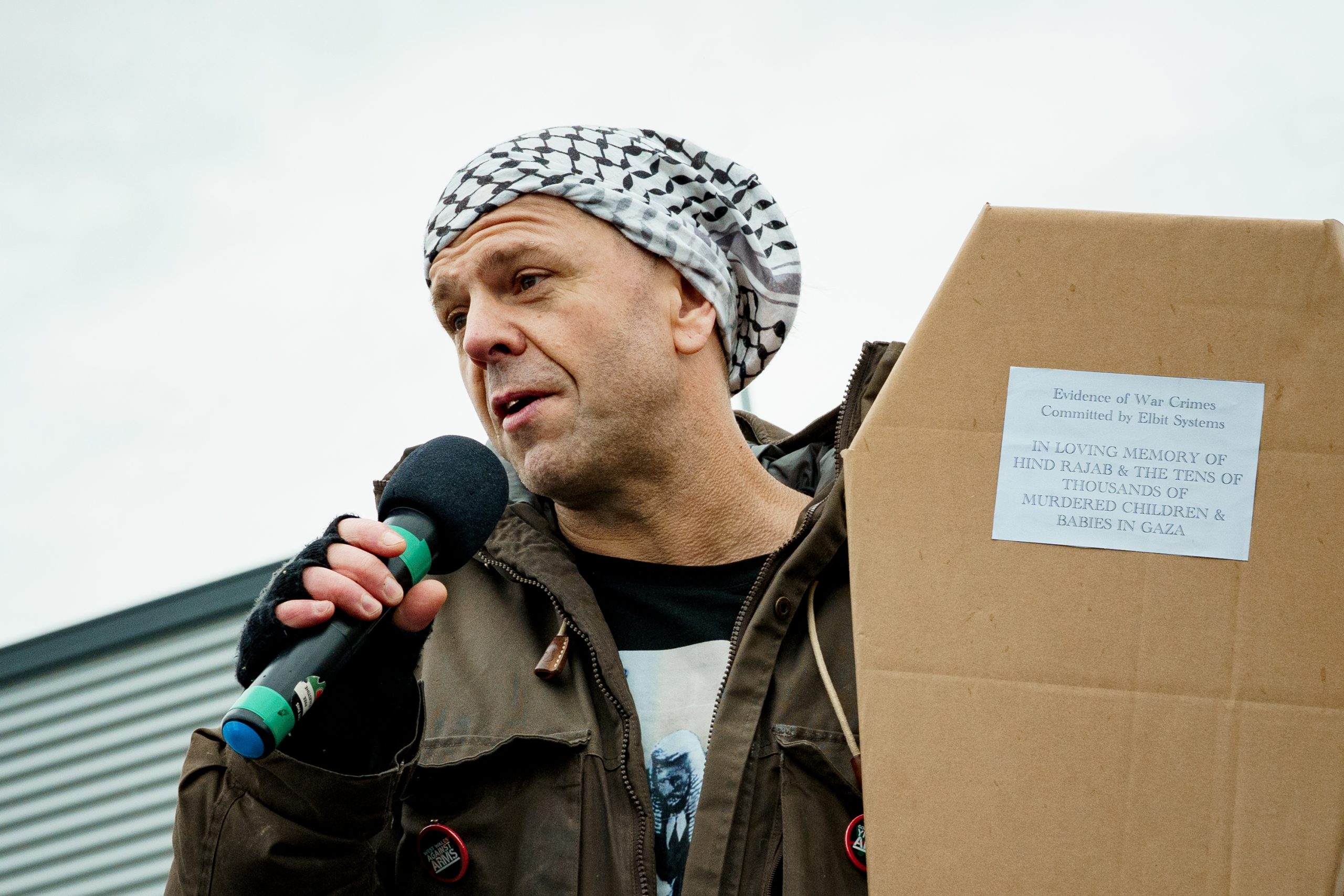
Evans, also known on social media as Leigh Cadno, is a humanitarian activist from Swansea and a vocal supporter of the Palestinian cause. He took part in the Thousand Madleens Flotilla, which set sail from Sicily in late September. It aimed to deliver aid to Gaza. The Israeli military detained him after intercepting the ship in international waters.
“Three of them have just gone over four weeks on hunger strike,” he continued. “I’m a retired emergency nurse and they are now at serious risk of cardiac arrest. The government and the jaded media of Britain are not allowing this into mainstream media.”
Addressing the hunger strikers, Evans said: “You’re a role model to us all… You have empathy in your hearts. Please carry on your strong stance. But allow yourselves to be fed gently. We need you alive.”
Since the hunger strike began, several prisoners’ health has deteriorated. Kamran Ahmed, 28, who began his strike on 10 November and is held at HMP Pentonville in north London, was hospitalised on 25 November. Teuta Hoxha, held at HMP Peterborough, was taken to hospital on 4 December.
A particularly moving moment came when a voice note from Amu Gib, on hunger strike since early November, was played through the megaphone by a close friend of Gib. Gib’s friend later passed this recording on to the Cable.
“We will never be able to compute, let alone feel, the depths of devastation, the death, the dispossession, displacement, the attack on education, infrastructure, health care, farms and olive groves,” came Gib’s voice over the crackly recording as protesters huddled in to listen.
“We have enabled and profited from the conversion of Palestine into a battlefield. Its people, histories and infrastructures are a wet zone for increasingly impersonal tools of war.”
The background to the hunger strike
There are currently 33 people in prisons across the country for their alleged involvement in actions including the targeting of Elbit Systems and breaching the fence to spray paint planes at RAF Brize Norton in Oxfordshire.
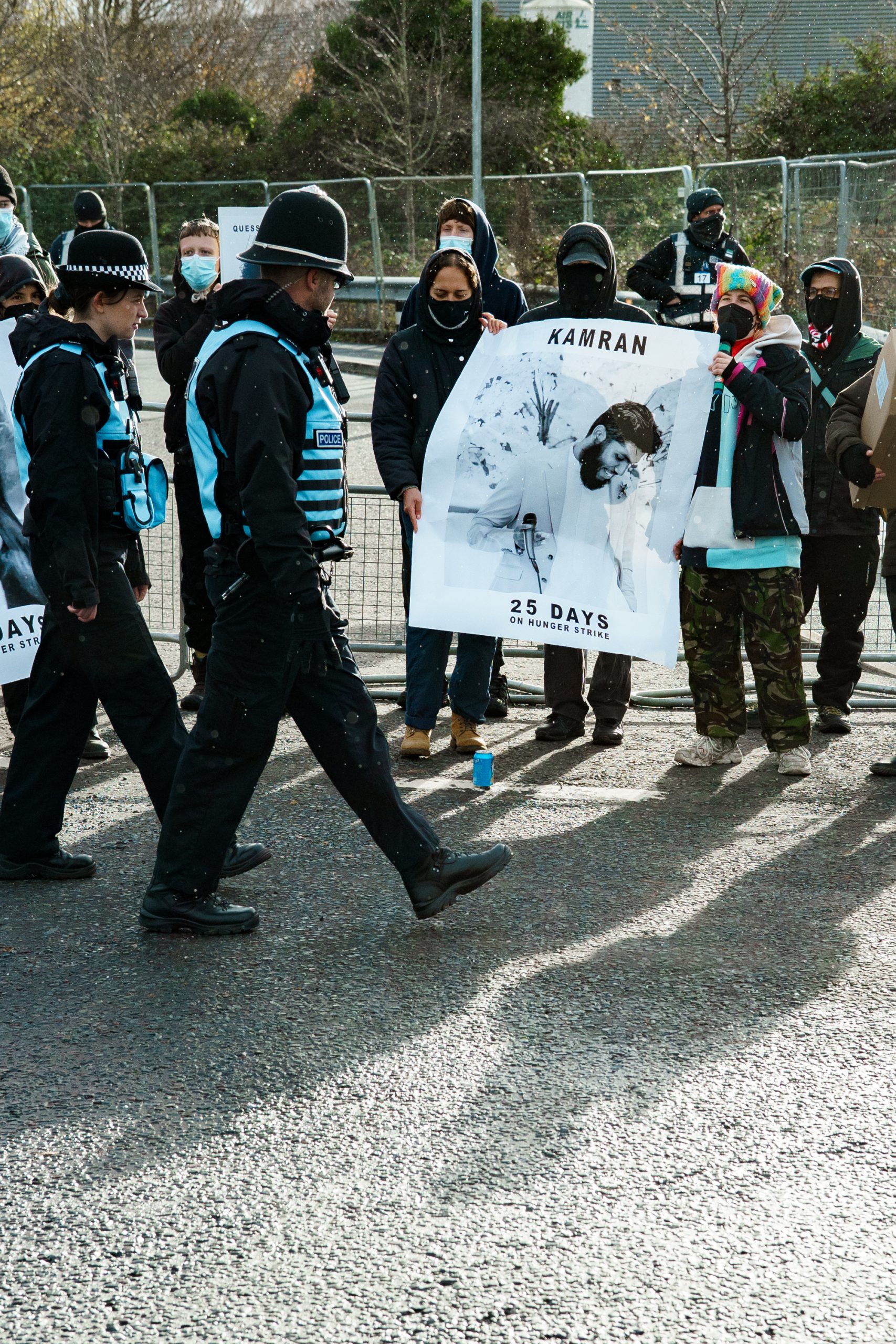
The prisoners include the ‘Filton 24’, most of whom are on remand while their trial begins. They are members of Palestine Action. The government proscribed the group as a terrorist organisation in July of this year.
Huda Ammori, co-founder of Palestine Action, submitted a judicial review challenging the government’s decision in early December. No public judgement has yet been released.
None of the defendants have been convicted of any crime. Yet some of them have endured up to 16 months behind bars. This far exceeds the normal six-month period of pre-trial detention for similar offences.
The hunger strike began on 2 November when Qesser Zuhrah, 20, and Amu Gib, 30, who are both being held at HMP Bronzefield in Surrey, began refusing food. Zuhrah has been on remand for over a year, while Gib has been on remand since July 2025. Four other defendants joined the strike the following week.
The initial spark for the hunger strike was poor prison conditions — including mistreatment by guards, prisoners having keffiyehs forcibly removed, and prison authorities’ withholding of letters, phone calls and books.
The strike has since expanded to include five demands: an end to censorship, immediate bail, the right to a fair trial, the de-proscription of Palestine Action and the shutting down of all Elbit Systems’ sites in the UK.
So far, the response from British politicians has been muted. However, on 1 December, Labour MP John McDonnell tabled an early day motion calling for Justice Secretary David Lammy to intervene. 14 other MPs have signed it. Green Party deputy leader Mothin Ali was the first political figure to visit two of the hunger strikers last week.
Elbit Systems and the British state
As the hunger strike enters its second month, many of the protesters had questions about Elbit Systems and its relationship to the British state.
Elbit has long held ties with the British military. In 2021, it was awarded a £73 million contract to supply electronic warfare capabilities to the Royal Navy. It has also delivered training to the British army.
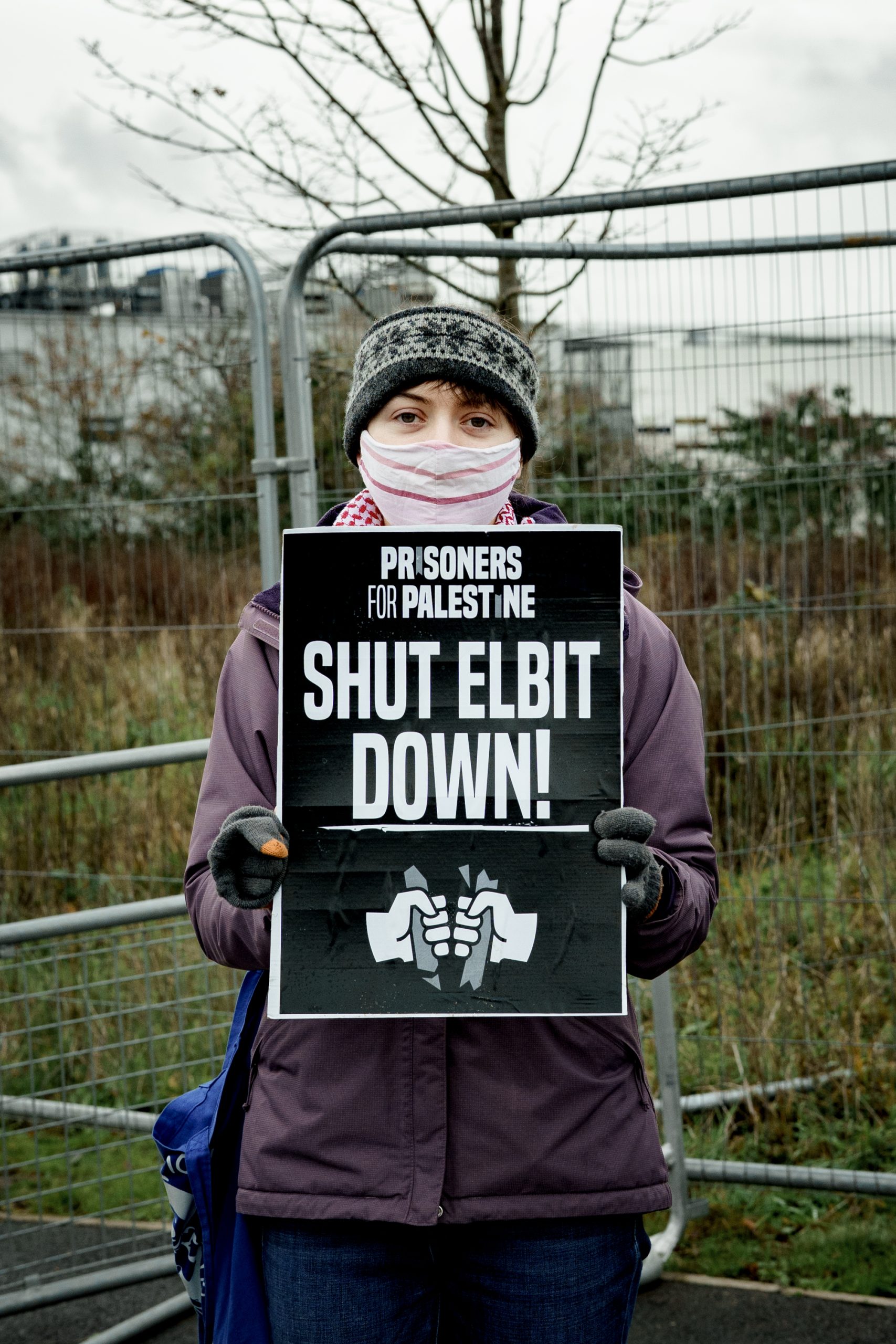
As of this year, the government is considering signing a £2 billion contract with the company to train 60,000 British troops. 45 MPs have signed an early day motion opposing this deal on the basis that it would “risk making the UK more complicit in war crimes being committed against the Palestinian people.”
The consequences of such a contract would be significant. “These companies, and this whole industry, is so deeply embedded within Bristol’s social and economic life”, said an activist organising with Prisoners for Palestine, referring to the thousands of workers employed by Elbit and other arms companies in and around Bristol.
“[Workers] should agitate and organise within [their] own companies. It needs to be a mass exodus. If people no longer are willing to work for these companies, then these companies will no longer function within Bristol.”
As the protesters outside Elbit packed up to head home, they remained determined to bring awareness to the hunger strike. Mainstream news outlets — notably the BBC — continue their silence. Meanwhile, in north Bristol, companies like Elbit continue to manufacture weapons of war, and thousands of miles away, those same weapons continue to maim and kill Palestinians.
Independent. Investigative. Indispensable.
Investigative journalism strengthens democracy – it’s a necessity, not a luxury.
The Cable is Bristol’s independent, investigative newsroom. Owned and steered by more than 2,600 members, we produce award-winning journalism that digs deep into what’s happening in Bristol.
We are on a mission to become sustainable, and to do that we need more members. Will you help us get there?
Join the Cable today