That time when one of the most iconic slavery abolitionists came to town
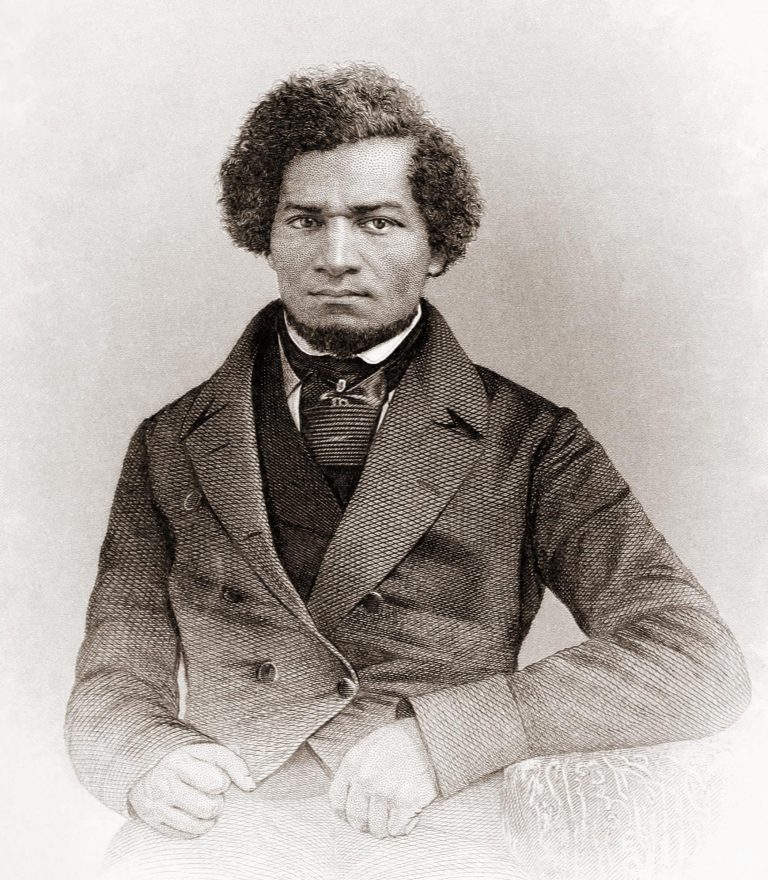
Engraving by J.C. Buttre f
On Tuesday 25 August 1846, the great human rights activist and anti-slavery campaigner Frederick Douglass delivered a powerful speech at the Victoria Rooms in Bristol. While acknowledging it was difficult for many in Britain to believe what he said about the horrors of slavery because they “had heard of America, 3000 miles off, as the land of the free and the home of the brave”, the truth, he declared to loud cheers, was that for all the grandiloquent talk of all men being equal, the sound in the South was that of the “clank of the fetters and the rattling of the chains, which bound their miserable slaves together”. John K. Haberfield, the popular Bristol mayor, chaired the meeting. He filled a glass of water for Douglass, leading a local paper to declare in outrage: “What! A white man – a mayor – a man in authority – hand a glass of water to a Negro! Incredible!”
Catapulted to fame by his incendiary 1845 autobiography Narrative of the Life of Frederick Douglass, an American Slave, Douglass was in Bristol as part of a nearly two-year lecture tour of Britain and Ireland. As an escaped slave he had been advised to lay low for a while. Revelling in the freedom of movement and mind that came with being away from the oppressive racial climate of the United States, Douglass would consider the tour a transformative experience. No ‘colour test’ kept him from travelling on omnibuses or trains. He even went to the Houses of Parliament, where he watched Prime Minister Sir Robert Peel address the Commons, knowing a trip to Congress in Washington would have seen him back in chains.
Among the other figures to speak that day in the Commons was the Bristol MP Sir John Cam Hobhouse, whose family’s wealth derived in no small part from slavery. Isaac Hobhouse, for example, was an owner or investor in scores of slave ship voyages in the mid-1700s, a time when Bristol had supplanted London as the epicentre of British slaving.
While in Bristol, Douglass stayed at the spacious 47 Park Street, the home that prominent citizen and eye surgeon John Bishop Estlin shared with his 25-year-old daughter Mary. Mary became a leading member of the Bristol and Clifton Ladies’ Anti-Slavery Society and described Douglass’s Bristol speech as brimming with “powerful reasoning … touching appeals, keen sarcasm and graphic description”.
Douglass delivered a number of lectures in Bristol, including at the Victoria Rooms – that now houses the University of Bristol’s Department of Music – where the audience was described as ‘a most select assemblage’. The following day he appeared before a 1,000-strong audience of ‘a more popular cast’ at Broadmead. Mary Estlin also took him to the Blind Asylum, where visually impaired people were trained for employment in crafts such as basket- and mat-making. ‘Their delight was extreme to feel him and question him. I think F.D. will never forget the scene,’ John Estlin wrote, the underlining of ‘feel’ suggesting those present actually placed their hands on Douglass’s striking face and features or perhaps the stature of his mere presence.
Thrilled with the response to his talks and with the friendship of the Estlins and others, including George Thomas the founder of Bristol General Hospital, Douglass visited Bristol several more times during what he called his ‘liberating sojourn’ in Britain. The pro-slavery elements in the city were surprisingly quiet during his stays, sated perhaps by the compensation received as part of the Slavery Abolition Act in 1833. Those that enslaved people, rather than those who were enslaved, received the equivalent of £20m from the British Treasury, approximately 40% of the entire UK government spending that year. The loan borrowed by the state to give to slave owners was only finally paid off in 2015.
The Estlins remained committed to the anti-slavery cause. John Estlin passed away in 1855 in the middle of an anti-slavery meeting being held in his home. Mary Estlin, meanwhile, would campaign for the advancement of African-Americans until her death in 1902.
When Douglass travelled back to America in the spring of 1847, it was as a free man; his manumission (release from slavery) having been secured by British supporters for £150. Armed with this freedom, he continued his crusade, establishing himself as the most forceful anti-slavery voice of the nineteenth century and an icon of international standing.
Laurence Fenton is a historian and author of ‘I Was Transformed’ Frederick Douglass: An American Slave in Victorian Britain.










Report a comment. Comments are moderated according to our Comment Policy.