How the BBC failed Gaza
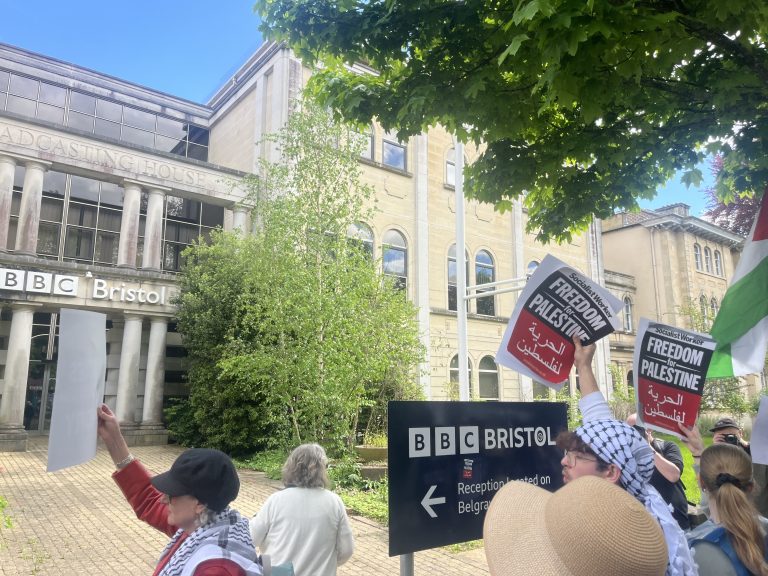
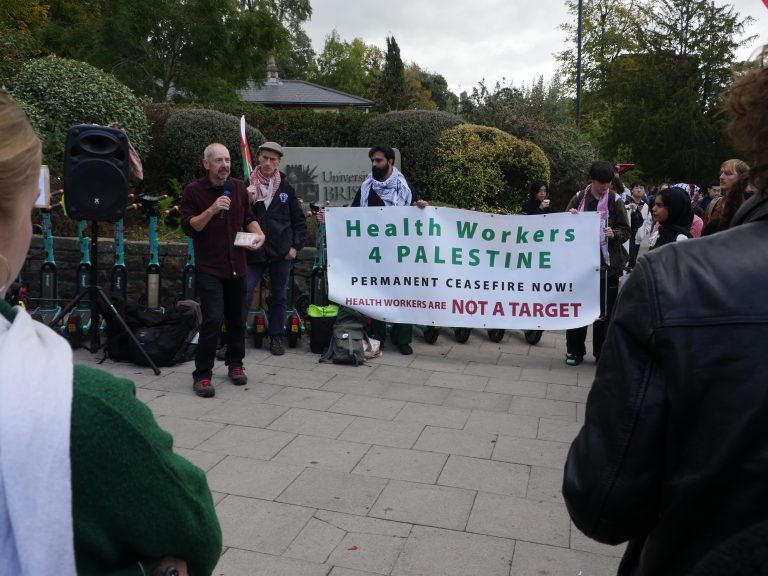
“The BBC has a duty to inform the public, not to sanitise genocide.” So read a placard outside BBC Bristol’s Clifton offices last year during a protest against the broadcaster’s coverage of Israel’s genocide in Gaza.
Weeks after that demonstration, the Centre for Media Monitoring (CfMM) released an in-depth study of more than 35,000 pieces of BBC content published since the start of the Israeli assault on Gaza in 2023. The report found a “pattern of bias, double standards and silencing of Palestinian voices.”
The BBC is a public service broadcaster – taxpayer funded, established by Royal Charter and bound by a duty of impartiality. Yet its coverage of Gaza has been anything but.
One-sided language
The CfMM report found Israeli deaths received 33 times more coverage per fatality, despite Palestinians being killed at a ratio of 34 to 1.
Language told its own story. The BBC used emotive terms such as “brutal”, “atrocities” and “slaughter” four times more often for Israeli victims. “Massacre” was applied 18 times more frequently to Israeli casualties. “Murder” appeared 220 times for Israeli deaths, and once for Palestinians.
When 176 Palestinian journalists were killed in Gaza, the BBC covered just 6% of them. In Ukraine, it reported on 62% of journalist fatalities.
Most damningly, the report documented more than 100 instances of presenters shutting down allegations of genocide, even after the International Court of Justice ruled in January 2024 that a plausible case existed.
The BBC made no mention of Benjamin Netanyahu’s biblical “Amalek” reference, now cited in war crimes proceedings at the International Criminal Court.
Historical context was virtually absent. Across tens of thousands of items, the BBC referred to 76 years of occupation in just 0.5% of coverage.
‘Terrrorism’ framing
On 18 February this year, the High Court ruled the proscription of direct action group Palestine Action was unlawful. Yet CfMM analysis found that 78% of TV coverage that day carried negative sentiment across 2,321 clips. More than half continued linking Palestine Action to terrorism even after the legal ruling.
The BBC was the worst offender: 69% of its clips mentioned terrorism in their framing, compared to 54% on Sky News and 35% on GB News.
From blockades outside Elbit sites in Filton, to protesters standing outside the BBC’s own offices demanding better, Bristolians have been central to demands for truth and justice.
Nearly one in five of the clips analysed by CfMM contained a striking logical inconsistency. In around 20% of the coverage, the ban was described as unlawful — suggesting procedural injustice. Meanwhile, the group itself was framed in terrorist language, reinforcing the very rationale the Government used to justify its restriction.
BBC One West covered the trial of six Palestine Action activists who dismantled an Israeli weapons factory here in Bristol, but national outlets stripped out the local context in favour of the terrorism narrative.
References to sledgehammers, which were carried by Palestine Action activists as they entered the Elbit site in Filton last year, appeared in 100 clips, becoming shorthand in right-wing commentary.
ITV aired 339 clips — the highest volume of any broadcaster — yet did not mention genocide once, despite the story’s direct link to Gaza.
Meanwhile, GB News leaned heavily on Islam as a framing device, weaponising it in two contradictory directions. Palestine Action was associated with Hamas, Hezbollah and the IRGC to suggest Islamist terrorism. Simultaneously, Muslim Home Secretary Shabana Mahmood’s condemnation of the group was used as a legitimising device.
The effect was clear: collapse all forms of anti-Israel protest into a single, undifferentiated threat.
A failure of scrutiny
Government overreach is one thing. Media complicity is another.
In June 2025, veteran journalist Peter Oborne confronted BBC news chief Richard Burgess at the CfMM’s launch event in Westminster. Oborne tore into Burgess over the BBC’s complicity in promoting a narrative that favoured Israel.
He highlighted several specific areas where the BBC had failed in its reporting.
These include omission of the Hannibal Directive (by which the Israeli justifies the killing of its own troops to prevent their capture by Hamas) and the Dahiya Doctrine – Israel’s repeated bombing of the population of Gaza as a form of collective punishment.
He noted how the BBC frequently downplayed the UK’s own role in abetting Israel’s genocide, by omitting any mention of the use spy planes from RAF Akrotiri in Cyprus, which have supplied real-time data to the IDF.
Bristol, and the possibility of another journalism
The BBC, alongside much of the rest of the legacy media, has omitted historical context, downplayed Palestinian suffering, and neglected to examine UK complicity.
And they have shown little interest in defending British citizens’ right to protest against companies profiting from war.
Yet Bristol has shown that resistance to the dominant narrative is possible.
From blockades outside Elbit sites in Filton, to protesters standing outside the BBC’s own offices demanding better, Bristolians have been central to demands for truth and justice.
These moments point toward a hunger for another kind of journalism — one that interrogates power rather than echoing it.
As Israel’s genocide in Gaza continues, and calls for accountability continue to go unheeded, this type of journalism is needed now more than ever.
Faisal Hanif is a media analyst at the Centre for Media Monitoring and a writer focusing on Islamophobia and British Islam.
Independent. Investigative. Indispensable.
Investigative journalism strengthens democracy – it’s a necessity, not a luxury.
The Cable is Bristol’s independent, investigative newsroom. Owned and steered by more than 2,600 members, we produce award-winning journalism that digs deep into what’s happening in Bristol.
We are on a mission to become sustainable, and to do that we need more members. Will you help us get there?
Join the Cable today