I chose the way that speaks truth
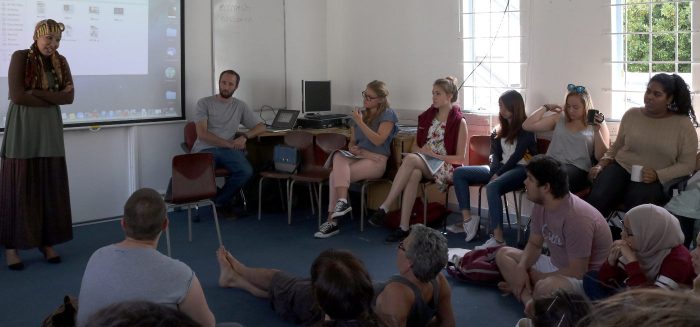
An exiled Sudanese journalist tells her story of political repression, exile and integration
Words: Sara Mohamed
I left Sudan in a dramatic way. My life of luxury as a journalist and writer, with a nice flat, domestic assistants and a driver, disappeared suddenly.
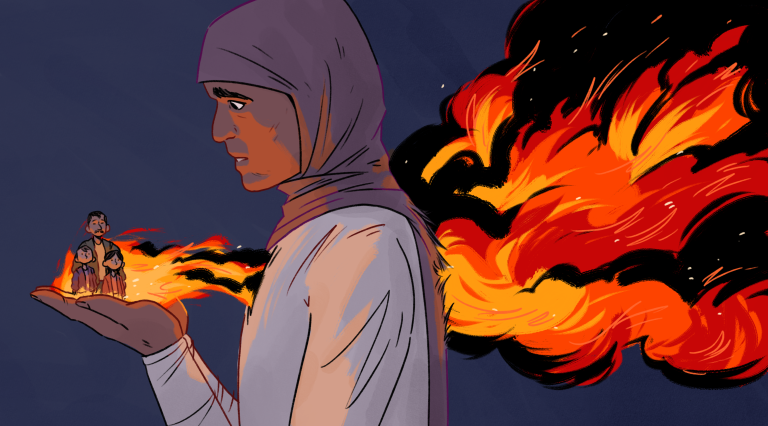
On advice from a friend who worked for the authorities, I left the country on a fake passport. I felt paranoid about being caught in the airport, but made it to Heathrow. On arrival I was confused and had no idea what would happen next. I started the process of seeking asylum, and, based in a hostel, began learning to live a new life.
 A hard road

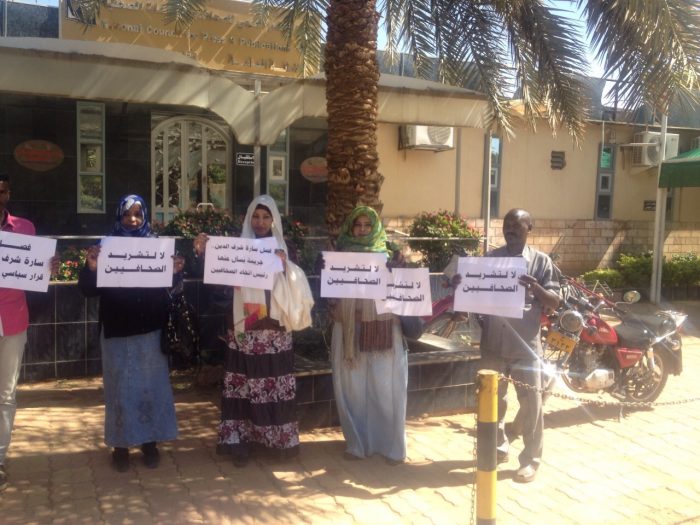
Journalism isn’t easy in Sudan. When I started out, I understood there were two paths. One led to safety, bowing down to the government. I chose the other way, where I could at least be myself, take on the oppressor and hopefully win some battles. But, as I learned, this way can also lead to prison and exile.
A coup led by former army colonel, now president, Omar al-Bashir hit Sudan in 1989. Since then my country has suffered at the hands of an authoritarian Sharia-led government and been isolated internationally.
With most leaders from an army background, the idea of freedom comes under pressure. The fear of the media presenting truth to the public is seen as a threat. In this context, educated people have a big role in holding the authorities to account.
“My newspaper ended my contract due to government pressure, and no one else would employ me – I knew it was time to leave”
Raising awareness
My passion for journalism started while studying at the University of Khartoum. I began publishing a regular wall newspaper of articles called Alwai (‘Awareness’). It was plastered on the university’s main road, a space students also used to exchange political and cultural views, mostly critical of the government.
I then spent more than 10 years working for radio and TV, eventually moving from Medany back to Khartoum in 2007 to become the politics correspondent of the Al-Ray newspaper. These were difficult times with freedom of speech constricted. The security units came around daily to censor any topic, opinion and investigation they thought could show the dark side of the government, or lead the reader to take action. If anything critical was published, all papers were withdrawn from circulation.
Amid this repression I published two books. The Woody Scepter, from 2007, is a collection of short stories; the main one explores how issues affecting young people stop them from achieving their potential. After a long-standing study about mental health issues with charities and community groups, I wrote The Scandal of Silence, published in 2013. This highlighted how people who suffered were mostly unemployed and from poor families. I also exposed the government’s responsibility in preventing people from expressing their views on the need for change.
Picking fights
The public launch of my book embarrassed the Ministry for Social Welfare, and they picked a fight with me. First, officers were sent to give me a warning. But I didn’t stop publishing stories about poverty and mental health and my case was passed to the security forces, escalating the threats.
One day in 2013, my friends and I got picked up by the police on a terrace. Through social media we were reporting on a wave of demonstrations calling for the government to resign. Firing into the crowds was their response – which went unreported in official newspapers. That was the last time I got arrested. Having pleaded guilty and on bail, I felt my every move was blocked.
While I was in Egypt caring for my father, who had cancer, my newspaper ended my contract due to government pressure, and no one else would employ me. Unable to do my work, I knew it was time to leave. Many colleagues are still there, scared and silent.
A new existence
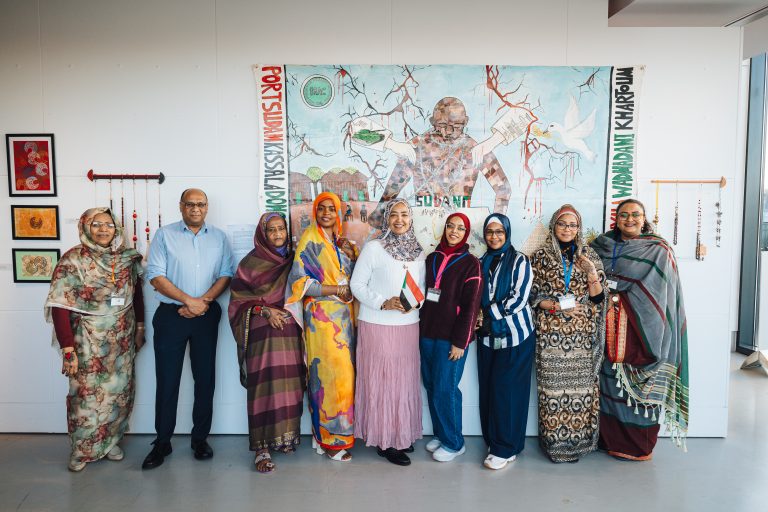
I’d read books by and about people in exile, but had never thought of myself as one of them. On receiving my ‘leave to remain’ visa I moved to Bristol. I’d heard it was a multicultural city with a big Sudanese community – but for many in my situation it is also a whole new society to get to grips with.
I recently completed a course in educational support in schools with Ashley Community Housing, and plan to start a master’s degree. Meanwhile I work in teaching support and volunteer in places such as the Girl Guides. I have seen the positive impact this has had on young people’s views of Muslim women. I hope to find long-term opportunities, and apply for work all the time – but discrimination also stares me down.
The worst feeling is when others don’t accept you for no reason. It’s hurtful that some people forget my humanity, that I have emotions and dignity. They can’t imagine the life I had before. But there are kind, tolerant and helpful people too, and I feel grateful for them.
I can’t say it is easy to adapt or that everything is going well, but I take the challenge to be myself again. So I’ve started writing another book, about my journey and what my life is like now.


Report a comment. Comments are moderated according to our Comment Policy.