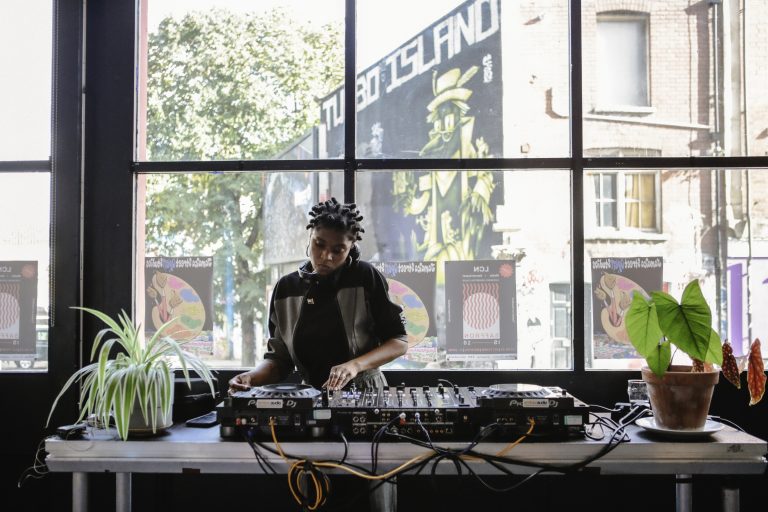
The rhythmic lilt of Hebrew chanting echoes around a crowded room — not in a synagogue or at Shabbat dinner on a Friday night, but from the stage of The Louisiana. Why am I hearing a liturgy written by Jewish Kabbalists in the Middle East more than 400 years ago in 21st-century Bristol?
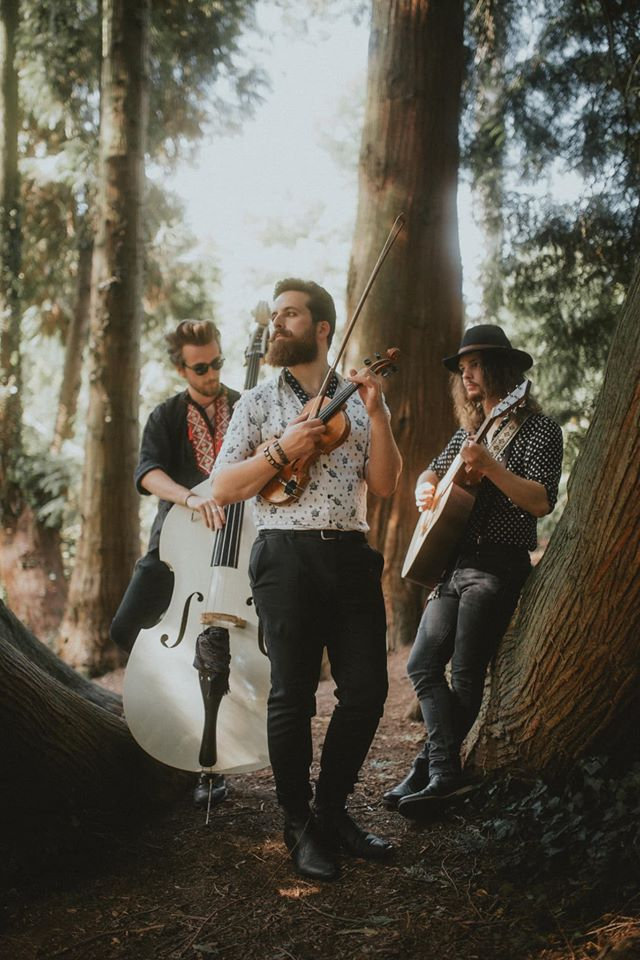
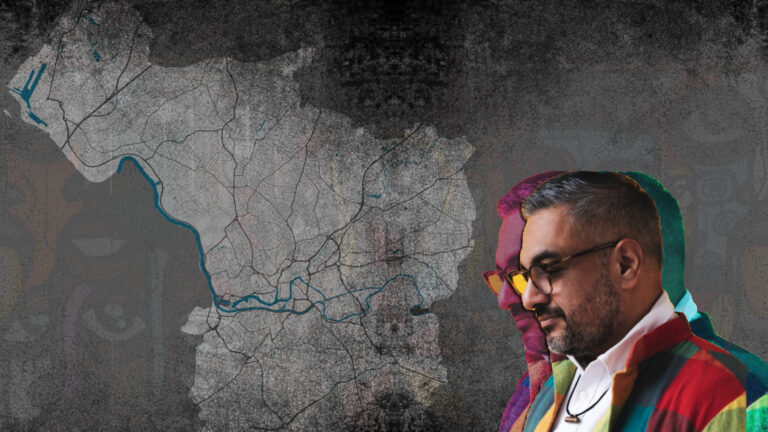
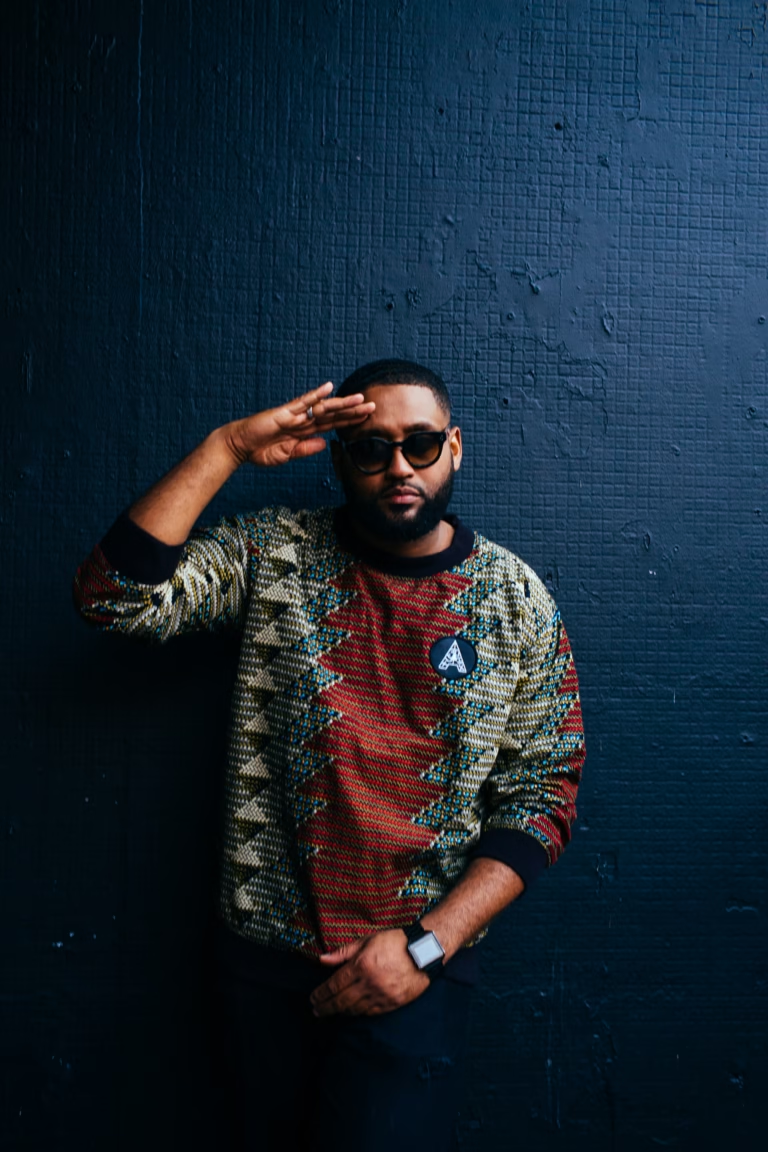
The answer lies with musician, activist and theologian Nik Jovčić-Sas and his band Ninotchka, a folk-punk trio who draw on Jewish, Balkan and Eastern European musical traditions. He’s one of a handful of queer, left-wing Jewish artists making work in and around Bristol today.
Around 1,200 people in Bristol identified as Jewish in the 2021 Census, just 0.3% of the population. Smaller still is the number of people, myself included, who align with the ancient and vibrant tradition of Jewish antifascism.
Jews have endured centuries of persecution, displacement and survival, the world over. Here in Britain, that history included massacres, pogroms and discrimination before Edward I expelled the country’s entire Jewish population in 1290.
When Jewish communities were readmitted more than 350 years later, prejudice endured. In Bristol, institutions including the Society of Merchant Venturers and the local press opposed Jewish integration, casting Jews as outsiders and fuelling hostility — an environment that may feel disturbingly familiar to refugees arriving today.
It is from this history that Jewish antifascism emerges; having known persecution ourselves, we have a responsibility to stand with those oppressed today. I met artists in Bristol carrying that tradition forward through music, activism and community.
Folk against fascism
“From a very early age, I wanted to play the Eastern European folk music I heard at home and back in the old country. Then I found a teacher, Nina Trot, who introduced me to klezmer. She came from a very musical Jewish family who were also Holocaust survivors,” Nik tells me.
Klezmer, the traditional folk music of Ashkenazi Jewish communities in Eastern Europe, is a sound shaped by its history. As Nik puts it: “There’s both sorrow and joy in this music – upbeat and lively one moment, haunting and melancholic the next.”
Nik’s mother arrived in the UK as a Serbian refugee with Jewish ancestry — a cultural inheritance that, alongside Nina’s teaching, shaped his musical path. His work now fuses folk traditions from the Balkans, Eastern Europe, Ireland and the Jewish diaspora, becoming a familiar sound in venues and streets across Bristol and Bath.
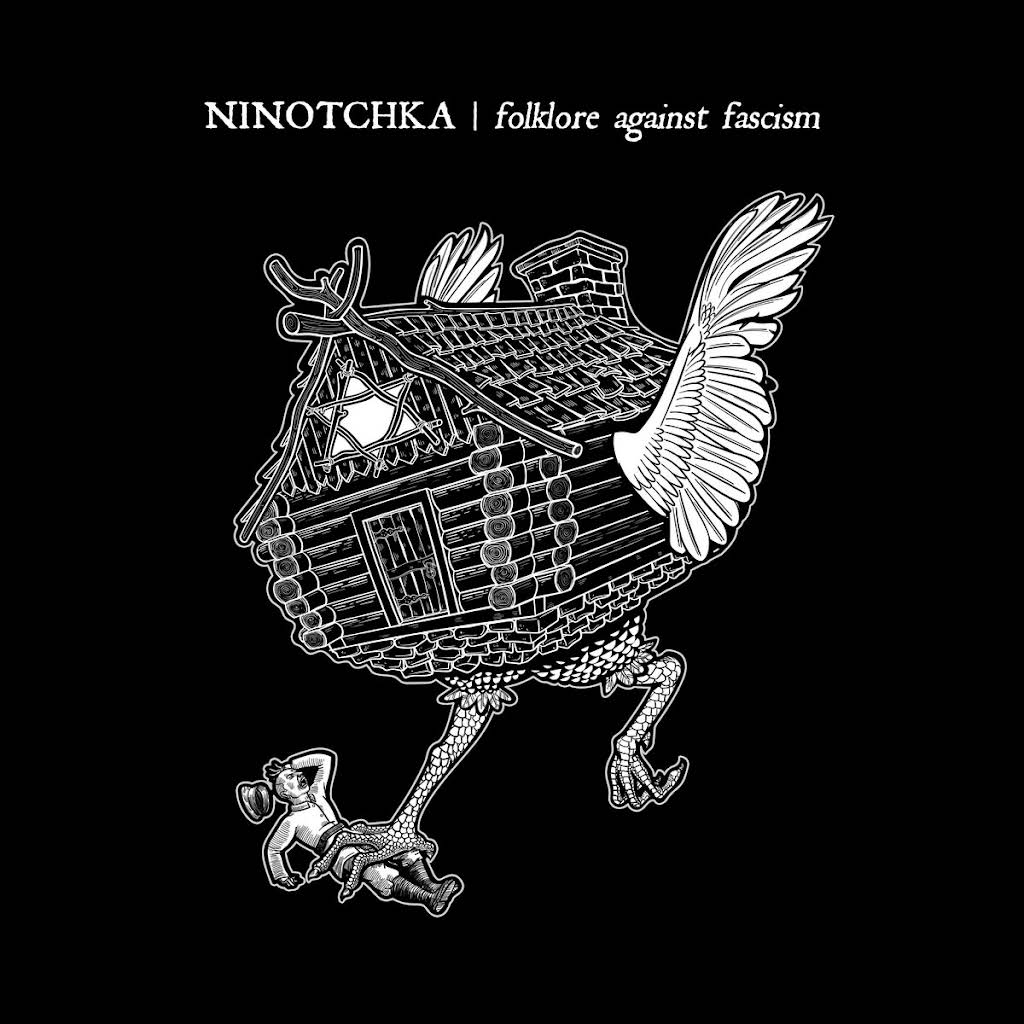
His politics are strikingly clear to anyone with a copy of Ninotchka’s EP, Folklore Against Fascism. The sleeve depicts the hut of Baba Yaga — a witch-like figure from Slavic folklore — emblazoned with a Star of David, crushing a Nazi beneath its clawed feet.
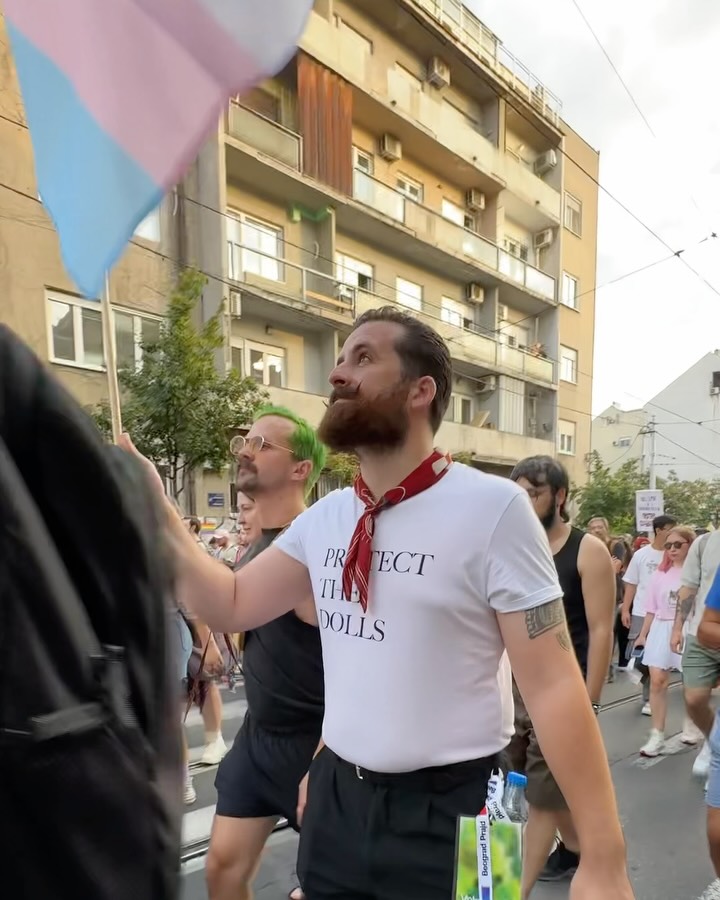
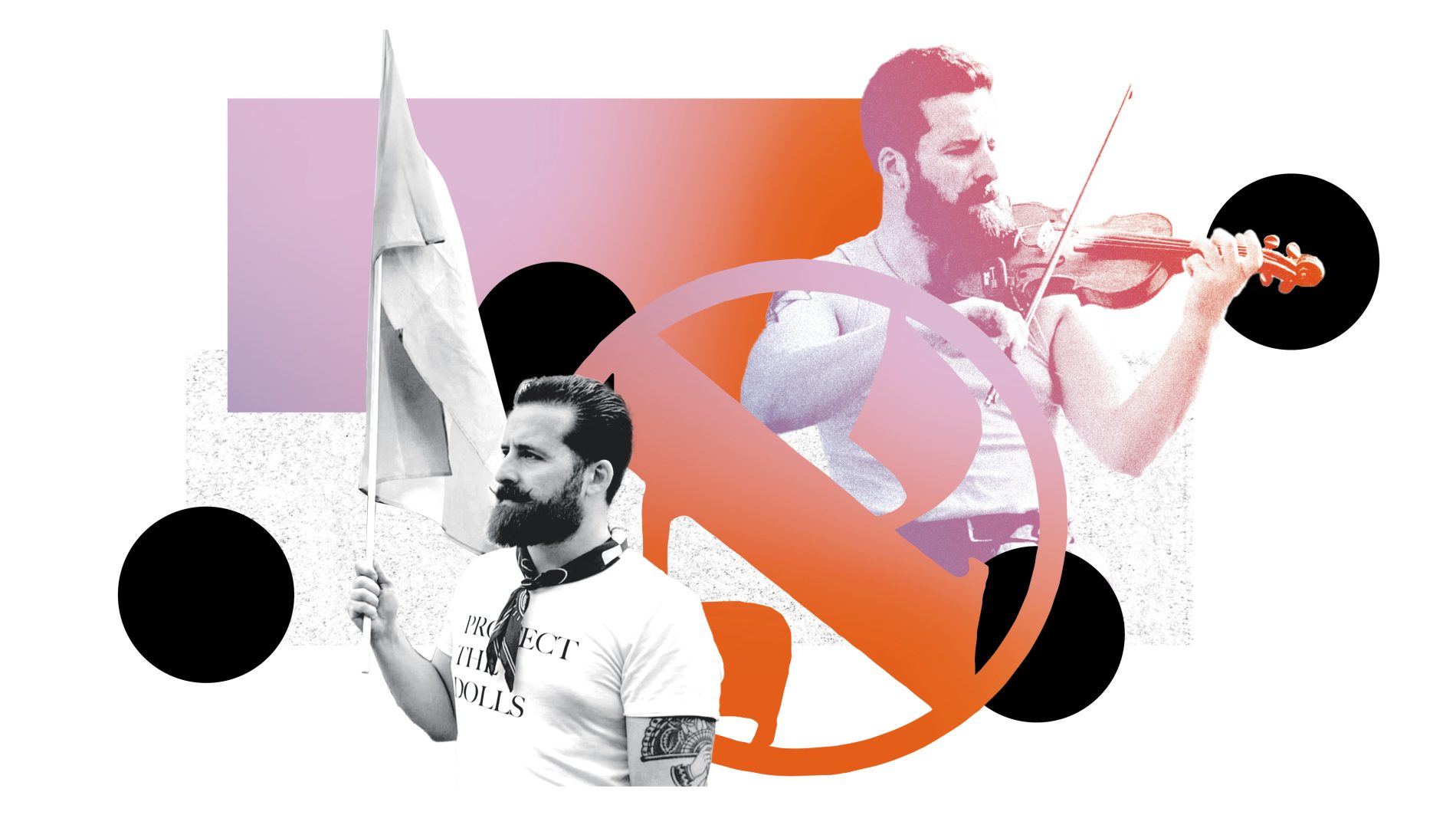
That politics extends beyond music. In 2019, Nik made headlines for carrying a homemade Virgin Mary icon with a rainbow halo at Belgrade Pride. Afterwards, received several death threats in the aftermath.
Being an openly Jewish artist comes with its challenges. Nik recalls a gig in Bristol when someone repeatedly chanted “Free Palestine” throughout a Jewish song he was performing. “I stopped and asked why he assumed that because I’m Jewish I’m against a free Palestine? I fully support a free Palestine. Then he got on stage and tried to punch me.”
“In Bath, I had one particular venue ask if I was Jewish. Then he made a Holocaust joke and refused to give us a show,” adds Nik.
“As someone who’s Jewish, and whose music is inherently Jewish, antifascism is essential to me. It’s a fundamental part of my reality,” Nik concludes.
Music as resistance
It would be impossible to write about Jewish antifascist culture in Bristol without mentioning Sade Arellano, a performer who might best be described as a modern-day Jewish mystic.
The histories of antifascist Yiddish workers, Jewish women leading protest through song, the Bund and the Warsaw Ghetto Uprising — I draw on them for strength, courage and inspiration.
Sade Arellano
After a recent show at Strange Brew, I sat down with them to trace the mix of Filipino, Appalachian, Yiddish and Kabbalistic influences running through their work.
“What I find beautiful is what connects these traditions I inherit. Songs of longing, pain, exile, solidarity and the mystical,” they tell me.
Their father is Filipino, raised in the US, with a family history shaped by racism, hostile borders and the legacies of US–Philippines neo-colonial relations. On their mother’s side, their grandparents were children of refugees.
“So throughout my family history run stories of migration, movement, assimilation, war and loss of access to land and language,” says Sade. “But also strength, survival, solidarity and resistance to state power.”
There is something distinctly Jewish in their live performances: vocal harmonies layered over droning chords, at times reminiscent of the Bar’chu, a traditional Jewish call to prayer.
“These sonic references are political,” Sade says. “The histories of antifascist Yiddish workers, Jewish women leading protest through song, the Bund and the Warsaw Ghetto Uprising — I draw on them for strength, courage and inspiration.”
“It’s a universal way of keeping the fight alive. Music as resistance, subversion, refusing to let history be only told by the victor,” they add.
Tikkun Olam
Sade and I, along with other Jewish antifascists, were present at the Black Lives Matter and “Kill The Bill” protests in the early 2020s. Sade explains why these struggles are intertwined with our Jewish identity: “This feels deeply aligned with my Jewishness, it’s Tikkun Olam.”
Tikkun Olam, literally “repair” in Hebrew, is a concept of collective responsibility, the idea that people have a duty to repair injustice, heal harm and make the world a better place in solidarity with the oppressed.
This tradition once stood on the edge of extinction. Jewish antifascists across Europe faced mass extermination in the 20th century. Up to 90% of armed fighters in the Warsaw Ghetto Uprising of 1943 were killed. Countless civilians were deported to extermination camps. Other organised groups, including the Jewish Anti-Fascist Committee in the USSR, were later dismantled and destroyed.
Sade reflects on an artist residency in Poland, held in an abandoned castle that once served as a Nazi labour camp: “We sang a 3,000-year-old hymn, Hinei Ma Tov, and the lyrics felt so fitting: ‘how beautiful are your tents living together in unity’. Tents that remind us of those who have been displaced, and our solidarity with all who are oppressed.”
‘They tried to kill us, they failed, let’s eat!‘
At the Progressive Synagogue in Bristol is a Torah scroll rescued from the Nazi regime; a relic reminding us of the incredible sacrifice our ancestors made to keep our tradition alive. It brings to mind a saying shared on Jewish feast days: “They tried to kill us, they failed, let’s eat!”
I’m reminded of my own lineage. My great-grandparents became part of working-class Jewish communities in London’s East End, taking part in the Battle of Cable Street in 1936 and helping to turn back Oswald Mosley’s fascists.
My grandparents, undocumented Jewish immigrants from the USSR, escaped an authoritarian regime and built a life here. I am here because of that survival.
It is because of this history that the symbol of Jewish anarchy is etched permanently on my skin. A reclamation of tattoos once used to mark my people for destruction, now turned into a sign of survival and the failure of fascism regimes to succeed.
As Jewish antifascists, we continue an ancient tradition, extending solidarity across the city’s streets, venues and shared home.
To all who dream of a better world: Yasher Koach (may your strength persist).
Independent. Investigative. Indispensable.
Investigative journalism strengthens democracy – it’s a necessity, not a luxury.
The Cable is Bristol’s independent, investigative newsroom. Owned and steered by more than 2,600 members, we produce award-winning journalism that digs deep into what’s happening in Bristol.
We are on a mission to become sustainable, and to do that we need more members. Will you help us get there?
Join the Cable today