Painter of Souls
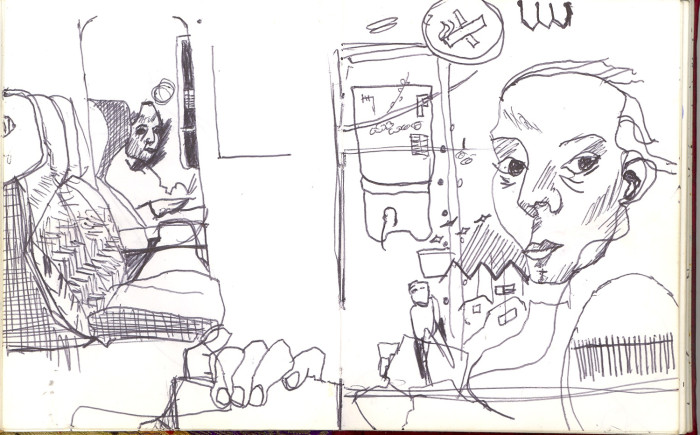
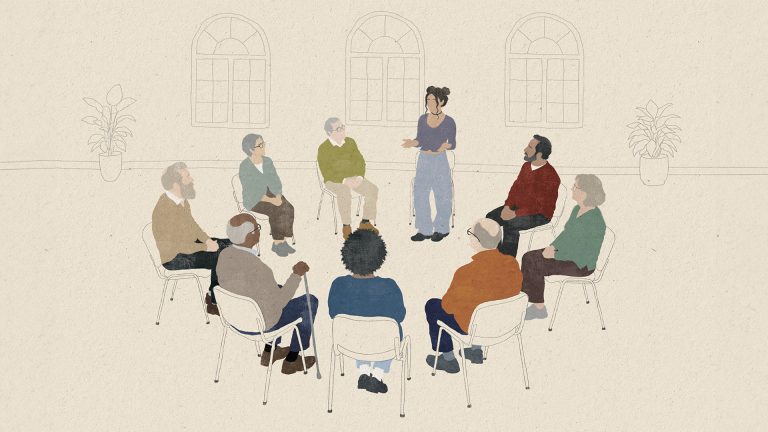
Illustration: Tessa Gleeson
My father was a painter of souls. That’s what he told me. I put it in my book at school, where it said ‘what does your daddy do for a job?’. He paints long faces, I wrote.
Elongated, he insisted when he saw my book.
It made no difference.
The souls were thin, unsmiling. Sometimes I dreamt they were in the kitchen at night. Their wax white skin gleaming in the light from the open fridge.
‘Much too imagination’, my mother said. ‘Of course they not steal my food; is always there where I put it.’
I wondered then why dad didn’t nourish the souls in his work, make them plump, put some colour in their cheeks. Would that make them happier? But I never asked him to. It seemed rude.
But really I suppose I always knew, deep down, that the souls came to him, already formed, and haunted his pictures. His paintings were their window on to our world.
Eventually it occurred to me that if they really were in the kitchen at night perhaps they didn’t eat because they couldn’t eat, like a ghost can’t eat.
They were just curious about mama’s food. People always said it looked amazing. The tray of souvlaki, rainbow scaled fish on a plate, aubergines, marinated white beans, yellow butter, a pot of jam, chocolate mousse.
They watched the food like I watched television. Perhaps they’d like to do that better but the set was always unplugged at night. ‘We have to keep the electric gremlins at bay while we sleep’, dad would say if I complained that all the plugs were out, even the kettle and the toaster.
The fridge was the only thing that hummed at night. Here was the answer of course – the souls were attracted to the power source.
I slept more soundly once I realised this, having unplugged my bedside lamp. I was fearful of electric gremlins of course but more disturbed by the way the souls crowded together around the fridge. I didn’t want to dream that they were crowding around my bed like that.
Congregating, my father said.
It made no difference.
Painting souls wasn’t my father’s only job. He worked shifts in a factory that made paint. The chemicals affected his kidneys. When I came back from travelling through Asia in my gap year, he was a grey old man and his face had grown long.
I gave no thought to the souls for he hadn’t painted in a while. It wasn’t until we stood at his graveside saying our prayers that I noticed them. Congregated, behind the family, peering, as one, over our shoulders and down into the hole.
I was strangely comforted. They didn’t attend the wake which I thought was a shame, for mama’s food was at a peak of irresistible deliciousness.
Platters of bulging dolmades, pottery bowls of olives with peppers and cheese, pineapple, grapes and kiwi, cream puffs, strawberry tart, a variety of sinfully sweet baklava. We ate and drank, laughed and cried into the night, and then I slept without dreaming.
When I started university a few months later I began to doodle absentmindedly in lectures. The faces were long, poorly drawn and in biro at first. I hadn’t inherited my dad’s artful hand.
For respite from the rigours of physics, I experimented with different mediums. Charcoal and crayons, watercolours, and even, ambitiously, a venture into clay. But pencils work the best for me, lots of shading and smudges of colour.
The souls are looking better now than in my early efforts.
But I don’t want them in my kitchen at night; one day I might meet a girl who cooks like my mother and there’ll be more than cold pizza, cans of beer and out of date eggs in the fridge.
So we do things differently. Electric gremlins were a myth of childhood, so I leave the television on at night. They never smile but the garish light from the flashing screen bathes their faces in a healthy glow.
Fruitcake, my mother offers.
It makes no difference.