Sukkot: In solidarity
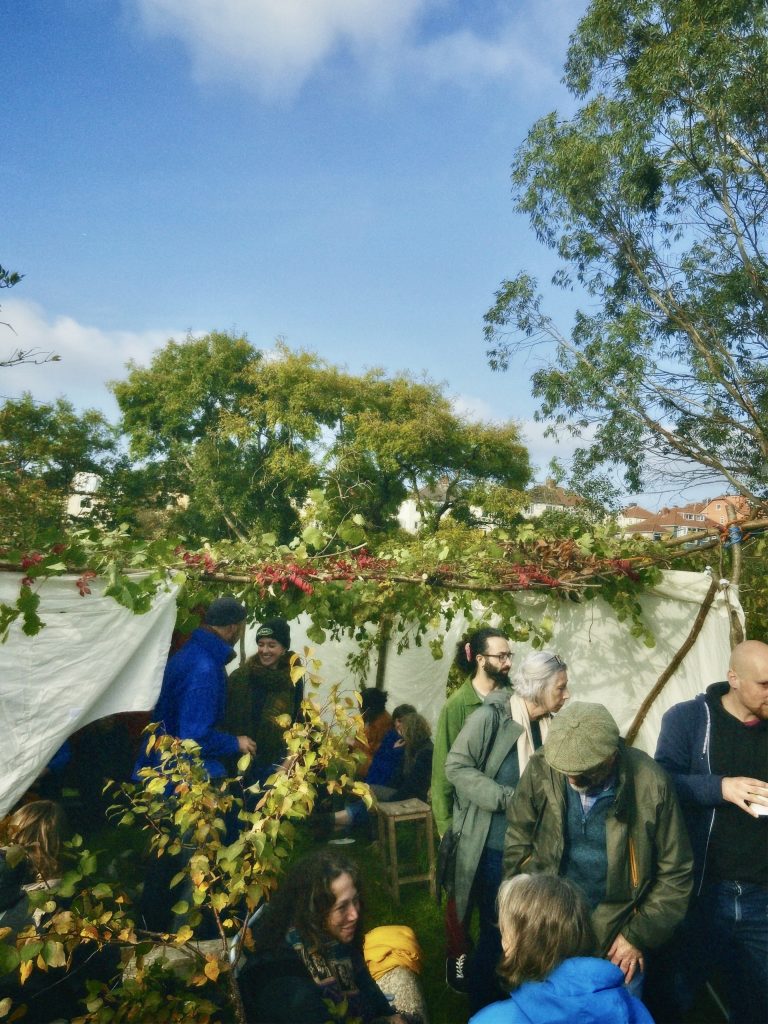
The harvest festival of Sukkot is celebrated in the seventh month of the Jewish calendar. It commemorates the 40 days the Israelites wandered in the desert after their exodus from Egypt.
Normally, it’s a joyous occasion. But on an autumn day in east Bristol, the mood is more sombre.
“We deliberately chose not to do too many decorations,” says Bess, a member of activist group Na’amod. “[We wanted] to show solidarity with the people in Gaza, and match the tone of the gathering.”
I meet Bess in Haven Community Garden, near Greenbank Cemetery. Orange rays of afternoon sunlight are filtering through the garden’s leaves. She’s standing with several others outside a hut at the end of a short stone path.
Na’amod describe themselves as “a growing movement of Jews in the UK seeking to end [their] community’s support for apartheid and occupation”.
Through various campaigns, including Racism Isn’t Kosher and The Elephant in the Room, Na’amod have been staunch advocates for Palestinian liberation since 2019, when the group was founded. Over the past two years, they’ve been a vocal presence at demonstrations for Palestine.
I chat to Bess for a few moments more. She explains how they built their sukkah (a shelter built from organic materials that is central to the festival) with a particular message in mind.
Just two days after Israel’s announcement of a supposed ‘ceasefire’, the group had gathered to remember the devastation in Gaza.
Inside the Sukkah
After brief introductions, everyone goes inside the sukkah to take part in the ritual.
First, you take the lulav (a bundle of branches that includes a palm branch, a myrtle branch and willow branch) and an etrog (a small citron fruit) and shake them three times in every direction.
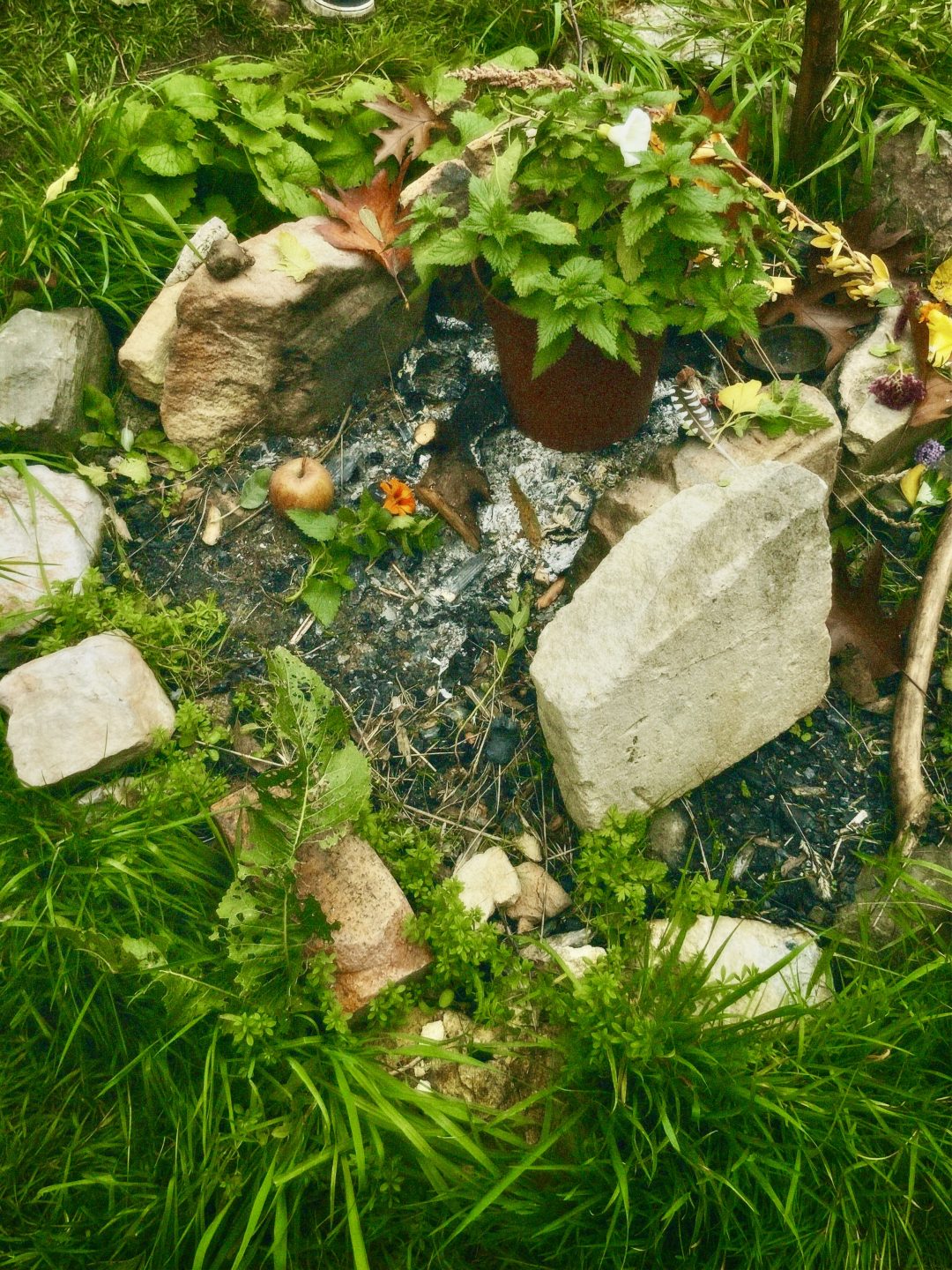
Then, you place an object that you have collected in the centre of the sukkah, in a circle of rocks, to mark a step taken forward.
Once I had placed my lavender branch (kindly given to me by the woman next to me, since I forgot to find my own) with the other objects, I took a few minutes to speak with some of the people in attendance.
Happily chatting away by a whistling kettle on a campstove are Rosa* and Nel*. They hadn’t met before, but stuck together for most of the day. I ask them about their initial reaction to the recent news of a ceasefire.
“Cynical,” says Nel before I even finish asking my question. Rosa echoes her sentiment. “Exactly,” she agrees. “I’ve heard it all before.”
Pain and anxiety
The events in Gaza over the past two years have deeply impacted them. They, like others I speak to, feel a strong affinity for Palestine. But as much of the media has created a dangerous conflation between Jewish and Israeli identity, being open about their views with others in their community can be challenging.
Nel has family in Israel. She admits to feeling that she has to keep her opinions on the war in Gaza private. It has become a source of “a lot of pain… and a lot of anxiety.”
Rosa has visited both Gaza and Israel. Raised by parents who actively rejected Israeli propaganda, she feels a responsibility to speak out.
She recounts her experience of going to Israel for the first time and spending time on a kibbutz. “My parents were telling me this was my homeland, but as soon as I got off the plane I was like, ‘this is not my homeland, this is so alien to me!’” she says.
The second time she went, she worked in a Palestinian community and took part in
initiatives to create dialogue between Palestinians and Jewish Israelis. “Ever since then, I’ve just felt what’s going on is totally wrong,” she continues.
Around the fire pit
Twilight is on the horizon. The group gathers in a circle around a fire pit.
The organisers expertly steer the discussion, encouraging people to share reflections and experiences of standing in solidarity with Palestinians.
One person starts: at their workplace, they and their colleagues are collectively opposing the purchase of all-new HP laptops, a brand the BDS movement has called to boycott.
Another person shares a personal dilemma: a young cousin is about to be conscripted into the Israeli army, something which makes him deeply uncomfortable.
“If I can just shine one beam of light, one glimmer of truth…” he begins, eyes on the ground. He trails off, disquieted by what he clearly views as a heavy responsibility.
I stand outside the circle, looking in. The message I’m hearing is stark – without engaging in meaningful conversations, we opt out of a chance at unity.
I’d come to the event to hear some new perspectives. I’ve always been aware and appreciative of Jewish communities who challenge the status quo and oppose Israeli apartheid in Palestine through their activism, protest and campaigns.
I was ignorant, however, of the isolation some of them feel in doing so. All it takes is one conversation to understand how much some people are sacrificing, from family ties to their right to a place of worship, in the name of solidarity.
Events like these, which are free of judgement, offer a rare space for nuanced conversations and the sharing of collective joy and pain.
*Names have been changed.
Independent. Investigative. Indispensable.
Investigative journalism strengthens democracy – it’s a necessity, not a luxury.
The Cable is Bristol’s independent, investigative newsroom. Owned and steered by more than 2,600 members, we produce award-winning journalism that digs deep into what’s happening in Bristol.
We are on a mission to become sustainable, and to do that we need more members. Will you help us get there?
Join the Cable today