The workers who tried to make ‘swords into ploughshares’

In the early 1970s, aerospace and defence were pillars of British industry. Jobs were secure and well paid, union strength was at its peak and workers could envision a stable future.
But as the decade wore on, those certainties began to crumble as rising global competition, internal restructuring and shifting geopolitics threatened once-stable jobs.
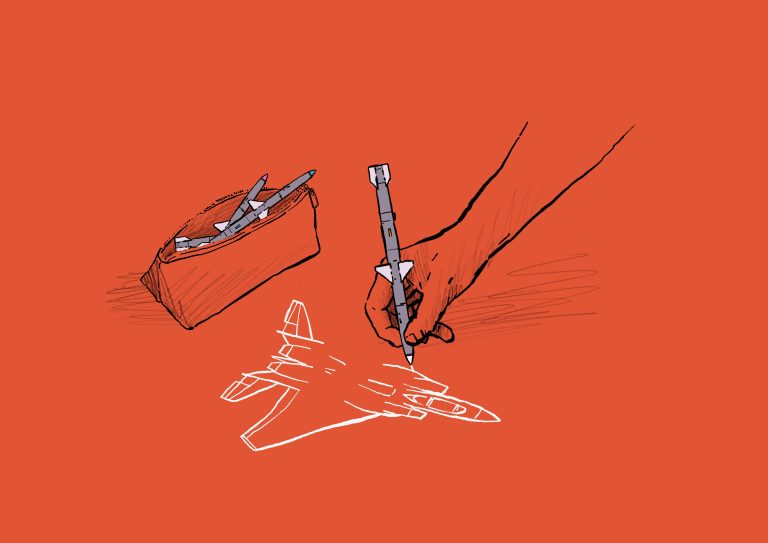
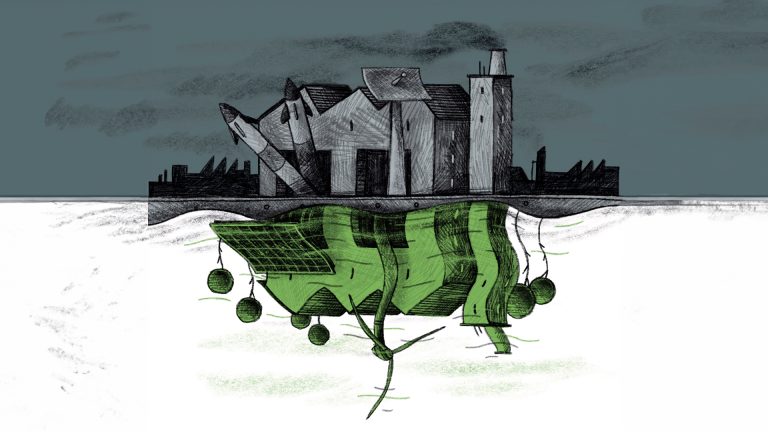
In this context, a unique idea began to blossom. Workers at Lucas Aerospace, a major arms company based in the West Midlands, unveiled a radical plan to save their jobs. Instead of weapons, they proposed manufacturing socially useful goods using their existing skills — renewable energy systems, medical equipment, and improved public transport.
Published in 1976, this idea became known as the Lucas Plan – a pioneering experiment in workplace democracy that also offered a critique of militarism. Some saw parallels with the Book of Isaiah’s plea to beat “swords into ploughshares”.
Though it ultimately failed, its ideals reverberated.
One of those who felt their impact was Andy Danford, a worker at British Aerospace in Filton. During the turbulent 1980s, as Thatcher’s government moved to curb union power and defence jobs came under pressure, Danford and his colleagues attempted to develop a similar alternative.
“The 1980s were so challenging for trade unionism,” he says. “I’m very proud of some of the things we achieved.”
Danford spent decades at British Aerospace before redundancy led him towards academia in the 1990s. Over those years he witnessed profound economic change and fierce industrial struggle.
Today, the geopolitical landscape looks different but no less volatile. In the context of the genocide in Gaza, campaigners in Bristol are increasingly scrutinising the role of arms companies in the local economy.
I sit down with Andy to ask, could these factories be converted? And what might today’s workers learn from the radical ambitions of the Lucas Plan?
Early days in Swindon and Bristol
Danford’s career began in his teens at Vickers-Armstrongs, a 4,000-strong company in Swindon, after his family moved from east London. He took up an engineering apprenticeship in electronics.
Around the same time, his political awareness grew. He branched out from his love of R&B to immerse himself in the protest music of Bob Dylan.
When the Swindon plant closed, Danford moved to Bristol and joined the British Aircraft Corporation, the forerunner to British Aerospace (BAe), which later became BAE Systems in 1999. It remains the largest manufacturer in the UK and one of the largest companies producing arms in the world.
Management emphasised that we were producing stuff for the UK military and the defence of the country. And that’s how most people saw it
In the early 1970s, the company was recruiting heavily, offering well-paid, secure employment. It operated both civilian and military divisions. Danford worked in the latter, initially as a quality control inspector in the guided weapons division before later moving into a white-collar role as a standards engineer.
“Workers seeking secure engineering jobs had little choice but to enter the industry,” he notes. At the time, he had no strong objection to producing arms. Management framed the work as contributing to national defence — and most employees accepted that logic.
The workplace culture was marked by strong unions and a sense of camaraderie, though the workforce was overwhelmingly white and male, he tells me. Compared with car manufacturing, aerospace offered more autonomy and less regimented production. “There were no assembly lines. The workplace was far more relaxed. It was highly skilled, high paid,” he recalls.
Workers produced components rather than complete systems. Complex supply chains and assembly systems meant they rarely saw the final product, but the military applications of their designs were clear.
“Management emphasised that we were producing stuff for the UK military and the defence of the country. And that’s how most people saw it,” says Danford.
“Unless you were a pacifist, most people wouldn’t have a problem with that. Including myself.” But as Danford became more involved in union and peace activism, his perspective shifted — particularly regarding Britain’s nuclear weapons programme.
Economic and political changes
By the late 1970s, the climate had hardened. “Managements were introducing far more discipline and regimentation on the shop floor. Wage negotiations became more difficult,” says Danford.
When Margaret Thatcher’s Conservatives took power in 1979, this crackdown on union militancy intensified.
Structural changes were also underway. The longstanding “cost-plus” pricing model — under which defence contractors calculated production costs and added an agreed profit margin — gave way to competitive tendering. British firms now had to compete internationally, squeezing margins and increasing insecurity.
The moment drew him further into political organising. He joined the Campaign for Nuclear Disarmament in 1981, during escalating Cold War tensions. He joined the Labour party the year after, and was deeply immersed in union activism.
During the eighties, as threats to previously secure jobs such as Danford’s began to grow, unions at BAe began to look towards a worker-led economic plan that had emerged in the seventies, where workers at Lucas Aerospace, which was based in the West Midlands, put forward a radical and far-reaching plan to transform the arms industry and produce technology for social good.
Alongside the economic changes, there were “changes in the global political environment, which politicians argued required less defence funding,” he says. “Defence companies were squeezed, and so companies such as British Aerospace and Rolls-Royce and others, and Lucas earlier, started rationalising their workforces.”
In 1988, management of the British Aerospace plant where Danford worked announced there would be mass redundancies. In response, the unions mobilised to formulate a plan. “The committees of the various unions came together into what was called a Joint Union Committee… and we decided we had to develop some alternative plan to the idea of mass redundancy. And that comprised a number of components. The easiest one was the mass transfer of workers from guided weapons to civil aircraft, up the road producing Airbus.”
The plan drew heavily on the Lucas Plan from a decade earlier. “Initially we surveyed our workforces, drawing up a list of skills that existed across different departments in the offices and on the shop floor,” Danford explains. “Then we surveyed members, requesting their ideas on alternative non-military products that could be manufactured at the plant using the technologies and skills that the workers had.”
The plan did gain local support. “We developed a plan for lobbying. We got the support of Bristol City Council. They funded reporting to our plans called ‘Bristol Aerospace in Bristol: What future?’ That was carried out by academics at University of Bristol, funded by Bristol City Council. It goes into the structure of the industry, an analysis of our alternatives. And as it says, no other recent proposals from a British defense plan have included such technologically sophisticated ideas for alternative products.”
Later years
Ultimately, the plan at the British Aerospace plant failed. Danford was one of 1100 workers that were made redundant in 1991. After losing his job, he studied sociology at the University of Bristol, completed a PhD, and became a UWE academic specialising in work and industrial relations.
Looking back, he remains proud of what was attempted — but doubts a similar initiative could take root today.
At last year’s TUC conference, Unite, GMB and Prospect — unions representing aerospace and arms workers—voted against a “wages not weapons” motion calling for reduced defence expenditure.
This reflects constant shifts in the TUC’s stance on UK defence. In 2017 it advocated ‘arms diversification,’ encouraging defence companies to branch into non-military and civilian products. But by 2022 it was supporting increased spending in the sector.
More generally, trade union power has declined. “The essence of trade unionism is workplace democracy and debate, whether through mass meetings or branch meetings,” he said. “Today, there is far less of that, and much less opportunity for workers to collectively discuss issues like those in the defence sector.”
Economic precarity also shapes workers’ choices: “The UK labour market is dominated by low-skill, low-pay jobs in the service sector, in care homes, in call centres, in warehouses, etc. If you’re a young person faced with a choice between that type of work and well-paid, skilled, secure work in aerospace, it’s pretty obvious what most will choose.”
Even so, Danford retains a cautious optimism. “Young people today are more aware of what needs to be done, and I just hope that eventually sparks radical political change.”
Andy Danford is the author of ‘Conflict and Struggle in the Arms Industry: A Memoir of a Bristol Trade Union Activist’, published by Bristol Radical History Group.
Independent. Investigative. Indispensable.
Investigative journalism strengthens democracy – it’s a necessity, not a luxury.
The Cable is Bristol’s independent, investigative newsroom. Owned and steered by more than 2,600 members, we produce award-winning journalism that digs deep into what’s happening in Bristol.
We are on a mission to become sustainable, and to do that we need more members. Will you help us get there?
Join the Cable today