Bristol’s Sikh community: A family history
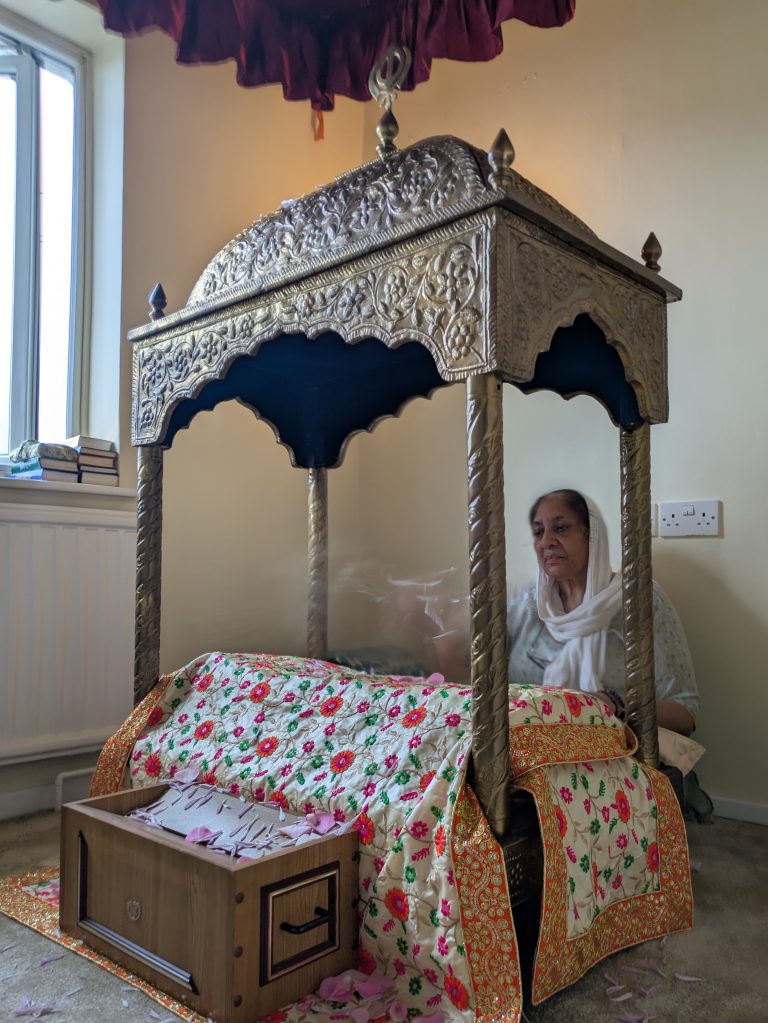

At 4am each morning before leaving for work, Jaskarn Singh washes, ties his dastār and goes to awaken the Guru Granth Sahib. He carefully folds back its cover and recites the Ardas prayer, which ends with the words: ‘Wahe Guru, Wahe Guru.’
Singh then opens the scripture at random, and reads the hymn on the left-hand page, which provides divine guidance for the day ahead.
“Whatever question is in your heart, you will find the answer in there,” his wife, Hardip Kaur, tells me later. In the evening, she performs the ritual in reverse — closing the scripture, folding the cloth and placing it in its resting place for the night.
The Guru Granth Sahib is regarded not simply as a book but as a living Guru, treated with the utmost reverence. This one holds particular significance: it was the first in Bristol.
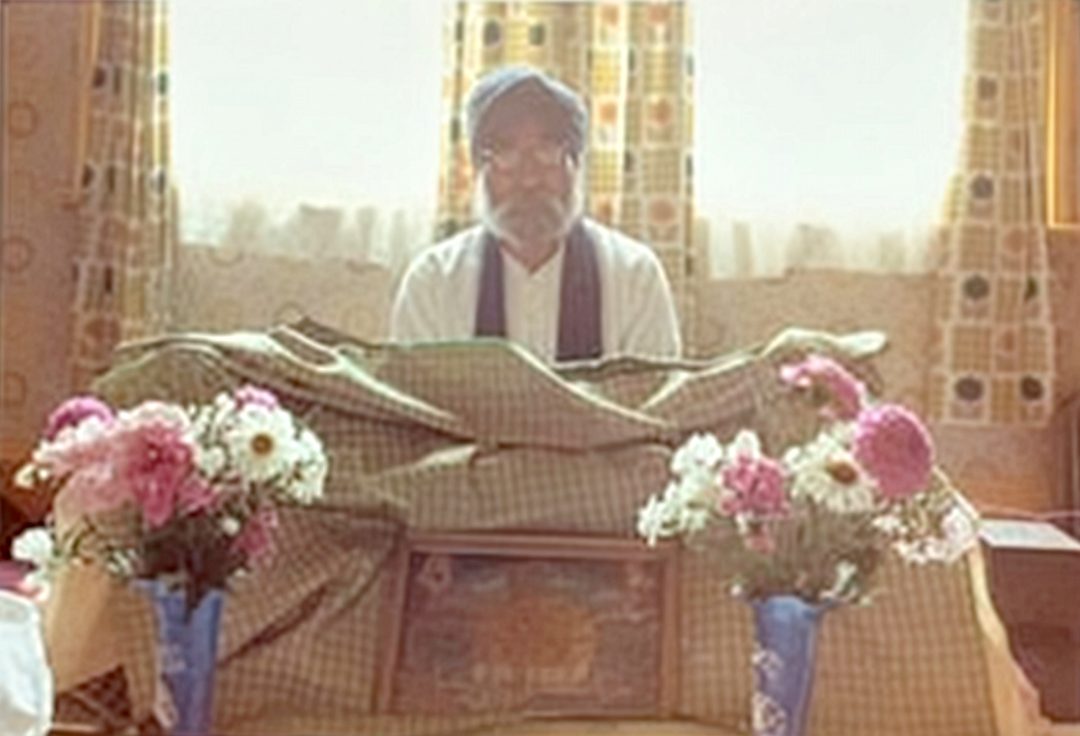
Hardip’s father, Mehr Singh, and his wife, Shanti Kaur, arrived in St Pauls in the 1950s, among the few Asian families living in the area at the time. In 1961, Mehr Singh brought the Guru Granth Sahib from Amritsar, Punjab, to Devon Road — the same year Hardip was born.
With the Guru Granth Sahib in his home, families gathered for prayers and ceremonies, laying the foundations of the city’s Sikh institutions.
I know this history through their son, Deepraj “Deeps” Singh, who I’ve known since school. Boundlessly kind, hilariously funny and now a dancer, movement artist and community practitioner. Through him I met his sister, Amanjeet Kaur — all warmth, wisdom and big-sister energy.
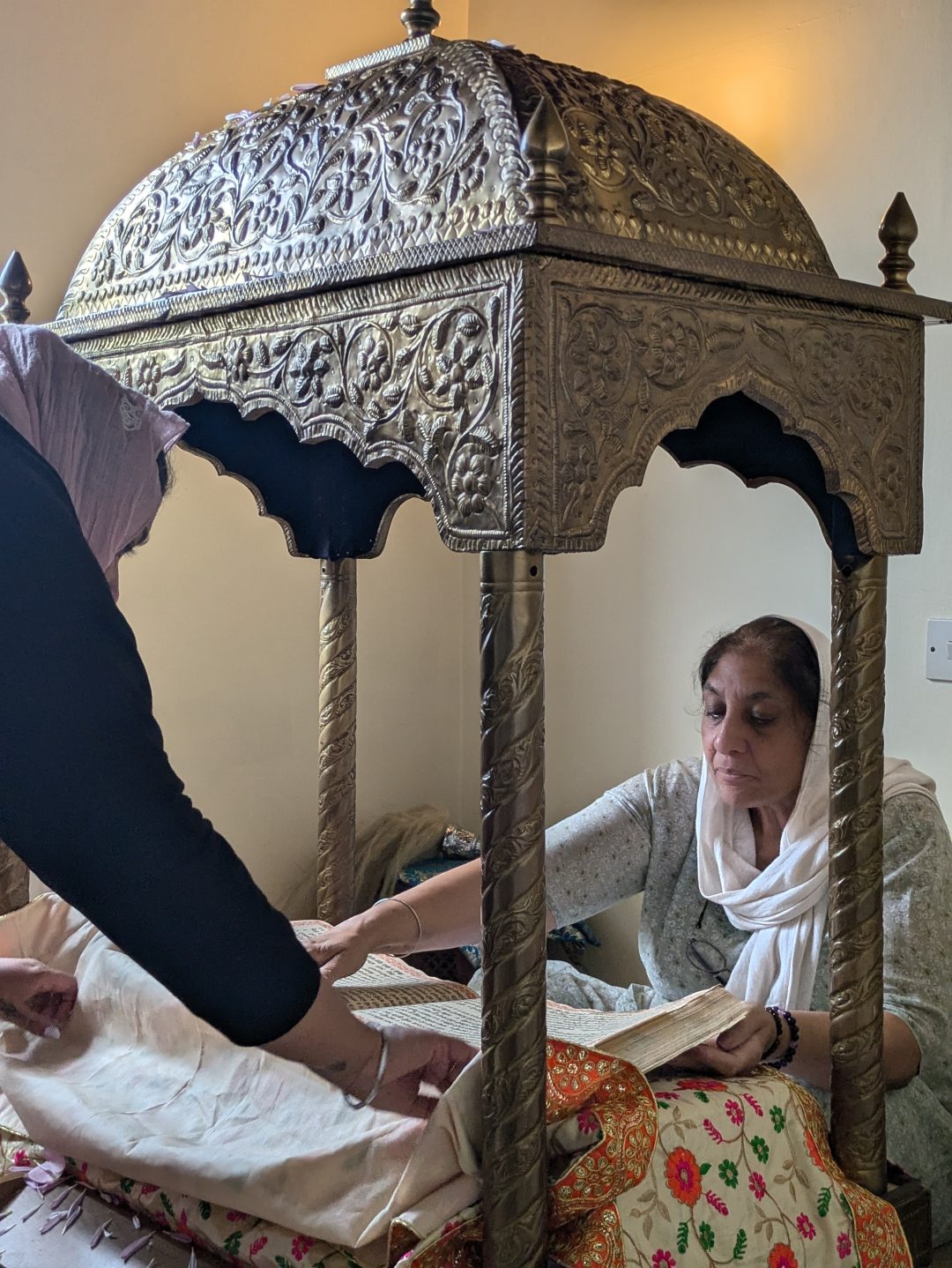
In 2022, Deeps and Aman invited me to a ceremony to bless their new flat in St Pauls, a stone’s throw from where their grandfather had first settled decades earlier. The family cooked langar for everyone. The whole building was invited. The Guru Granth Sahib, the same one their grandfather brought from Amritsar, was carried in and prayers were recited.
Later, we walked through St Pauls, dropping food at the Salvation Army and handing it out to people we met in the street. That is how I’ve come to know this family: through their hospitality, their community service, their acts of social justice.
It’s why I’m here now, interviewing them about faith, because they don’t just believe Sikhism – they embody it.
The beginnings of sangat in Bristol
“You’ll have some daal?” says Aunty (This is how I will refer to Mrs Kaur, out of respect, as per Indian custom). I’m starving and gratefully accept. Aman and Deeps are here too: we eat together — steaming rice, daal, achaar, rotis brushed with ghee. It’s delicious.
Blissfully full, we drift into the living room and Aunty switches on a small electric heater. “Heating in June — you know you’re in a Panjabi household now!” Aman jokes. Above the doorway, another marker: nail marks where a chanani (canopy) is hung above the Guru Granth Sahib to offer shade.
Between cups of chai and tasty snacks, four hours pass. Three decades, five generations, stories of joy and grief, ritual and family, all orbiting one constant presence: the Guru Granth Sahib.
“My parents loved bringing people together,” says Aunty. She grew up with other Sikh families coming round the house, gathering nightly, singing songs, the harmonium in constant use, prayer, cooking and nattering. “I just remember the raunak,” she says — a word with no direct translation, meaning something like liveliness, bustle, and the joy of a full house.
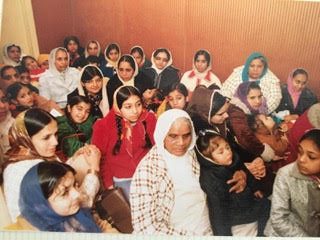
This was how Bristol’s early sangat (Sikh community) began: gathering in one another’s homes and bringing the Guru Granth Sahib to them.
In time, they were able to establish the city’s first gurdwara, the Sikh place of worship, at number eight St Mark’s Road. “The uncles and Dad, the trustees, were the first to organise it,” Aunty says. Each contributed £500, and for a few thousand pounds they secured the building.
As the community grew, they moved to Fishponds Road. Others followed in Chelsea Road, Church Road, and Summerhill Road.
“But the sangat is fractured now,” Aunty says. “There’s politics in the gurdwaras — divisions along caste lines. And I think it’s disgusting because being against the caste system is what our religion was founded on.”
“We’re lucky to have the Guru Granth Sahib,” Aman adds. “You create the sangat for yourself. You bring it with you, and you use it in the way our grandfather intended. We go back to that all the time.”
With the presence of the holy scripture, rituals can take place here. “Our cousin Asha wanted a small ceremony, so the family hosted the whole wedding in this house! Weddings are so much fun. They’re really joyful.” says Aman.
Sikh weddings stretch over several days — prayers and readings from the Guru Granth Sahib, singing, dancing, and an abundance of food. During the marriage, the couple circles the Guru Granth Sahib four times, each turn marked by a hymn and symbolising a stage of spiritual commitment.
Other occasions have been more sombre. “My nephew lost his little girl. She was four days old,” Aunty tells me. “Usually, we take the body to the gurdwara, then to the crematorium. But this time it was too private. So we brought the Guru Granth Sahib, and performed the ceremony at home.”
Masi’s passing
Dilip Kaur, Deepraj and Aman’s masi (aunty) — comes up again and again in conversation. A true force of nature. “Masi climbed up on the speaker to dance once,” Aman laughs. “She loved being the centre of attention.”
She never missed Deepraj’s dance performances. At one show, she looked around, and before even saying hello to him said: “This place is full of posh white cunts, isn’t it?”
Last year, in May, she became seriously ill. By July, she was gone. But those final days, Aman says, were among the most powerful of her life.
Family and friends packed into the home in Fishponds. They sat together day and night, some slept in camping chairs in the garden, or in their cars outside.
Masi lay on the sofa — surrounded by her loved ones, and the smell of cooking. Others told jokes, stories and read prayers from the Guru Granth Sahib.
At the end, the same prayers that are whispered into a baby’s ear at birth were spoken again — accompanying her out of life.
Chardi Kala
I’m speaking to the family in the aftermath of the murder in Southampton of Henry Nowak, who bled to death while handcuffed by the police.
The man found guilty of his murder, Vickrum Digwa, is a Sikh man. His brother falsely claimed he’d been racially abused.
Nowak’s family urged the public not to let the incident fuel division or hatred. Despite that, far-right figures have sought to weaponise the moment, fuelling riots that erupted following Digwa’s sentencing.
Sikh and other migrant communities are now reporting rising hate incidents, and I ask how it makes them feel.
Deepraj adds: “Our religion doesn’t teach us to be afraid. Bravery is a big part of being Sikh, for yourself and others.
“There’s a concept in Sikhi: Chardi Kala, it means eternal optimism,” he adds. “It’s what Guru’s would shout running into battle — Chardi Kala!”
Nanak Naam Chardi Kala is a line in the Ardas prayer, recited when opening and closing the Guru Granth Sahib. It means: Through the remembrance of God’s name (Naam), may our spirits always remain high and positive.
“Faith in people is at the heart of Sikhi,” says Deepraj. “By being of service to your community… you find faith in people. That trust gives you hope.”
Independent. Investigative. Indispensable.
Investigative journalism strengthens democracy – it’s a necessity, not a luxury.
The Cable is Bristol’s independent, investigative newsroom. Owned and steered by more than 2,600 members, we produce award-winning journalism that digs deep into what’s happening in Bristol.
We are on a mission to become sustainable, and to do that we need more members. Will you help us get there?
Join the Cable today