‘Violence is worse than loving your enemy’
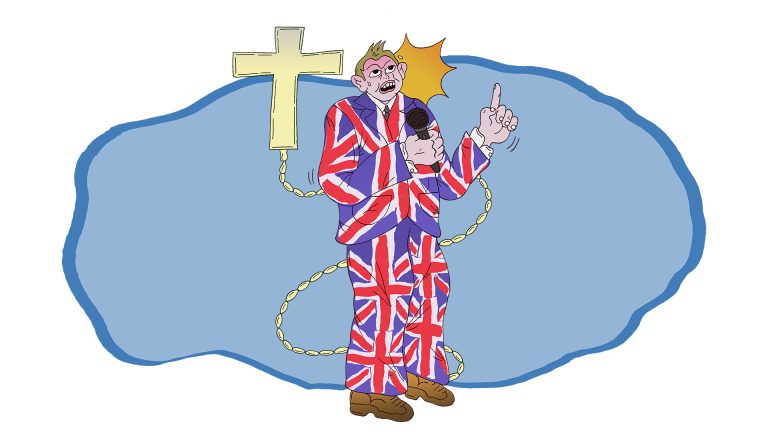

It’s early May. A 17-year-old sits behind a folding table in the middle of the University of Bristol campus, inviting students to debate him while a small crowd gathers. The atmosphere is tense.
This is Gregory Moffitt, better known online as “Young Bob”, a right-wing YouTuber and self-described follower of Eastern Orthodox Christianity. He’s built a following in the outrage economy, staging confrontational debates on migration, abortion and LGBT+ rights.
Whenever anybody gets angry or aggressive or upset, it’s coming from an unmet need in that person.
Rosa Hunt, Cardiff Baptist College
“There was one woman debating him quite passionately. He had a banner on his desk saying something like ‘abortion should be completely banned’,” Lenny Osler, a student at the University of Bristol, told The Cable.
“Mostly he talked about migration,” Osler added. “He describes himself as a ‘remigration activist’ which, from what I heard, means he wants to see all ethnic minorities out of the country.”
It’s not Moffitt’s first trip to Bristol — he’s shown up at Bristol Patriots demos on more than one occasion. He’s part of a growing ecosystem of online influencers blending far-right politics with Christian language.
From wooden crosses and crusader costumes at demos to politicians invoking the defence of “Christian civilisation”, Christian symbols and language have become more prominent on the British far right in recent years. This movement, more established in the US and other parts of the world, is often referred to as Christian nationalism.
At its core, it argues that national identity and Christian identity are inseparable — to be part of the nation is to be Christian. Its hardline politics also views things like migration, LGBT+ rights and abortion as existential threats to this identity.
The Cable spoke to theologians, academics and Christian leaders to explore its rise, its appeal to some young people, and the challenges of confronting it.
Christian patrols and crusaders
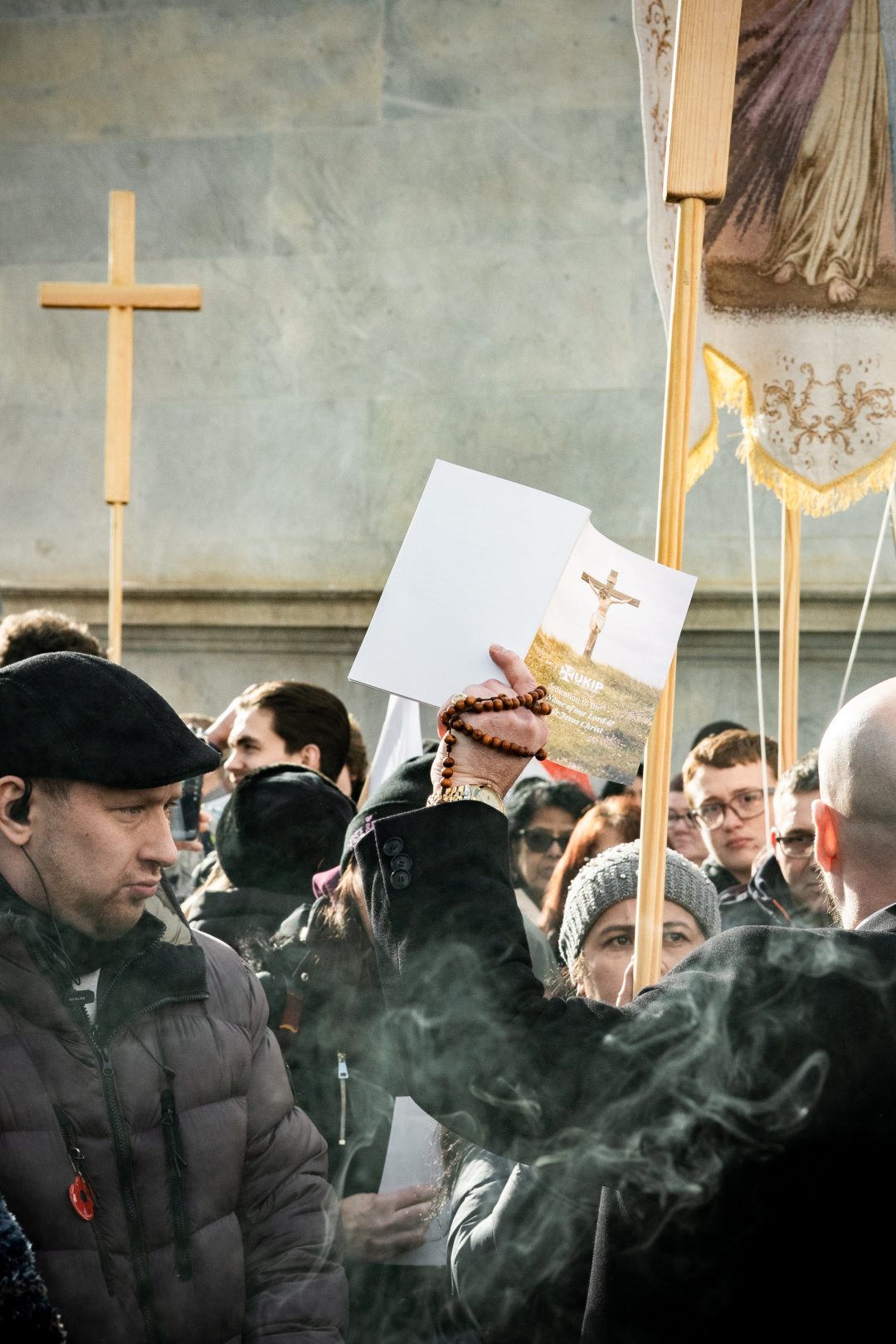
Battles waged by Christian nationalists are not restricted to the online realm. At last May’s Unite the Kingdom rally in London, organised by Stephen Yaxley-Lennon, better known as Tommy Robinson, marchers waved banners reading “Jesus is King” and dressed as crusaders and medieval knights, while decrying immigration, Islam and supposed “replacement” by non-white people.
“It’s not just Christians being patriotic, it is the assumption that to be British is to be Christian,” says Ed Kaneen, Principal of Cardiff Baptist College. “It’s essentially that alliance between a particular cultural expression and Christianity.”
Christian nationalism is not a new idea. Far-right organisation Britain First, founded in 2011 by former British National Party activists Paul Golding and Jim Dowson, describes Britain as a “Christian nation” and uses appeals to Christianity to justify its virulently Islamophobic politics.
The group has staged so-called “Christian patrols”, which have barged into mosques, and carried wooden crosses at demonstrations, including in Bristol. It often frames opposition to migration and Islam in terms of “defending Christendom.”
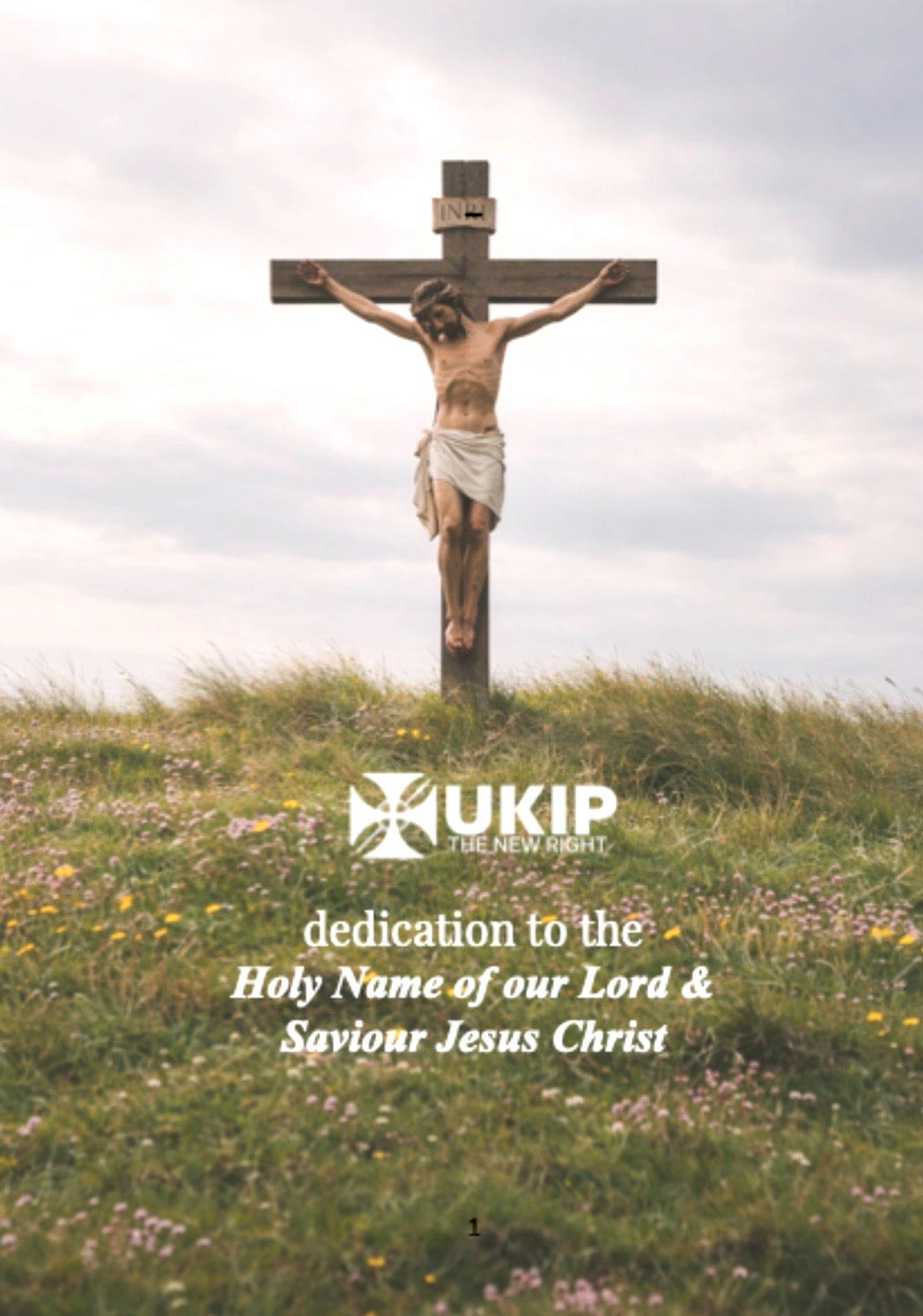
More recently, UKIP, under leader Nick Tenconi, has drawn attention for its use of Christian symbolism: as part of its 2026 rebrand, the party unveiled a black cross-like emblem alongside the slogan “The New Right”. The logo has been likened to an iron cross, a symbol used by the German military under the Nazis.
For Anthony Ince, Senior Lecturer in Human Geography at Cardiff University, this imagery serves a strategic purpose. “It’s part of how [the far right] reinvented themselves from your classical fascist biological racism, to say ‘this is a civilisational struggle’,” he says. “Obviously it’s deeply racialised.”
Influencers, young people and the church
Roscoe Crawley leads Crossnet Church, a network encouraging people to explore Christianity, including among university students in Bristol. He also works with the Fusion Movement, an evangelical organisation that connects students with local churches.
“A lot of young people are very open to spirituality at the moment,” he says. “We’ve handed out about 1500 Bibles in the last 18 months to students who want to read it. That surprised us quite a lot, but it definitely speaks to that openness that we’re seeing.”
Data from the Fusion Movement suggests 49 per cent of non-religious university students would be interested in reading the Bible, while 75 per cent would be willing to go to church if invited by a friend.
But Crawley says that openness is now shaped by online political culture as much as personal faith. He points to moments when high-profile influencers have driven spikes in church attendance. The most prominent of these was Charlie Kirk.
“After Charlie Kirk was shot, we noticed a real uptick in students coming to church,” he says. “He said he was a Christian, and he was pushing forward a position on Christianity that was mixed with politics and had very strong views in certain areas.”
Kirk, head of conservative organisation Turning Point USA and a prominent supporter of Donald Trump, was known for hardline positions on abortion, LGBT+ rights, race and Islam. He was shot and killed in an apparent assassination during a speaking event in Utah in September 2025.
Crawley also says some young people are arriving with “manosphere-adjacent” ideas, particularly around gender. This overlap between the manosphere and the Christian right is becoming more pronounced online. He says the response to this has to start with dialogue.
“You’ve got to meet people where they’re at,” he says. “The best place to start is probably looking at the Bible… I don’t think the Bible pushes that idea forward. So we actually read it together and see what we think, and go on that journey.”
Purpose, meaning and identity
For Rosa Hunt, who works alongside Kaneen at Cardiff Baptist College, the appeal of Christian nationalist narratives is rooted less in theology than in identity.
“They feel they don’t belong, don’t have a sense of identity, don’t really know who they are anymore,” she says of people drawn to the movement. “It’s a very attractive narrative to say: you’ve been exploited, you’ve been abused, other people are coming in, taking what’s rightfully yours.”
Similarly for Ince, making sense of the pull of Christian nationalism starts with the understanding that it’s meeting a need for belonging among its followers.
“In a world where our lives are so complex, confusing, and fragmented, somebody like your pastor comes along and says, ‘I’ll show you the meaning’” he says. “If that aligns with your political ideas anyway, then that deepens a sense of community, it gives you a sense of belonging.”
Compassion over confrontation
That leaves a difficult question: how do you respond to beliefs that feel meaningful to those who hold them, but are linked to hateful ideas and far-right politics that are harmful to others?
Hunt and Kaneen have produced a series of videos on how churches might engage with the far right, drawing on the work of psychologist Marshall Rosenberg and his model of non-violent communication. It’s an approach based on dialogue rather than confrontation.
“The idea behind it is that whenever anybody gets angry or aggressive or upset, it’s coming from an unmet need in that person,” Hunt says. Identifying this need is the first step in engaging in dialogue.
Back at the University of Bristol campus, that tension plays out in real time. Some students respond to Moffitt with anger, while others choose to engage directly.
“The Christian Union embraced the format of debating him one on one,” says Lenny Osler, with some Christian students choosing to challenge Moffitt directly on his beliefs.
“There was a sense of—you’re misrepresenting the religion by advocating all of these problematic views in the name of some sort of Christian ideology.”
While this battle within Christianity continues, Hunt advocates for a compassionate approach. She adds a final thought: “Hatred and violence are just so much worse than the pain of loving and forgiving your enemy.”
Independent. Investigative. Indispensable.
Investigative journalism strengthens democracy – it’s a necessity, not a luxury.
The Cable is Bristol’s independent, investigative newsroom. Owned and steered by more than 2,600 members, we produce award-winning journalism that digs deep into what’s happening in Bristol.
We are on a mission to become sustainable, and to do that we need more members. Will you help us get there?
Join the Cable today



Report a comment. Comments are moderated according to our Comment Policy.
It is sad that so many deluded people are using their distorted views of Christianity and other religions to spread racial hatred and misogyny. Wake up! Smell the coffee! There is no bearded white man floating in the sky. It’s all fairy tales spread around by those who wish to control your thoughts. Do you think farage or stephen yaxley lennon and their ilk actaully care about ordinary people. They’re in it for the money. Simples!