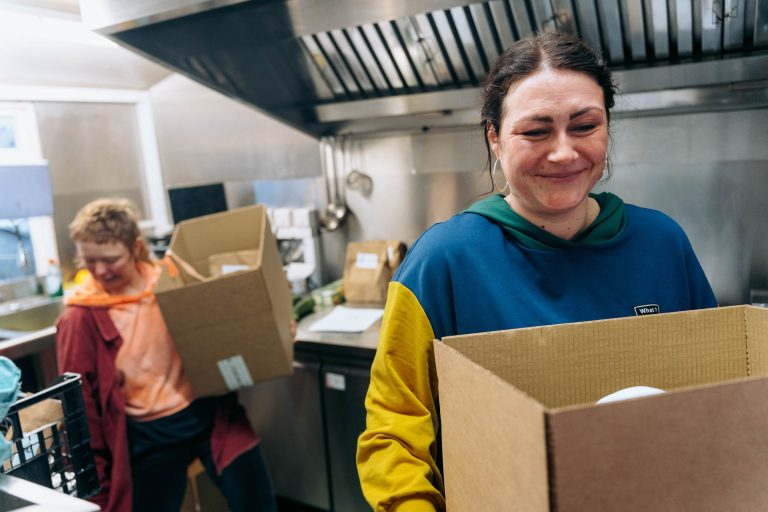
‘People don’t get a say in the food system’: How Generation Soil is transforming Bristol’s food waste
Photos: Stefano Ferrarin

“Children don’t know that chicken nuggets come from chickens,” says Alex Montgomery, recalling a school workshop he gave where he became the bearer of bad news.

“Or what a bumblebee is. That disconnect is what stops them from caring.”
We’re standing in the market garden, a two-acre site on the edge of Roots Allotments in Leigh Woods. Volunteers have been developing the land since August last year. Alex is the director of Generation Soil, a non-profit that collects food waste from households across Bristol and turns it into compost. Alongside running talks and classes, the project is aiming to build a circular local food system.
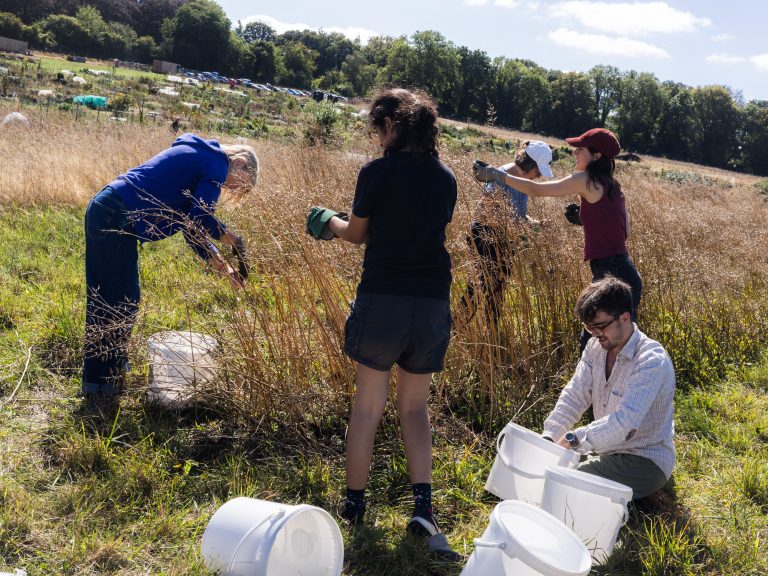
This Saturday, there are five of us – Alex and his mother Angela, myself, Lucy and Emma*. I’m here to volunteer for the afternoon and get stuck into a bit of harvesting. Along the way, I’ll learn about the challenges of reducing food waste emissions and how healthy soil benefits us all.
The herb beds, growing beds and sapling forest are part of a long-term project to transform the area into a regenerative ecosystem, explains Alex.
Between us, there’s breadth of experience. Lucy was introduced to sustainable food systems 30 years ago through her Global Futures degree. She’s hoping to take the garden’s agroforestry practices to a Buddhist centre she frequents in the Vézère Valley, in southern France. Emma, a first time volunteer, grows food at an allotment she shares with friends. For my part, I once starved a cactus.
Thankfully, it’s easy to follow along as Alex guides us around the site.
The Three Sisters
The garden, like many others across the country, was badly affected by this summer’s drought. Rows of broad bean beds are blackened and shrivelled, destroyed by successive heatwaves.
The current food system is very energy intensive and extractive. Soils are degrading because we are taking all the organic matter and giving back poison
Alex Montgomery
“These used to be a lot greener,” says Angela, showing me a photo of a bed filled with thriving borage – blue star-shaped flowers. “We used to have bees everywhere.”
Today’s task, harvesting mustardseed by hand, should have been completed weeks ago. “We’ve spent the last two or three months focused on watering and reviving everything,” Alex says. He gestures to the opposite bed, where volunteers have tried to make the most of the drought, chopping up the dead borage and using it as mulch for a bed of squash and sweetcorn.
Growing corn, squash and beans together comes from an Indigenous American agricultural practice called “the three sisters”. Living mulch – the squash climbing between the corn and beans – shades the soil, keeping the ground moist even in dry weather. A few weeks on, this bed is by far the greenest in the garden, boasting giant yellow flowers crawling with bees.
Alex is completing a PhD in health and environmental research with the UK Food Systems Centre for Doctoral Training, and is using his subject knowledge to build the garden from the ground up.
“Right now, we’re concerned with regenerating the soil,” he says. “Instead of tilling the ground, we’ll leave it. Minimising soil disturbance means microbiological fungal networks and bacteria aren’t being disturbed.” He goes on to explain that microbe-rich soil produces more nutrient-dense food, something that isn’t always possible with large-scale industrial agriculture.
“The current food system is very energy intensive and extractive,” says Alex. “Soils are degrading because we are taking all the organic matter and giving back poison.”
‘People don’t get a say in the food system’
Satisfied with our progress so far, we take a break from the harvesting, dumping our gloves off to the side. Alex puts the kettle on as we circle Angela’s tupperware, which is crammed with honey fudge, banana cupcakes and fruitcake. As we settle on the grass with our mugs, Lucy comments that it’s nice to escape the constant noise of the city. “You don’t realise how loud everything is. Even now we can hear the cars in the distance.”
Spending time in nature is linked with lower levels of stress and improved wellbeing, even in cities. Contact with soil has also been found to increase our skin microbial diversity, making our immune systems more resilient.
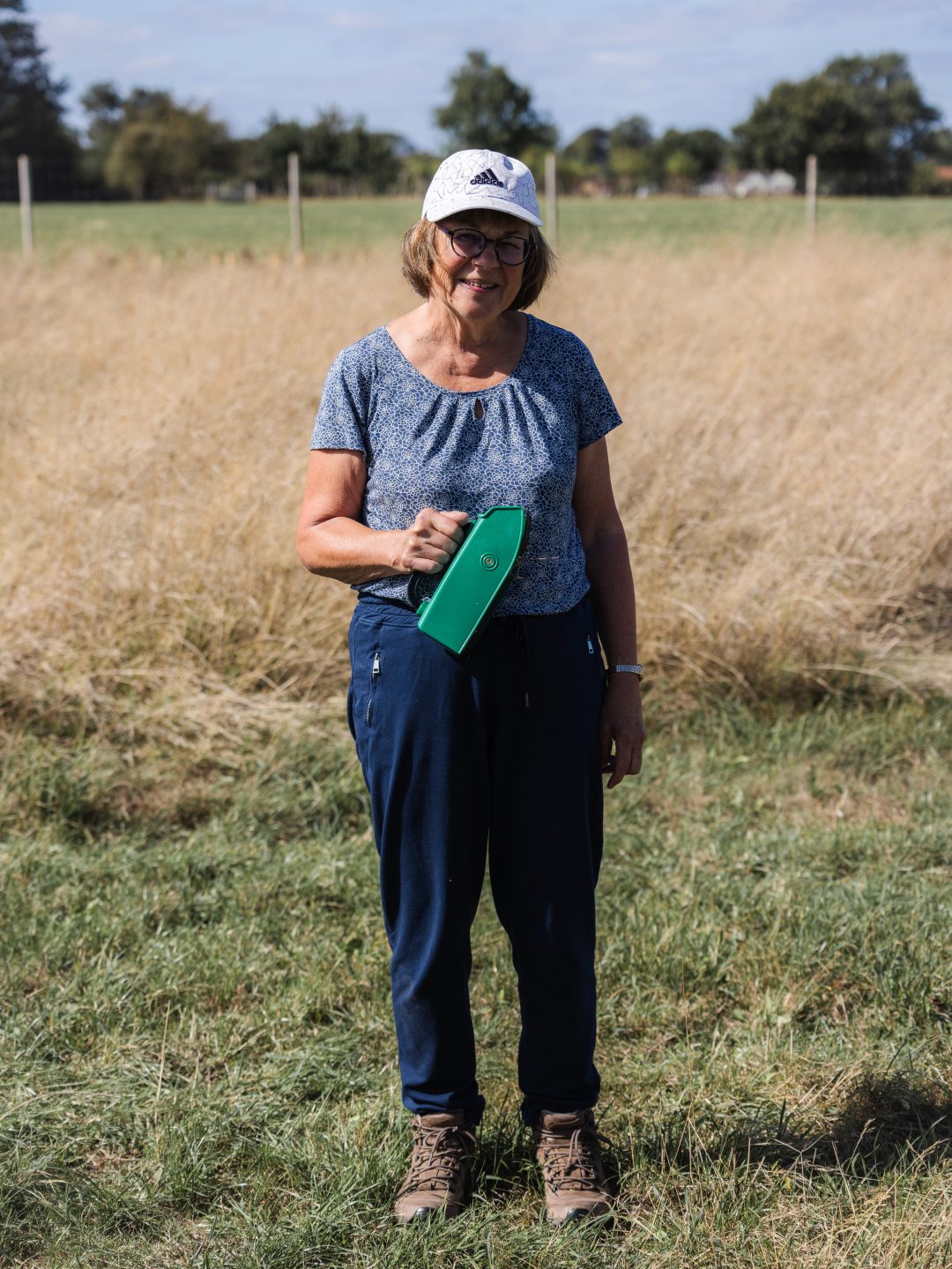
Emma is keen to get an allotment of her own. “I’m on a waiting list, but it’s taking ages,” she says. She is one of almost one hundred Bristol households registered to Generation Soil’s compost project. “They collect my food waste and bring it back as compost, which I use at the allotment I share with friends.”
The UK generates around 9.5 million tonnes of food waste annually, with the average household wasting £470 worth of food a year. When it ends up in landfill, food waste releases methane, generating around 25 million tonnes of CO₂-equivalent emissions annually, which contributes to global heating. Composting prevents food scraps from reaching landfill and instead redirects them locally. The process adds nutrients to soil, improves water retention and increases resilience to drought.
“People don’t get a say in the food system, or in what happens to our food waste” says Alex. Generation Soil hopes to change that – by creating a circular food system, reducing emissions and giving locals the option to contribute to the garden.
To use the space, Generation Soil pays £1 a year in rent to Roots Allotments, after the company advertised for a local community organisation to create a market garden.
Roots’ privatisation of allotments has been controversial, with locals objecting to the scale of the startup’s 700-allotment site in the green belt of Leigh Woods and the extortionate cost of a plot – £549 a year, more than 12 times the cost of a council plot.
In 2024, the venture capital-backed company also came under scrutiny when Avon and Somerset Police ordered them to temporarily cease work on the Leigh Woods site to protect nesting skylarks.
The future of farming
Another essential part of the site is the food forest, a collection of 74 saplings they hope will one day become its own ecosystem. The goal is to grow seven layers of canopy trees, perennials, shrubs, herbs, ground cover, roots and fungal networks. Mimicking the structure of natural woodlands, these layers will ensure the forest is self-sustaining, making its maintenance less labour-intensive.
The members of Generation Soil are adapting their plans to prepare for increasingly hot summers. “We’ve got IBC water tanks, boreholes, green manures,” Alex says. “I was gunning for bees.”
We pick our way through the long grass, trying to see which saplings have survived the most recent heatwave. Alex points to a few that are beyond repair, but is pleased with how the rest have held. “I’m surprised at how quickly some of the beds have grown back”, says Angela. She draws my attention to where, underneath the heap of dead borage, a tiny blue flower is beginning to open.
“We want to offer a vision of what the future of farming could look like, a future that’s less damaging to the environment, and that ensures people are more connected with the land,” Alex tells us.
Lucy scans the rows of saplings. “In 20, 30 years, people here are going to be walking around a forest.” She gestures to me. “You can bring your grandchildren here.”
*Names have been changed.
Independent. Investigative. Indispensable.
Investigative journalism strengthens democracy – it’s a necessity, not a luxury.
The Cable is Bristol’s independent, investigative newsroom. Owned and steered by more than 2,600 members, we produce award-winning journalism that digs deep into what’s happening in Bristol.
We are on a mission to become sustainable, and to do that we need more members. Will you help us get there?
Join the Cable today