Damien Egan school visit: Anatomy of a faux scandal
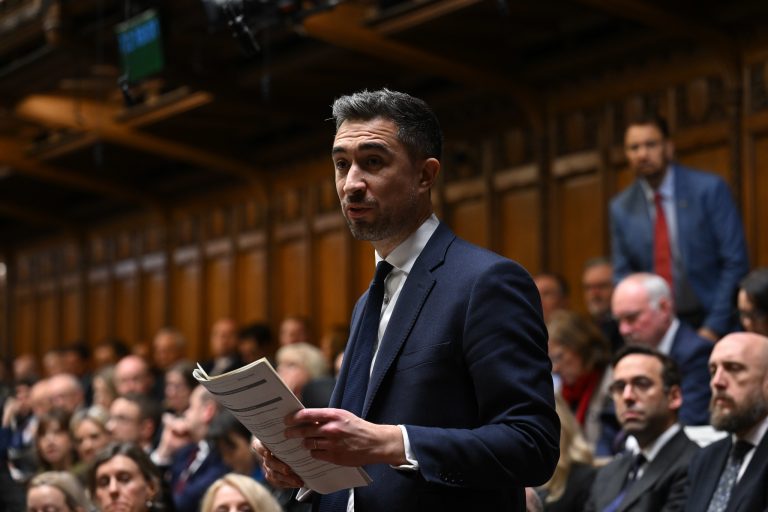
Damien Egan in Parliament. Credit: House of Commons

Like anyone in Bristol who holds the apparently radical opinion that genocide is wrong, and has a passing interest in the news, I was genuinely surprised by the furore that erupted around the cancellation of MP for Bristol North East Damien Egan’s visit to Brunel Academy in Speedwell.
I was further surprised to discover, after venturing beyond the headlines, that the cancellation was not recent at all. It had taken place in September 2025, a full four months before it became one of the biggest news stories in the country.
Knowing my inclination to dabble in controversy, The Cable asked me to explore how this media firestorm had come about. We decided to dig where others had skimmed, to find the story behind the story. So I set off to work out where this tale of “extremist” parents and “meddling” unions had originated.
After not too much digging, I texted my editor with a likely answer: “Oh shit. I think we might have been the source of the Egan stuff.”
The more I looked, the more that seemed to be the case.
From ‘footnote’ to firestorm
This is not to say The Cable colluded with the national press to stoke a scandal around one of our city’s schools. However, in a piece published in November 2025, fellow Cable reporter Mickey Grant wrote:
“In July, the government proscribed Palestine Action, which had carried out direct action against companies producing arms used by Israel. Open resistance has become riskier, but activists are finding other ways to push back…
NEU members in the Cabot Learning Federation successfully blocked Labour MP Damien Egan, vice-chair of Labour Friends of Israel, from speaking at Bristol Brunel Academy due to his stance on Palestine Action and Israel sanctions.
An NEU member at a CLF school told The Cable how, in September, the union rep at BBA posted about Egan’s visit in a WhatsApp group, sparking a flurry of organising.”
Mickey’s piece is excellent. It does what journalism should do: it talks to workers and examines the work of trade unions, the organs through which we build class power.
Yet much of the subsequent reporting on the Egan–Brunel brouhaha tracks almost beat for beat with that paragraph.
The Guardian linked directly to The Cable’s article. The Daily Mail quoted it extensively though didn’t deign to link to it. The Times repeated the language of the visit being “blocked”, as did Nick Robinson in an interview with NEU president Daniel Kebede.
The BBC later all but confirmed the origin story, stating on Politics West on 8 February: “At the time it was reported as a footnote by The Bristol Cable.”
Emails obtained from Ofsted via FOI make clear that the surge in media coverage triggered the school watchdog’s inspection. A Times Radio interview with a Labour MP and The Guardian piece mentioned above are referenced directly in internal emails between senior Ofsted figures. It is evident that the volume and tone of coverage drove the decision.
In one email, Sir Martyn Oliver, HM Chief Inspector of Education, Children’s Services and Skills since 2024, told colleagues: “Move as quick as you can please – this one might have legs and we need to be in front of it.”
So what actually happened?
In September 2025, Damien Egan was due to visit Brunel Academy, part of the Cabot Learning Federation. News of the visit reached some parents and members of the teaching union NEU, who discussed organising a protest.
The demonstration was not, as Tory MP Lincoln Jopp later claimed in Parliament, “because he’s Jewish.” In fact, Jayne, one of the parents I interviewed who had planned to attend, hadn’t even known Egan was Jewish.
“I had assumed he was Irish,” she said.
There was nothing in our actions that forbade him from going. We just made our intentions clear that we’d be outside with Palestinian flags
Jayne, Bristol Brunel parent
Jayne grew up in a secular Irish Catholic family in the UK. “I grew up with Egans,” she added, slightly indignant at the suggestion that her objection could be religiously motivated.
Egan, like Jayne, was raised in an Irish Catholic family that had moved to the UK. He converted to Judaism in 2018 after meeting his husband, IDF veteran Yossi Felberbaum. Felderbaum has been a source of controversy in his own right, having served in the IDF’s cyberwarfare Unit 8200 — Israel’s equivalent of GCHQ.
According to Jayne, the planned protest related to Egan’s support for Israel and his role as vice-chair of Labour Friends of Israel, an internal Labour lobbying group, with opaque funding, which pay for MPs to undertake trips to Israel. Egan himself travelled there in March 2024, shortly after his election as a MP and during Israel’s ongoing genocide against the people of Gaza.
The school cancelled the September visit after conversations with local police, reportedly out of concern that protests might cause disruption. At the time, it barely registered locally. The only outlet to mention it was The Bristol Cable, and then only in passing.
Jayne disputes the language that they “blocked” him.
“There was nothing in our actions that forbade him from going,” she told me. “We just made our intentions clear that we’d be outside with Palestinian flags.”
She hadn’t even realised the protest plans had affected the visit. When she was told it was cancelled, she said: “It was like, ‘oh, okay, fine. I’m not doing that tomorrow afternoon’. It was as simple as that.”
Back in September, that seemed to be the end of it.
Months passed. A “ceasefire” was agreed in Gaza, though the more than 600 Palestinians in Gaza killed by Israel since then complicates that description.
Then, on 11 January, Communities Secretary Steve Reed told the Jewish Labour Movement conference: “I have a colleague, who is Jewish, who has been banned from visiting a school and refused permission to visit a school in his own constituency, in case his presence inflames the teachers. This is an absolute outrage.”
He added: “They will be called in, and they will be held to account for doing that, because you cannot have people with those kinds of attitudes teaching our children.”
Reed did not name Egan. The Guardian later reported that “sources close to Egan” confirmed he was the MP in question. For those unfamiliar with journalistic parlance, “sources close to” often means the individual or their staff, speaking off the record.
The delay, Jayne believes, was significant.
“This story was stored to come later,” she told me. “Back in September, the whole country was watching Gazans being butchered while queuing for food aid.”
In her view, the story could only gain traction months later, when the intensity of media coverage had shifted.
The media storm
After such a helpful intervention from Reed, the minister responsible for fostering communities, one area in Bristol was thrust into a media firestorm. Within days, it was national news being reported by almost every outlet in the country.
The Times ran a piece headlined “The Bristol neighbourhood where Jews are shunned and Zionists hated” illustrated with images of Bristol Apartheid-Free Zone posters (BAFZ). The article appeared to refer to Easton, noting homes and shops displaying posters “showing they are boycotting Israeli products to end the ‘apartheid’ in Gaza and the West Bank.”
One parent was quoted describing being “confronted with the war in Gaza” on the walk to school, by parents wearing keffiyehs at the school gates and saw posters declaring genocide. The piece concluded that a “small Jewish community is being ostracised in an organised way.”
BAFZ has since been embroiled in its own wave of media hysteria. Tommy Robinson aligned counter-protesters have accused the organisation of “Jew Hunting” and “making lists of Jews” for politely chatting to their neighbors about not buying Israeli produce and allowing people to have their address noted as “Do Not Disturb” if they aren’t interested in the campaign.
The framing of the story was that he was being in some way excluded… by a handful of parents in Bristol
Jim, Bristol Brunel parent
It must be said plainly: antisemitism is real and dangerous. We saw it recently here in Bristol, where self-proclaimed neo-Nazi Ryan Ferguson spouted a vile antisemitic tirade in front of police. Jewish people in the UK understandably feel vulnerable, and irresponsible reporting can heighten those fears.
But solidarity with Palestinians — including boycotts of Israeli goods — is not the same thing as hostility toward Jewish neighbours.
The Jewish Chronicle also entered the fray, publishing a piece about educational slides shared by Bristol NEU members after October 7 to help teachers explain the conflict. The apparent transgression of these trade unionists? Encouraging critical thought. Teachers were advised that understanding why someone commits violence is not the same as condoning it, and that it would be antisemitic to assume all Jewish people support the Israeli government.
Truly barbarous ideas are taking root in our schools.
One NEU activist told me he received a call during the fallout and was asked: “Do you support Hamas?” It is the familiar trap posed to anyone expressing solidarity with Palestinians. A question designed less to illuminate than to intimidate. To answer “yes” would cause you to fall afoul of the same anti-terror laws used to arrest nice old ladies who hold pro-Palestine Action signs.
According to Ofsted documents, within days of Reed’s announcement Brunel Academy received “over 800 emails and phone calls from different pressure groups.”
Jayne described the sensation of watching the story snowball: “It just kept coming… and I was like, ‘Oh God.’”
Jim, another parent, called the coverage “incredibly irresponsible.”
“You’ve got Damien Egan, he’s an MP. He’s in the party that controls parliament and forms the government” he said. Yet “the framing of the story was that he was being in some way excluded… by a handful of parents in Bristol.”
On 14 January, even Keir Starmer weighed in, stating in Parliament his intention to “hold to account those who prevented this visit.”
The suggestion was that parents and unionised staff members had done something wrong. This made Jim uneasy. “You’ve got the prime minister talking about it… trying to tell a school and a community what is acceptable thought on an issue. That made me deeply uncomfortable.”
On 15 January, Ofsted launched a snap inspection of Brunel Academy. The watchdog unusually announced the inspection while it was ongoing, rather than after publishing its findings.
Internal documents suggest political and media pressure was implicit rather than explicit. One regional director wrote:
“There is considerable media and political interest in this case, and an urgent inspection will enable Ofsted to report to parents, the wider community and Parliament about pupils’ experiences in the school, and pupils’ and staff safety.”
The inspection found no evidence of partisan political views. Brunel was described as promoting “tolerance and respect for the diversity of modern Britain.”
Education secretary Bridget Phillipson had, however, already announced a wider review of antisemitism in schools. A course of action not borne out by the findings of the government’s own schools watchdog.
Jayne responded to the threats of accountability with characteristic bluntness.
“I will hold these parents to account,” she mimicked. “Oh will you? How will you know who, given they didn’t actually go and protest?”
She has since written to Starmer, Egan, Phillipson and Bristol East MP Kerry McCarthy, offering to talk it over. She even included her phone number. They haven’t got back to her.
When the media takes the Mickey
Mickey Grant and I discussed the media response and my theory that his piece provided much of the fuel for the media firestorm.
It wasn’t just the spectacle around Brunel Academy and the surrounding neighbourhoods. Mickey had also received pushback on social media and from Airbus behind the scenes.
I was curious whether this affected how he felt about the piece and how championing good causes can be weaponised against those very causes.
He stood by it: “This article was an important one to write. Pushback from Airbus, abuse on social media and Ofsted visits do not change my feelings about this.”
Mickey stressed he wasn’t in journalism for fame. In fact, despite my insisting on making him a key character in this piece, he prefers his privacy.
“But if you aren’t willing to stick your neck out and cover something due to fear of pushback what’s the fucking point in being a journalist?”
Mickey at times expressed a sense of self-doubt during our chat. This, I think, gets to the root of these scandals. They aim to discipline those of us fighting for a better world.
Jayne expressed a similar sentiment about their chilling effects. Palestinian parents she knows from the school, who had initially intended to protest, now feel too vulnerable to speak publicly.
“Is that the society we want?” she asked. “People being scared to speak their minds? Being scared to talk about violence?”
Labour Together (against the rest of us)
Jayne told me she felt the affair had been “whipped up to serve someone else’s political agenda.”
That’s hard to prove. But there’s some interesting context.
Steve Reed, who triggered the controversy, has, like many MPs previously, traveled to Israel on a Labour Friends of Israel-funded trip. A veteran of Labour’s antisemitism wars under Corbyn, Reed has been both accuser and accused.
He once compiled a “purge list” of Labour members to suspend for antisemitism. Reed is not Jewish, though roughly 40% of those on his list were, including Jonathan Rosenhead, an academic and lifelong anti-racism campaigner who campaigned against South African Apartheid.
In 2020, Reed himself was accused of antisemitism after describing Conservative donor Richard Desmond as a “puppet master.”
Even as he was triggering the Brunel row at the JLM conference, Reed had other outrages to share. In his own constituency, children were given biscuits shaped like historic Palestine iced with a Palestinian flag. Reed declared this was “teaching children things that are antisemitic” and urged the government to “root it out right at the source.” Mr Kipling may find himself on Reed’s next purge list.
Until 2023, Reed was director of the now-controversial “think tank” Labour Together, alongside Keir Starmer’s disgraced former chief of staff, Morgan McSweeney. Labour Together is widely credited with helping to undermine Corbyn and for masterminding Starmer’s ascent.
In 2021 it was fined for breaching electoral law after failing to properly declare £739,000 in donations largely from millionaires Trevor Chinn and Martin Taylor. In Get In, Gabriel Pogrund and Patrick Maguire suggest this opacity concealed not just who was funding the project, but what that funding implied about its politics.
Through Labour Together, Reed reportedly helped incubate Stop Funding Fake News (SFFN) and the Centre for Countering Digital Hate (CCDH) astroturfed campaigns presented as grassroots initiatives, albeit with millionaire patrons and MPs hovering in the wings.
Initially targeting the far right, they quickly turned their attention to the radical left, most notably to Bristol outlet The Canary. In 2019, SFFN enlisted Rachel Riley to push for its demonetisation, accusing the site of antisemitism over its pro-Corbyn stance and criticism of Israel while lobbying advertisers to drop them.
Regulator Impress later cleared The Canary of antisemitism. By then, Facebook’s algorithm changes and sustained advertiser pressure had forced The Canary to drop its funding model and gutted its thriving newsroom. SFFN figures later bragged about their role in its decline.
As of late this aggressive campaigning against media outlets and critics considered hostile to Labour Together and the Starmer project has gained more attention. LT stands accused of hiring private investigators, in late 2023, to produce dossiers on journalists investigating their illegal failure to declare donations.
The resulting report speculated on Gabriel Pogrund’s “status as a Jew,” citing an unnamed source who found an “odd” mismatch between his faith and his politics. It also suggested that reporter Paul Holden’s grant funding from George Soros’ Open Society Foundation might constitute a “significant source of leverage.”
The modern day dirty-dossier saga ultimately claimed a scalp: Josh Simons, the Labour Together director who commissioned the report, resigned from his cabinet role. It had emerged he had attempted to pass claims to GCHQ suggesting the reporters were receiving information from state-backed Russian hackers. GCHQ reportedly told him, in person, that this was untrue and that no investigation was under way. Simons nevertheless continued briefing colleagues and The Guardian’s Pippa Crerar that such an investigation existed.
There is no evidence Reed personally orchestrated the dossier episode. He stepped down from Labour Together before it was commissioned, though his expenses continued to be covered by Labour Together into 2024. Still, the broader pattern is difficult to ignore: spurious allegations of extremism or antisemitism deployed as factional weaponry. It is a strategy long associated with the organisation he helped build and one that forms the backdrop to the Brunel affair.
When senior ministers amplify a story, the press follows. Institutions respond. Pressure escalates. A cancelled school visit becomes a national crisis.
And then, quietly, it isn’t.
On 5 February 2026, Damien Egan visited Brunel Academy. He met the school council. There was no riot. No extremist uprising. No collapse of civilisation.
Just a delayed visit that, absent the ministerial outrage, would likely have passed unnoticed.
I’ll leave the last word to Jayne, one of the more bubbly “extremists” I’ve encountered.
What did she make of the fact that her planned peaceful protest had led to parents, teachers and a school being painted as dangerous radicals?
“It was laughable, really,” she said. “Bollocks. There’s no other word for it. A load of bollocks.”
Independent. Investigative. Indispensable.
Investigative journalism strengthens democracy – it’s a necessity, not a luxury.
The Cable is Bristol’s independent, investigative newsroom. Owned and steered by more than 2,600 members, we produce award-winning journalism that digs deep into what’s happening in Bristol.
We are on a mission to become sustainable, and to do that we need more members. Will you help us get there?
Join the Cable today




Report a comment. Comments are moderated according to our Comment Policy.
Great Journaisme!
Switzerland