Palestine Action’s ‘Filton 6’ cleared in ‘huge victory for moral courage in face of political pressure’

Credit: Palestine Action /Laurence Ware


A jury at Woolwich Crown Court in London has refused to convict six Palestine Action activists who broke into an Israeli arms facility Elbit Systems UK on the outskirts of Bristol. Campaigners hailed the verdict as a “huge victory for moral courage in the face of extraordinary political pressure.”
Charlotte Head, 29, Samuel Corner, 23, Leona Kamio, 30, Fatema Rajwani, 21, Zoe Rogers, 22, and Jordan Devlin, 31, were found not guilty of aggravated burglary, a charge carrying a potential life sentence. They also faced charges of criminal damage and violent disorder, but the jury returned partial or no verdicts, leaving prosecutors to decide whether to seek a second trial.
The case marks the first trial of the so-called Filton 24, following a direct action protest at Elbit Systems UK’s £35 million research and development site in Filton that is reported to have caused more than £1 million in damages. Elbit’s parent company supplies up to 85% of the land-based equipment and drones used by the Israeli military, according to the Database of Israeli Military and Security Export.
Some of those on trial were held on remand for over a year, far exceeding the six-month statutory limit. Human rights groups and campaigners said the activists were treated like terrorists, despite no terror charges being brought and the action taking place before Palestine Action was proscribed in July 2025. Other defendants accused of taking part are still awaiting court dates.
Despair, defiance, dedication
Charlotte Head, 29, was among the six activists on trial.
Her barrister, Rajiv Menon KC, detailed his client’s years of activism, including her work with refugees in Calais. He likened Charlotte to the suffragettes, noting that while they are celebrated today for their heroism, at the time they were branded a “threat to the social order” and dismissed as “unladylike… aggressive and violent” by politicians and the media.
“The reality, of course, is very different… The suffragettes were remarkable women from all walks of life united in their hope, their despair, their defiance and their dedication,” Menon added in his closing submissions to the jury.
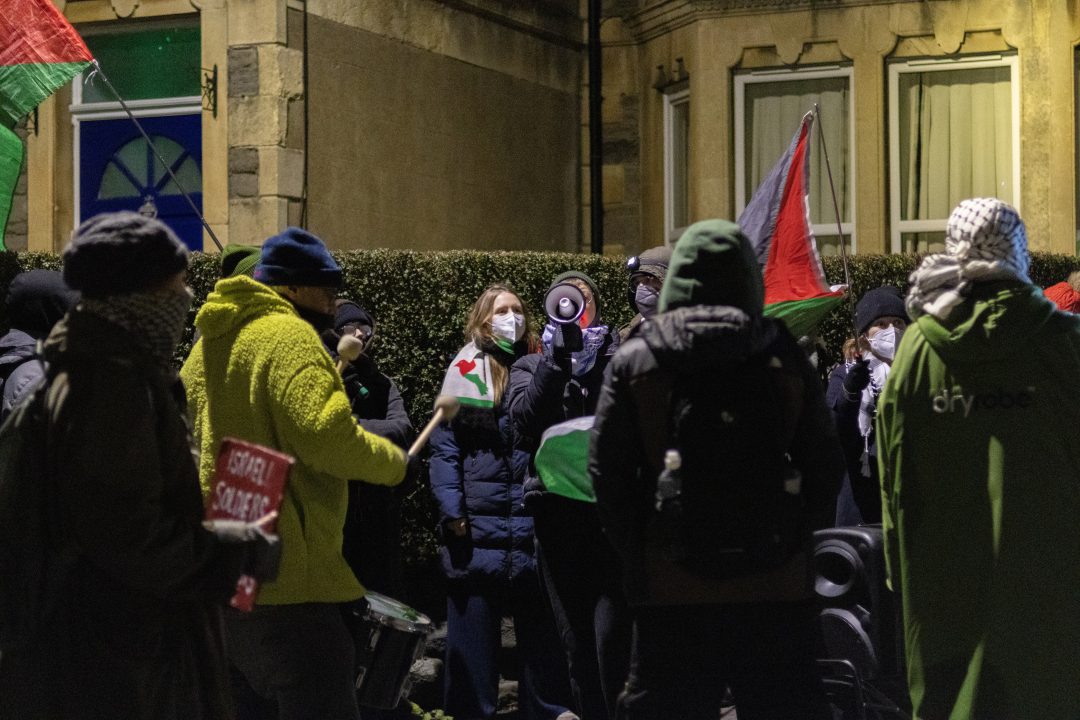
“Charlotte Head is also a remarkable woman, “ Menon added. “This is not something that lawyers defending clients in criminal trials often say… But it must be said in this case, not only because it is true but also because it is relevant.”
Addressing the jury, Menon also described Elbit Systems as a company that has “played a critical role in the killing of tens of thousands of Palestinians” while being “wined and dined” by those in power in the UK.
Elbit Systems UK denies involvement in the manufacturing and supply of weapons to the Israeli military.
Never part of the plan
Samuel Corner faced an additional charge of causing grievous bodily harm to a police officer during the Filton action — a charge on which the jury were unable to reach a verdict.
The defence argued that Samuel struck police sergeant Kate Evans with a sledgehammer only after being sprayed with Pava, a synthetic pepper spray, in order to protect one or more of his co-defendants, whose screams he heard.
“I was trying to protect her,” were the words Samuel used moments after the incident involving the police officer, the defence lawyer Tom Wainwright KC told the court. He explained: “This was his motivation, intention, was when he swung that sledgehammer.”
Prosecutor Deanne Heer rejected the defence, saying Samuel’s actions were “nothing to do with self-defence or defence of anyone else,” and described the force used against the officer as “completely disproportionate.” The officer sustained a fractured spine, the court heard.
Wainwright framed the incident as unplanned chaos: confronting the unexpected, being Pava-sprayed, seeing a co-defendant in pain, Samuel “was acting on instinct.” He quoted Mike Tyson: “Everyone has a plan until they get punched in the face. When confronted with reality – unexpected, cold, hard reality – you react.”
Describing Samuel as a “clearly very intelligent” linguist and philosopher, Wainwright noted he could absorb abstract texts calmly in a university library, but struggled to process fast-moving, real-world events.
“Is he the raging psychopath the prosecution makes him out to be? His whole purpose and motivation was quite the opposite,” Wainwright told the jury.
Love called me
Zoe Rogers was also among the activists in the dock. She was due to start university in the autumn of the year the action took place and told jurors she took part to “destroy drones used to drop grenades.”
The court heard that shortly after entering the Filton site, Zoe and Jordan Devlin were confronted by a security guard. “You can see from the body-worn camera footage that she is terrified,” her defence barrister Audrey Mogan told the jury. “The drones were no longer on her mind because she was shocked, stressed, scared. When she finally gets around to breaking a drone, all she could do was hold the sledgehammer up and let it fall on it.”
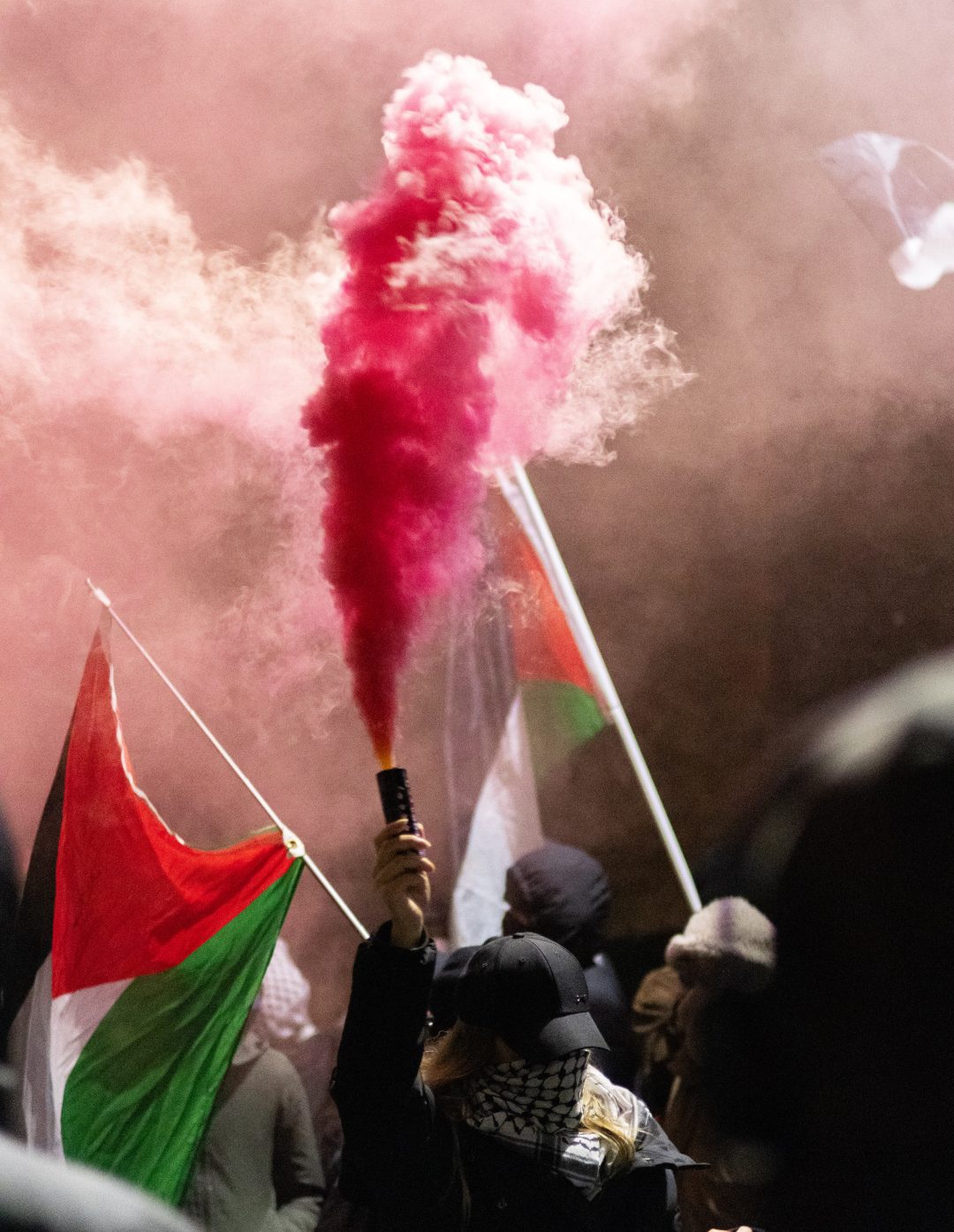
Whilst in prison on remand, Zoe wrote an open letter titled Loved Call Me, describing what drove her to act. She said she was moved not by anger but by the devastation inflicted on Palestinians.
“When they ask why I did it, I tell them about the children,” Zoe wrote. “Their childhood was stolen from them. Their skeletons are left charred and smoking. Their bodies are crushed so easily by falling buildings. Their skin melts as flaming tents collapse around them.
“I tell them about the boy found carrying his brother’s body inside his bloody backpack. I tell them about the girl whose hanging corpse ended at the knees. I tell them about the father holding up his headless toddler. I tell them about the mother who received the ‘approximate weight’ of body parts of her family to bury, as they had been shattered beyond recognition.”
Essential checks and balances
Opening her closing statements, Heer, prosecuting, told jurors that while they may have views about the conflict in the Middle East: “For the purposes of this trial, however, your views about those matters don’t matter.”
Justice Johnson echoed that warning before his own directions, telling the jury: “The nature of this case may excite strong emotions… But you must each keep cool heads. Your decision should be a decision in which bias, emotion, sympathy, prejudice, political views and matters of that sort play no part.”
Yet politics ran through the case, and through the wider criminal justice system, like an undercurrent too powerful to ignore. Eight of the so-called Filton 24 had taken part in hunger strikes while on remand, demanding immediate bail and to “Shut Elbit Down” – a slogan used by Palestine Action in its UK campaign against the weapons company.)
Three of them ended their hunger strikes after the UK government decided not to award a £2 billion contract to a subsidiary of Israeli arms firm Elbit Systems UK. The announcement came after fears were growing over the welfare of those taking part.
Justice Secretary David Lammy notably refused to meet with the hunger strikers. In December, hunger striker Kamran Ahmed told Declassified that the government was “just waiting for one of us to pass away”.
Speaking from Pentonville prison, he said: “I genuinely thought they would have negotiated by now, [or] at least meet some of the demands… It seems that they are not willing to do anything really.”
The first trial also came at a time of uncertainty over the future of the jury system in the UK. In December, Lammy announced plans to remove the right to a jury trial for defendants in cases likely to result in a sentence below three years in prison.
As put by defence barrister Wainwright in his closing remarks to the jury: “Why is it that those in power want to take away the right to a trial by jury? The jury system gives power to the people. The role of the jury is one of our essential checks and balances on which the criminal justice system rests.”
A powerful affirmation
Campaigners have described the jury’s refusal to convict any of the six defendants of any charges as a “huge victory” and a “powerful affirmation of jury equity and brings to a humiliating end one of the most politically charged trials of this year thus far.”
Naila Ahmed, head of campaigns at independent advocacy organisation CAGE International, said: “This is a huge victory for the movement but nationally and abroad who campaigned on behalf of the defendants, and a powerful affirmation of jury independence and moral courage in the face of extraordinary political pressure.
“Though they cannot get back the 17 months of their life taken from them unlawfully, they should all be compensated and the remaining 18 defendants of the Filton 24 should also be released on bail.
“This case was used to justify the ban against Palestine Action, a decision that should now be overturned.”
Independent. Investigative. Indispensable.
Investigative journalism strengthens democracy – it’s a necessity, not a luxury.
The Cable is Bristol’s independent, investigative newsroom. Owned and steered by more than 2,600 members, we produce award-winning journalism that digs deep into what’s happening in Bristol.
We are on a mission to become sustainable, and to do that we need more members. Will you help us get there?
Join the Cable today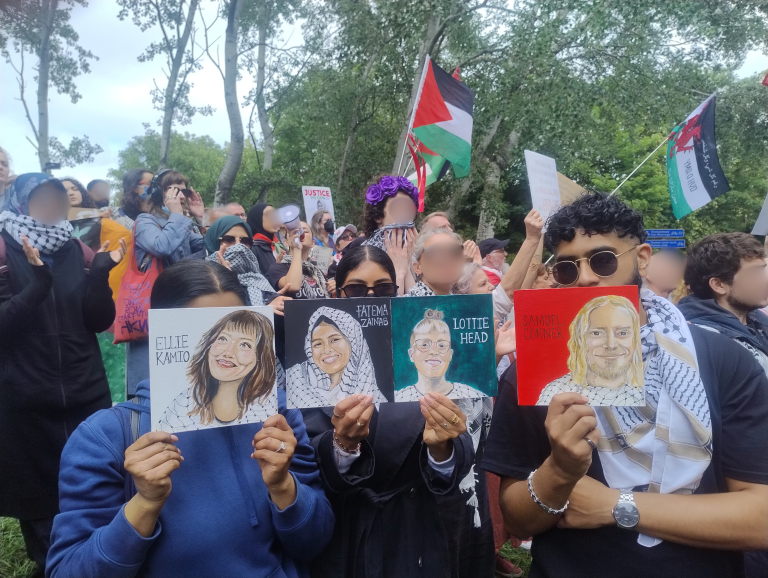

Report a comment. Comments are moderated according to our Comment Policy.