War, weather and oil: Greengrocers navigating an economy on the brink
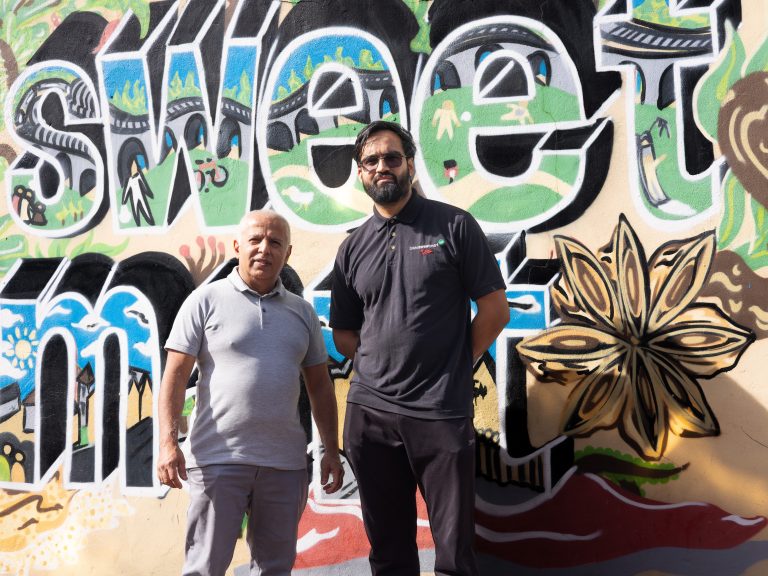
Photos: Stefano Ferrarin

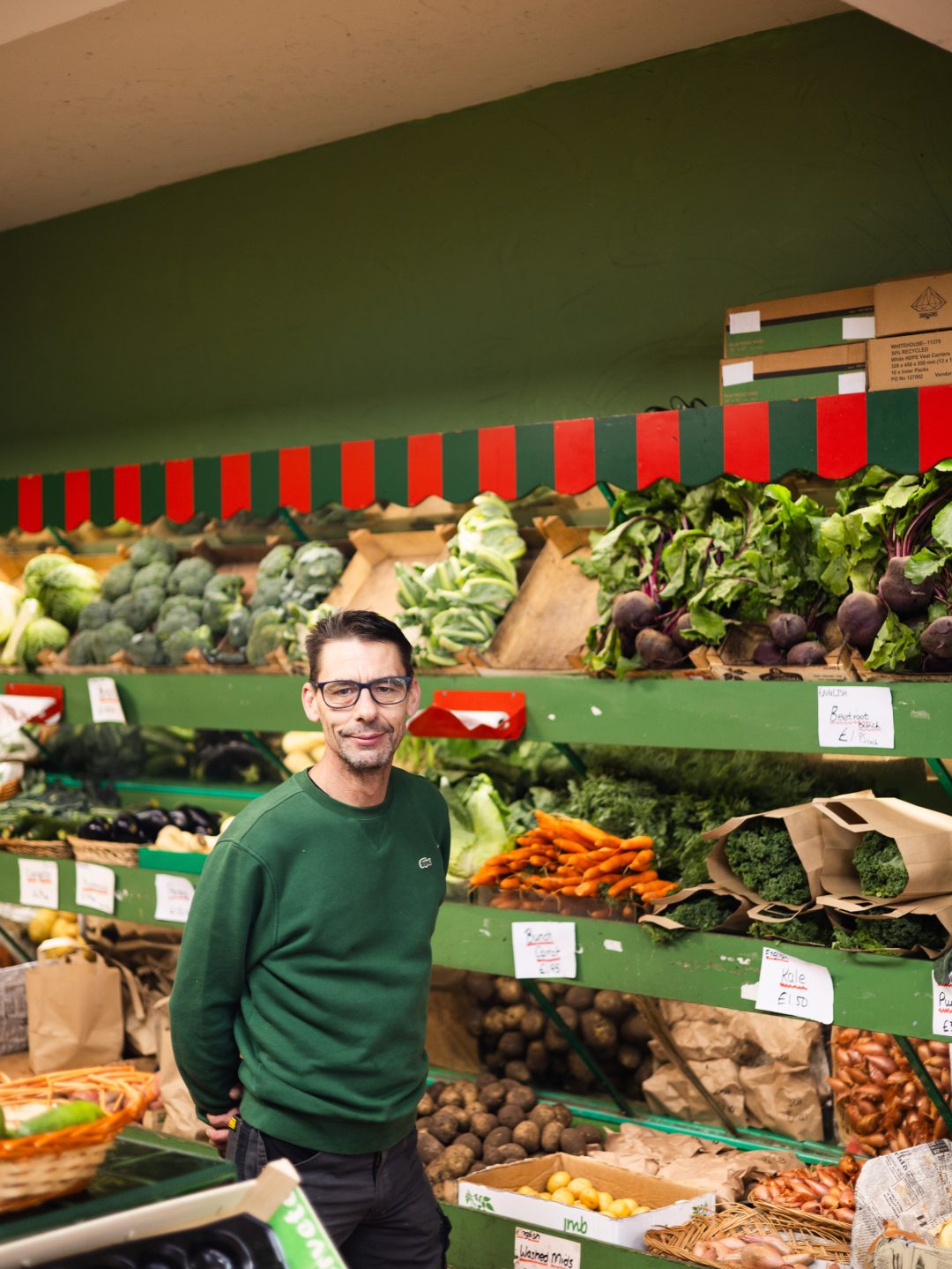
Mike has run Ashton Fruit Shop on North Street in Southville for 21 years. Asked what a shop like his means, his answer is matter-of-fact: “It’s all about the community… we’re one of those shops where we help old ladies across the road.”
Greengrocers are an emblem of a country’s food culture. Put on any cooking show worth its salt and its host will amble through a bustling fruit and veg market, chatting with an expert seller about which delicacies to try.
Yet in the UK, greengrocers are dying away. Some reports suggest the number has more than halved since the late 1990s.
This is partly due to price rises. Government data on wholesale prices shows fruit and vegetable prices up are 6% and 13.7% respectively this year alone. Since 2019, the rise has been starker still: 64.8% for fruit and 50.8% for vegetables.
Between war, extreme weather caused by climate breakdown and supermarket price pressure, things are only getting worse. With this three-pronged attack on their livelihoods, how are Mike and other greengrocers in Bristol surviving?
Food and geopolitics
Food prices in the UK have long been shaped by global drivers. The British, alongside other European powers, spent centuries reshaping the world to feed an appetite for food and domination, while a ruling class gorged on sugar, spice and everything nice.
The result is a global food system in which what happens thousands of miles away is felt by produce sellers in Bristol.
Today, 80% of global trade travels by sea. Fuel, food and fertiliser squeeze through a handful of narrow chokepoints. Western military and economic dominance once underwrote that system, but the guarantee is fraying, caught in a pincer of climate and armed conflict.
Low water levels caused by drought have cut transits along the Panama Canal by 18% since August, leading to an upsurge in prices. Meanwhile, Iran, under sanctions for decades, has used drones to close the Strait of Hormuz since the US and Israel attacked it in February, choking off the route for a third of global crude oil and fertiliser.
The West is getting a taste of its own medicine: an amuse-bouche of economic warfare.
For small businesses like Mike’s, all of this means a steady squeeze on his income. “I’ve got less margins and I’m selling less,” he says. What he sees is a constant ratcheting of prices: “It’s all on the same sort of tangent. It’s all on the rise.”
How far can you go before it comes to the point where you push customers out the door into the supermarket’s arms?
Mike, greengrocer
Motor fuel prices in the UK are up 23% on August last year, and fertiliser prices this summer were up to 23% higher than February. This pushes up wholesale prices but Mike says prices rarely come back down.
Take jacket potatoes. A box of forty costs Mike £17.60, or 44p each. Sold at 53p a potato, that makes about £21.20 if every potato goes, leaving roughly £3.60, or 17%, profit.To make the 33% profit he would like, he’d need to charge around 65p and, as Mike says, “who wants to pay that for a jacket potato?”
Bristol was recently named the UK’s most unaffordable city, with average rents equivalent to 57% of the average wage. The pressure shows at food banks.
The Trussell Trust distributed 32,074 emergency food parcels in Bristol in 2025, or roughly 66.4 per 1,000 residents. This is double the amount they distributed in 2019 and far higher than the English average of 38.2.
The message is stark: If Bristolians can’t afford food, grocers can’t sell it.
Squeezed from all sides
On the other side of the river, on St Mark’s Road in Easton, the shopkeepers of Bristol Sweet Mart are also feeling the pinch.
The shop has been an east Bristol institution for decades. It was founded by Kassam Ismail Majothi and his wife Fatma after Idi Amin’s mass expulsion of Uganda’s South Asian community, whose forebears had come from India under British rule.
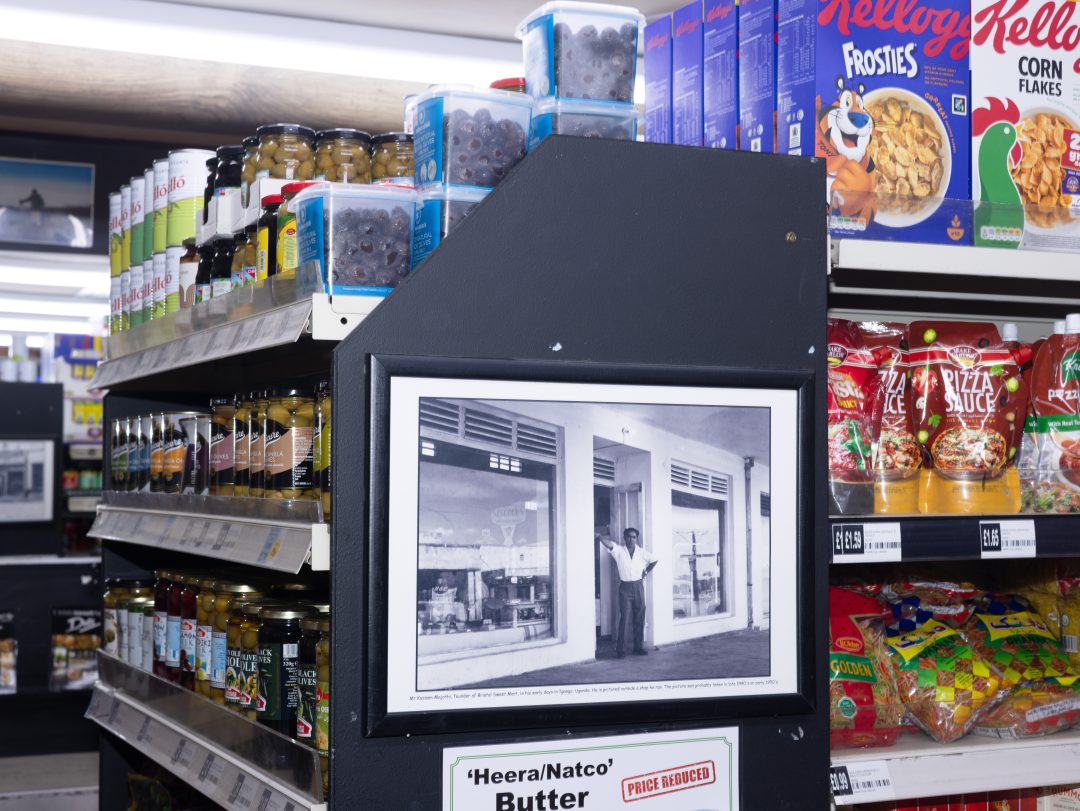
In 1972, they were given 90 days to leave. They ended up in a British refugee camp with just £50 and a suitcase.
They were told that Easton wasn’t the best area, but “when you’ve got nothing,” says their son Rashid, who runs the shop, “you have to have determination… and a vision.”
Now, despite the family’s entrepreneurialism, things are getting tough. “Once the price goes up, it’s a very difficult and slow process for it to come down,” says Nouman, Sweetmart’s retail manager.
Mike is facing similar struggles. How far can you go, he asks, “before it comes to the point where you just push [customers] out the door, you push them into the supermarket’s arms?”
Rising temperatures, rising prices
Other factors are adding to the pressure on both shops. This year was the hottest UK summer ever and August was the joint warmest month ever recorded globally.
When bad weather halves a farmer’s yield, Mike explains, the farm still has “to make money… to be able to go again next year,” and the cost is passed to the wholesaler. He knows of suppliers who’ve been unable to fill a pallet and were thus unable to sell anything at all.
The UK is particularly exposed to rising global temperatures, producing only 53% of its vegetables and 20% of its fruit, while 18 of the top 20 countries the UK imports fruit and vegetables from are moderately to severely vulnerable to climate change.
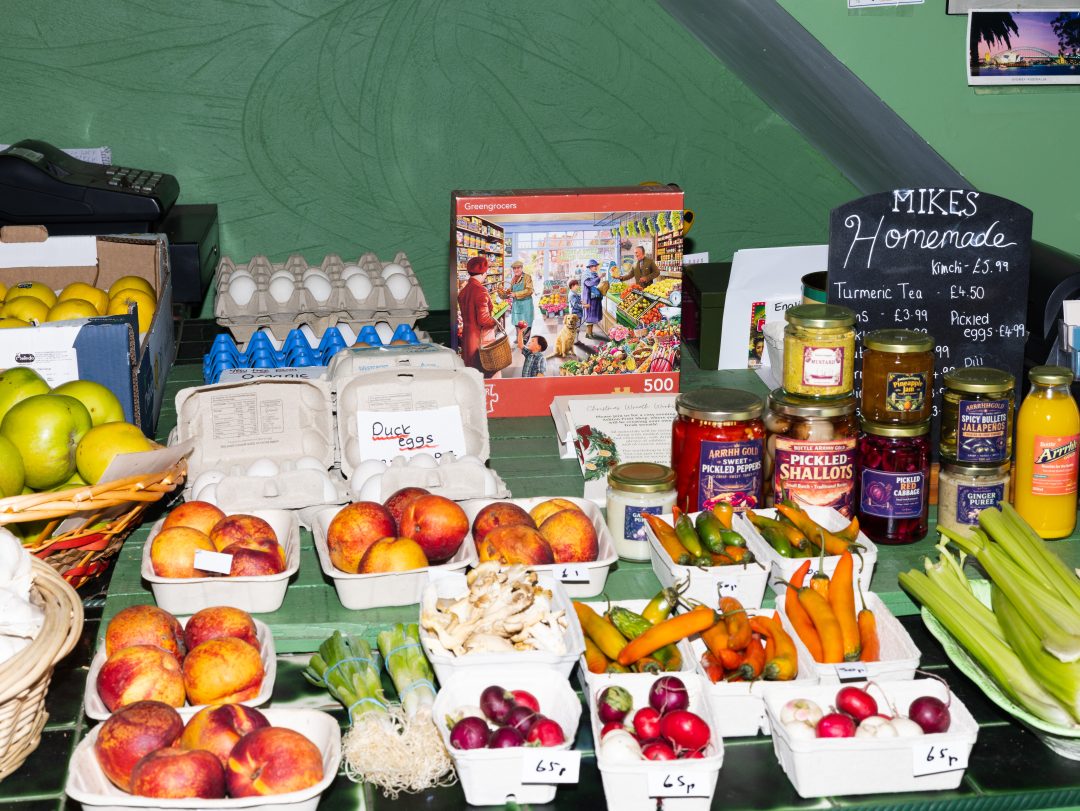
Rashid saw the heat hit the wholesale market: “Suddenly we had a really big heat wave… [prices of] produce had gone shockingly high. Basics, like cauliflowers, carrots, potatoes.” A box of tomatoes is now £15, when it had previously been £3 or £4.
Supermarkets, Mike says, leave shelves empty when they can’t honour their deals, so shoppers assume there’s a shortage. “It’s tactical,” he says.
For an importer like Rashid, Brexit has been a factor. More checks make things more difficult: “You literally have to shop around. Whether you get it is another thing.” Suppliers in Pakistan might prefer selling mangoes to buyers in West Asia, as it’s less far to travel.
British garlic costs him up to £13 a kilo to buy in, while he sells it for £4 to £4.50. “What am I going to sell it for?” he asks. “We try to absorb, but it gets to a stage where we can’t meet our cost.”
‘There’s community here’
It’s not just about food though. “We might be the only people [customers] talk to today,” says Mike.
Rashid echoes this sentiment: “If it was to do with just finance, to be honest, we’re probably in the wrong location because there’s a parking issue. But there’s a community here.”
Sweet Mart adapts to its customers, stocking tomatillos when regulars request them for tacos and Hungarian paprika when people discover it online.
While they try to stand firm against the headwinds of climate breakdown and changing world order, neither wants much from the government.
Mike wants multinationals taxed properly. “Let’s make it fair,” he says. Rashid feels the multinationals have the government’s ear while small businesses are sidelined: “The support needs to be hands-on.”
Both value the loyalty of returning customers. “Support your local high street. Pay them with cash,” says Mike. “We really appreciate people who want to shop and support local businesses,” says Rashid, “’cause we’re not a multinational.”
For now, Mike and Rashid are clinging on. But the global supply chains they rely on are becoming increasingly brittle. And with 2027 predicted to be an even hotter year than this one, is this disruption a wake-up call, or a glimpse of worse to come?
Independent. Investigative. Indispensable.
Investigative journalism strengthens democracy – it’s a necessity, not a luxury.
The Cable is Bristol’s independent, investigative newsroom. Owned and steered by more than 2,600 members, we produce award-winning journalism that digs deep into what’s happening in Bristol.
We are on a mission to become sustainable, and to do that we need more members. Will you help us get there?
Join the Cable today