‘Find your people, find your space’: Lawi Anywar on Bristol’s arts scene
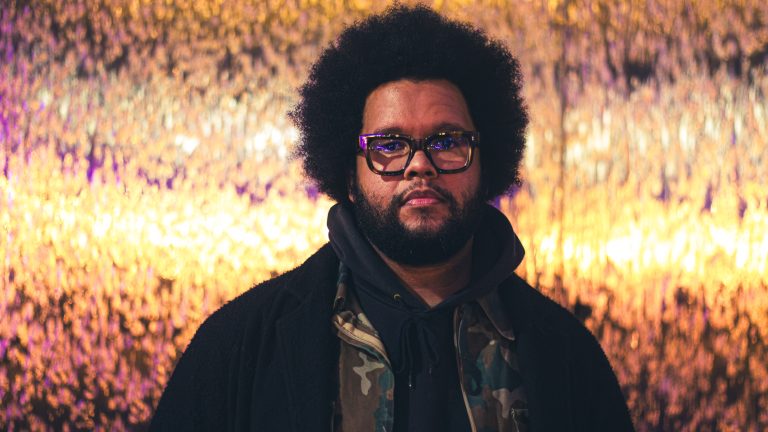
“Always trying to be a better creator, a better person, that’s what it really comes down to,” says Lawi Anywar. The musician’s wide-ranging creative career is hard to sum up, but he gets to the heart of his motivation with characteristic eloquence. We’re chatting in the Pervasive Media Studio, at the Watershed – where, by day, Lawi works as studio coordinator – to discuss Bristol, music, and mental health.
A vocalist and multi-instrumentalist, Lawi shifted to solo work in 2020 following several years of DJing and playing in bands. This work in music, coupled with his role at Pervasive (which brings him into contact with hundreds of artists and digital creatives), puts him in the thick of Bristol’s creative life.
An advocate for supportive networks, he is a trustee at mental health charity Seed Sessions, which supports young male musicians who are experiencing poor mental health. As both a musician and a facilitator for the city’s creative scene, he offers a nuanced perspective on the vital role of the arts as well as the mental toll it can take on those who want to thrive in them.
Early inspirations
There wasn’t a lot of opportunity to see live music in the small Devon town where Lawi grew up. So when Black Roots, a reggae band from St Pauls, played a gig there in the early 2000s, when he was in his teens, it had a profound effect: “I was really taken with them – an all-Black band from Bristol making music that I really connected with.”
Lawi moved to Bristol for university in 2011, picking up part-time work at legendary reggae club Cosies in St Pauls. “I started getting more of this amazing Bristol tapestry, and that’s where it started. I was working in bars and DJing, so I was just around music all the time.”
He began to immerse himself in Bristol’s creative scene, while probing the city’s complex historical relationship to colonialism and the slave trade. Despite some misgivings, he describes the city’s culture as “a Petri dish for ideas and creation that you don’t necessarily get anywhere else.”
‘Making the most of duality’
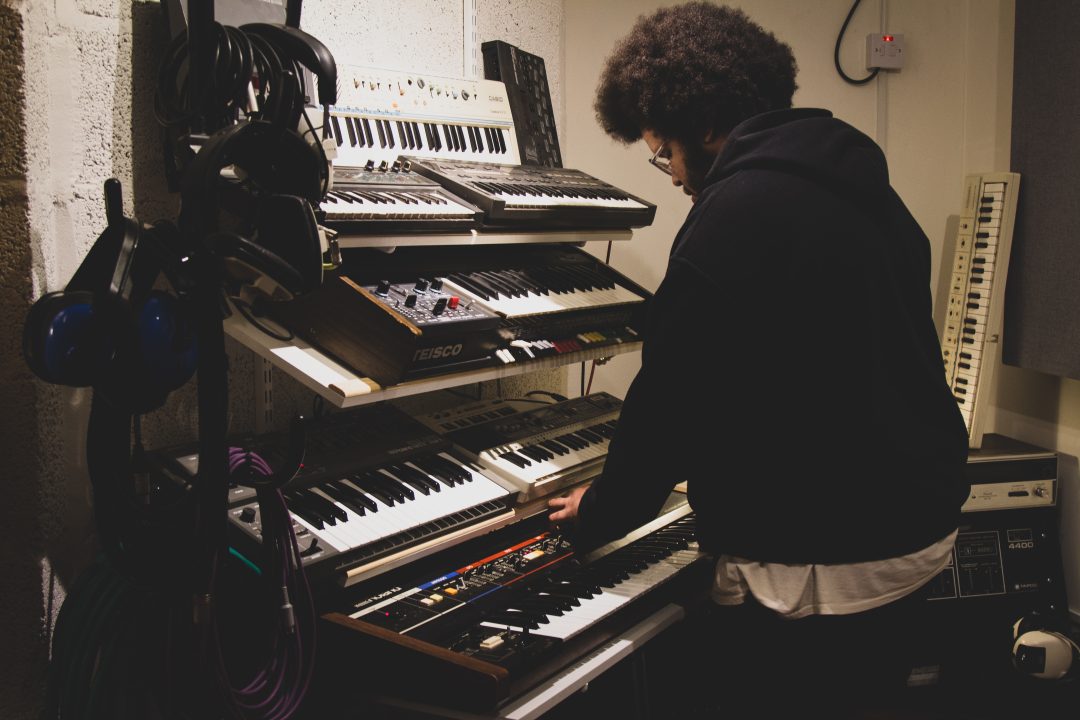
Today, Lawi describes his sound as “a combination of funk, nineties shoegaze, and the New York indie scene of the 2000s.” On stage, he plays bass and sings lead vocals, with guitar, drums, backing vocals, and synths provided by his band. In the recording studio, however, Lawi does almost everything himself, sometimes with the addition of keys and production.
A lot of people who need an avenue for expression do that because it helps them cope. It’s a filter through which you process the things that happen to you
His musical inspiration is deeply personal: “I’m mixed race and a lot of my dad’s influence is ingrained in my subconscious by way of his traditional African-ness, traditional Ugandan-ness. As a dualistic person, [I’m] trying to make the most out of that duality and translate it into a musical form that is legible and that people feel something towards.”
Lawi’s second album, Centenarian, was released in September last year. Making it was a challenge. “It’s difficult for me to listen to the album because I can hear where I was when I was making it, which was not the rosiest of places,” he says.
“I was quite depressed and feeling very angsty because I’d been in therapy for a while and it was bringing a lot of stuff to the surface. It was a lot of unravelling of all these things that have come out of childhood experience.”
Still, emotional honesty is part of what makes Centenarian so compelling. “No thing that I’m feeling is necessarily bad. It’s all just part of the gallery of human experience that we are baked with. You are allowed to feel all these things.”
Precarity in the arts
For Lawi, music is a direct channel for human connection and essential to the mental health of creators. “A lot of people who need an avenue for expression do that because it helps them cope. It’s a filter through which you process the things that happen to you,” he says.
Yet despite this momentous human value, funding in the arts remains precarious. In Bristol, the culture sector generated a reported economic impact of £892.9m in 2023-2024, with £122.4m of this deemed “social value”. Yet last year, Bristol City Council proposed to cut funding for arts organisations by removing its Cultural Investment Programme, worth £635,000, by 2029. The proposal was scrapped in January 2026, but the contingency of arts funding remains a weighty consideration for those working in the sector.
In this context, the impact on artists’ mental health can be huge – something Lawi has witnessed in the people around him. In addition, working at the Pervasive Media Studio, which he describes as “an incubator space for creative freelancers and creative businesses,” has been a key factor in shaping his view of the arts sector and its pressure points. “I’m very lucky to have a job… I come from a working-class family and I’ve always understood the importance of juggling economic precarity with fulfilment. But not everyone has that luxury.”
Mental health and masculinity
Intersecting with this are the specific challenges faced by men, which he’s observed through his work in mental health.
“A lot of the issues that men face in creative industries, from my observations, tend to be about who they feel they should be, based on an unspoken set of rules set by other men. The amount of energy that takes is a proper mindfuck,” he says.
On top of this, the frequent lack of nuance in online discourse can be counter-productive. “I think part of the issue with men’s mental health right now is that they feel like for the past 10 or so years, they’ve been told ‘everything is your fault, dude.’ But we have to change how we have the conversation”.
He continues: “I feel like it’s about saying: ‘you benefit from patriarchy, and you need to know what to do with that privilege and what it means, but you aren’t the reason for everything bad, just for existing’”.
Despite all the structural, sometimes existential challenges that Lawi has witnessed in Bristol’s creative scene, the will to move forwards is strong. “I’m finding hope in… seeing young people who are having these conversations from a young age. There’s always going to be mistakes. It’s just how you deal with those mistakes and how you teach people that it’s okay to make mistakes. It’s all about responsibility.”
Meanwhile, creative life remains a fundamental source of resilience. “Find your thing, because that’s gonna be the thing that will sustain you ultimately. Find your people, find your space, really love it sincerely and just be you.”
Independent. Investigative. Indispensable.
Investigative journalism strengthens democracy – it’s a necessity, not a luxury.
The Cable is Bristol’s independent, investigative newsroom. Owned and steered by more than 2,600 members, we produce award-winning journalism that digs deep into what’s happening in Bristol.
We are on a mission to become sustainable, and to do that we need more members. Will you help us get there?
Join the Cable today