Bristol activists stand with the West Bank olive harvest
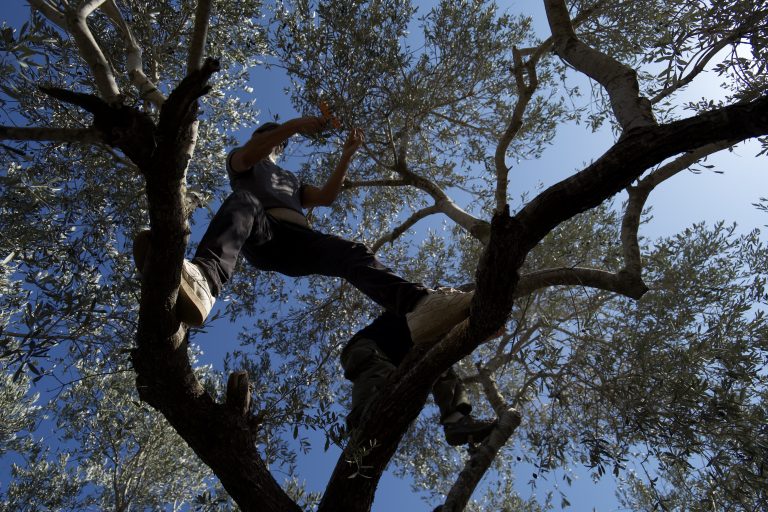
Each autumn, as the olives ripen across the West Bank, families return to the groves for harvest. The season traditionally brings communities together in shared labour, song, and storytelling — rituals passed down through generations.
Olives are a major source of income for Palestinian families, providing vital revenue. Their fruit and oil are staples in the kitchen.
But more than that, olive trees, their roots centuries-deep, stand as living testaments to generations of Palestinians and their connection to the land.
Every harvest unfolds under threat. Thousands of olive trees have been uprooted or burned by settlers and military forces. Attacks have made the season one of the most dangerous times of the year.
In 2024, a 59-year-old woman was shot dead by an Israeli soldier while picking olives. During last year’s harvest, settler attacks averaged eight a day.
As the renowned Palestinian poet Mahmoud Darwish wrote: “If the olive trees knew the hands that planted them / Their oil would become tears”.
I first joined the olive harvest in 2002, the year the Palestinian-led International Solidarity Movement (ISM) was established. This is the fifth year in a row I have worked on the ground in the West Bank. Each time I return, the situation worsens. This year was the worst yet.
Last year, I wrote a piece for the Cable about rural communities struggling to remain on their land. Since then, several of these villages have been emptied entirely. In others, only a few households remain.
I want to tell the story of the village of Beita because it captures what the harvest has become — and why international solidarity now feels more necessary than ever.
The ambush on Qamas Hill
As I walked with Palestinian, Israeli, and international comrades through the olive groves, the air was charged with excitement and trepidation. We were heading to the top of Qamas Hill, overlooking the West Bank village of Beita near Nablus, close to the Israeli outpost of Mevaser Shalom.
It was the first day of the Zaytoun2025 campaign last October—a coordinated effort by Palestinian groups and international supporters to help farmers safely harvest their olives. Around 100 local farmers and more than 60 volunteers took part.
A local farmer I met, Bassem, told me he had harvested there safely in previous years. Since the outpost was established, it had become dangerous.
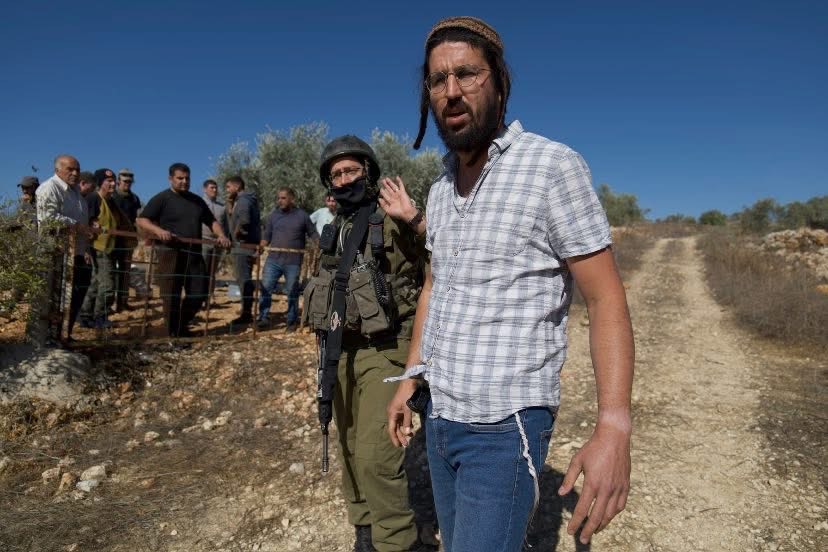
Outposts have expanded rapidly across the West Bank. They are illegal under international law, often used as staging posts for deadly attacks.
Since 2022, over 130 have been built — more than in the previous two decades combined. Settlers from these outposts have forcibly displaced 52 Palestinian communities since October 2023.
The Qamas outpost is inhabited by the Hilltop Youth, a violent settler group supported by Israel’s interior minister Itamar Ben Gvir. While the Israeli military and reservists are occupied with the genocide in Gaza, settlers are on the offensive in the West Bank, carrying out increasingly frequent violent assaults.
As we reached the top of Qamas hill, we split into smaller groups. My group placed ladders against the trees and laid-out tarpaulins to catch the olives, before gathering them into sacks. The road was already lined with military vehicles.
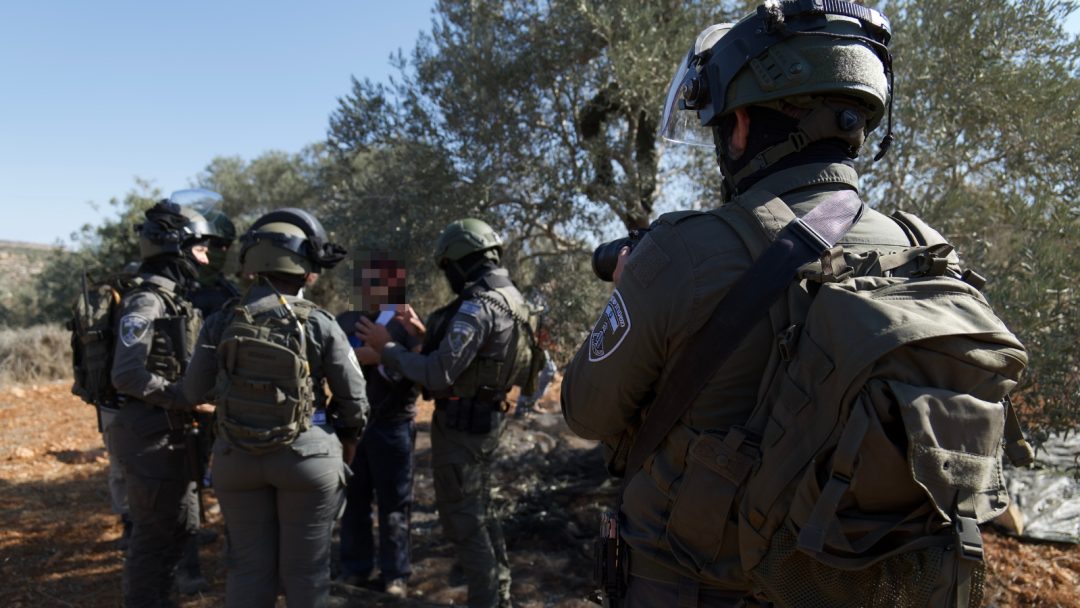
Within minutes, around twenty settlers confronted us, shouting at us to leave. We stood with the Palestinian farmers, holding our ground. The army fired tear gas. One soldier shot a canister directly at a Palestinian journalist, injuring his leg, and he was rushed to hospital.
A negotiation began, between villagers and the military, about where they could pick the olives, and for how long, lasting several hours. The soldiers allowed a limited window to pick each small grove – between fifteen minutes and half an hour – before giving us an ultimatum: move on or face another volley of gas.
Despite the restrictions, our sheer numbers allowed us to fill several sacks of olives and spirits remained high. As the army readied their tear gas guns again, we decided to leave, hoping to return the following day.
At that moment, we were ambushed. Masked settlers had descended from the hillside and began torching our vehicles. As the first truck was set alight, the settlers started firing live ammunition. We retreated down the hill, carrying the olives and equipment. The settlers pursued, throwing rocks. In total, eight vehicles were destroyed and 20 people were hospitalised.
Beita pays the price
The villagers were determined to continue the harvest. A few weeks later, armed settlers tried to ambush us again, but we escaped into the village with the olives. In early November, an attack by 50 settlers injured 14 olive pickers, journalists and activists in the village.
Beita paid heavily for their resistance. On 11 October – the day after the violence on Qamas Hill – 13-year-old Aysam Naser went out picking olives again with his family. Tear gas fired by the army caused him to collapse. He fell into a coma and died three weeks later.
He joins 20 others who have lost their lives in Beita’s anti-colonial struggle since 2021, including ISM volunteer Ayşenur Eygi, targeted by a sniper in 2024 while attending a demonstration in the village in 2024.
Despite the violence, many local farmers I spoke to considered the Zaytoun campaign a success.
Why access to land matters?
It could be hard to comprehend why Palestinians risk their lives to reach their olive groves. But the threats they face are part of a deliberate strategy.
Settlers establish outposts on hilltops, often using them as bases for attacks on nearby villages. The Israeli military then restricts Palestinian access to the surrounding valleys, under the pretext of “security.”
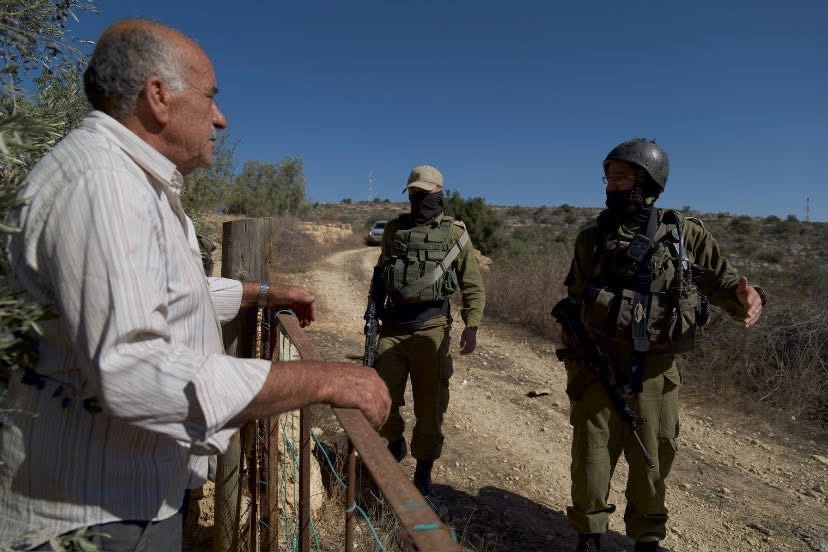
The army sometimes allows farmers short harvesting windows or bars them from harvesting entirely, making simple agricultural work dangerous. When land is left uncultivated, settlers claim it is “state land” and push for it to be formally transferred to them.
The state frequently legalises these outposts after the fact, rewarding settlers for their expansion and cementing the displacement of Palestinian communities.
In this context, harvesting olives is not only about income – it’s an act of resistance, a way to maintain legal and physical presence on the land.
Bristolians showing solidarity
Beita was one of dozens of villages supported during the Zaytoun 2025 campaign. Without the collective presence of volunteers, much of the crop would likely have gone unharvested.
The Israeli authorities tried to disrupt the campaign, deporting 32 activists and denying entry to many others. One Zaytoun organiser, Rabia Abu Naim, has been imprisoned since October last year. Others risk indefinite incarceration.
Places may be erased from the map, but they remain in memory
Bristolian Eva Rubin joined ISM three years ago. “I’ve been trying to integrate my Jewish identity with engagement in Palestine solidarity,” she tells me. She sees ISM’s work as significant: “it contributes to resistance through sumud” – the Palestinian practice of steadfastness on the land in the face of colonial oppression.
Elle Rosetta, a former Bristolian, has taken part in demonstrations in solidarity with Palestine since she was 15. “I want to make sure they know they’re not on their own,” she says.
She reminds me of a time when we’d both travelled to a village near Nablus. Armed settlers, accompanied by a large dog, drove down to intimidate farmers. One settler got out of the vehicle and waved a gun.
“They wanted violence, to put a stop to this joy, to intimidate,” she said. They did not succeed, the day ended without incident, we enjoyed lunch in the groves, and returned home laden with olives.
Weeks later, Elle and other activists stayed in Al Khalayel, one of the last Palestinian families remaining in the hamlet, who were subject to continuous harassment. In the middle of the night, eight masked settlers entered the family home and attacked everyone. She and other family members were hospitalised
In an incredible display of defiance, the family decided to stay in their home, with the support of ISM volunteers. However, the violence escalated and the remaining families were finally forced to leave in February 2026. A member of the family told ISM, “Places may be erased from the map, but they remain in memory”.
Palestinians show extraordinary courage, taking huge risks just to stay in their homes, tend their land, and harvest their fields.
And volunteers the world over come to stand with them, enduring tear gas, beatings, live ammunition, intimidation, arrests and deportations—putting their bodies on the line in solidarity.
ISM welcomes activists from around the world all year round. If you want to find out more check out palsolidarity.org or ismpalestine on Instagram.
Photos byDiana Khwaelid. Diana is a Palestinian photojournalist from Tulkarem in the northern West Bank. She has spent the last nine years documenting the crimes of the Israeli occupation against Palestinian communities.
Independent. Investigative. Indispensable.
Investigative journalism strengthens democracy – it’s a necessity, not a luxury.
The Cable is Bristol’s independent, investigative newsroom. Owned and steered by more than 2,600 members, we produce award-winning journalism that digs deep into what’s happening in Bristol.
We are on a mission to become sustainable, and to do that we need more members. Will you help us get there?
Join the Cable today



Report a comment. Comments are moderated according to our Comment Policy.
Thank you for covering this so powerfully.
Thank you from Bethlehem, Palestine.