The Greens’ UBI proposal doesn’t go far enough
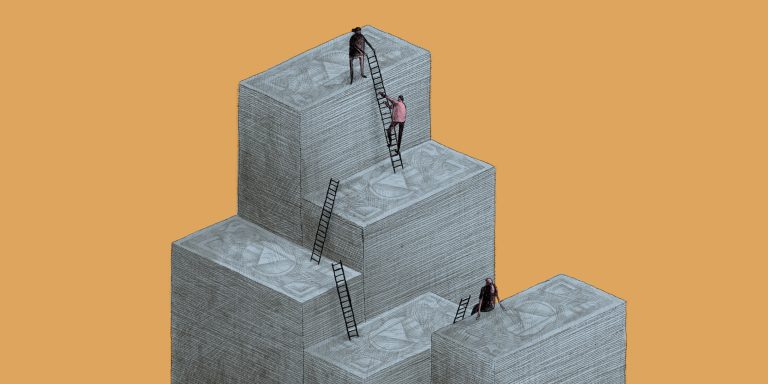
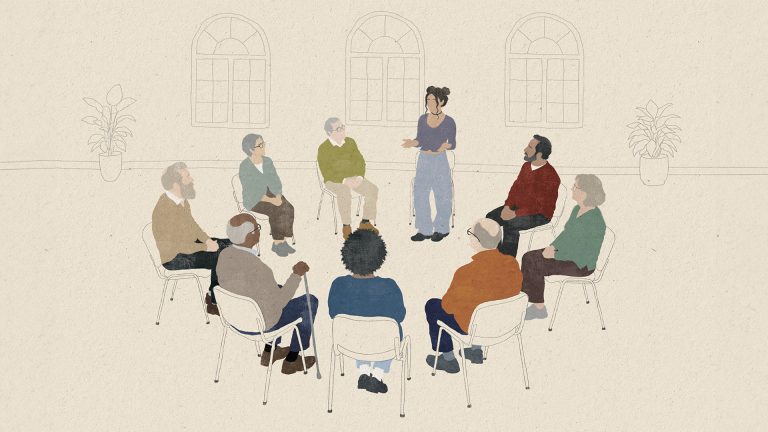
Illustration: Alex Dimond
At the start of 2026, the Green Party put forward a motion to Bristol City Council to lobby the government for a Universal Basic Income (UBI) pilot in the city.
The motion argues that the current system of Universal Credit is causing hardship to communities, and that UBI is the best way to tackle the fallout from Covid-19, artificial intelligence and climate change. It also makes bold claims about UBI’s potential to address inequality, poverty and loss of community, but the details are lacking.
Reactions to the motion online have been mixed. One controversial aspect of the trial is that, if approved by central government, payments would target the arts and cultural sector, raising pointed questions around class.
“Politically it’s likely to be a disaster. No problem with care-leavers, but.. the creative sector? This is some kind of joke, right?” said one Cable reader who responded to our online call out. “This will be portrayed as a subsidy scheme for middle-class graduates. Why not single mothers? Why not those unemployed over 50 who are unlikely to find new jobs?”
Other readers were more sympathetic, with some arguing that pilot studies like this could be the first step in developing a more robust form of welfare. But it begs the question, why not campaign for higher Universal Credit, or a less punitive benefits system?
What is UBI?
The basic idea is that everyone, regardless of income, receives a minimum payment from the government to cover essential costs every month.
How it differs from our existing welfare system is that it is not means tested. Those who don’t need the payment would simply pay it back through tax, through a combination of lowering the income tax threshold and raising income tax rates, balancing out the additional UBI income.
“The current welfare system spends more on administration than it does on actual welfare payments,” said Bristol Green Councillor Ani Townsend, who proposed the motion. “We could actually save money by scrapping cruel and demeaning means-testing”.
She continued: “The savings wouldn’t just be from the benefits payments themselves, but the wider societal impact. UBI could help to reduce child poverty, homelessness, and illness from malnutrition or stress, which could all have knock-on savings for local councils and the NHS.”
Do the ends justify the means?
According to the National Audit Office report for the fiscal year 2024-25, the Department for Work and Pensions (DWP) spent a total of around £298bn.
Of that, £143.3bn was spent on benefits to pensioners, £83.9bn on benefits to working people, including Universal credit, and £46.3bn was spent on disability benefits. The claim that the benefits system spends “more on administration than welfare payments” therefore appears unsubstantiated.
According to a report by Compass, to completely eradicate child and adult poverty, the cost of UBI would be closer to £677bn, more than double the amount currently spent on benefits. This would require significant tax rises to be viable. Green Leader Zack Polanski’s proposed 2% wealth tax on people with assets over £10m would raise just £25bn annually, falling far short.
Costs aside, another argument in favour of UBI is that it will be necessary to face the rising threat of rising unemployment from AI. A non-means-tested income, advocates argue, would give people the ability to retrain and ‘upskill’, but evidence supporting this claim is weak.
Testing UBI in Finland and Ireland
Proponents of UBI often argue that an unconditional safety net could lift people out of poverty by giving them more time to apply for jobs or learn new skills. Upskilling has become a new buzzword in Westminster, where it’s seen as a potential solution to the looming threat of AI-induced unemployment.
The first European pilot to test the upskilling effects of UBI happened in Finland in 2017. It provided 2000 unemployed Finns with 560 euros per month for two years. To the disappointment of the centre-right Finnish government, the study found the payment did not improve the recipients’ ability to find work, but they did see an improvement in overall psychological wellbeing.
Could anyone playing a didgeridoo in their bedroom be eligible for this arts-targeted UBI?
Neil Maggs
The Greens’ UBI proposal is more similar to the targeted pilot carried out in Ireland from 2022 onwards. Designed to help the arts sector recover from the economic fallout of the Covid-19 pandemic, the scheme provided €325 weekly to 2,000 randomly selected artists. The Irish example found that artists had better mental health outcomes and were able to engage in more creative work, which ended up generating positive net tax revenue.
Cllr Townsend believes a UBI trial for Bristol could produce similar results: “For every £1 the council spends on the cultural sector in Bristol, it gets £88 in return. A UBI for artists in the city would give them the time and space needed to engage in cultural work, without having to work two or three jobs on the side to make ends meet. The knock-on benefits of this extra cultural output could be a big boost for the local economy.”
The class issue
Yet some are sceptical. In his recent interview with Cllr Townsend, Cable reporter Neil Maggs asked who counts as an ‘artist’ for the purposes of this policy. As he put it, “could anyone playing a didgeridoo in their bedroom be eligible for this arts-targeted UBI?”
Cllr Townsend replied that for a person to be eligible, they would need to prove that they were already working in the sector. Given the barriers to entry into the culture and arts sector, this raises some uncomfortable questions about class.
A 2024 report from the Sutton Trust found that 43 per cent of classical musicians, and 35 per cent of Bafta-nominated actors went to private schools, a huge overrepresentation compared to the 6% of the UK population who are privately educated.
What’s more, this pattern has become worse over time. Research published in 2022, using data from the Office of National Statistics, found that the proportion of creative workers with a working class background had more than halved, from 16.4% in 1962 to just under 8% four decades later.
Simply put, there is a risk that the UBI proposal in its current form could discriminate against those from disadvantaged backgrounds, while giving those from more privileged backgrounds the chance to receive an unconditional income.
“I grew up in poverty and it was definitely a shock for me when I went to an arts university in London, to find so many of my peers had been privately educated,” said Townsend when questioned on the issue.
On the Bristol pilot, she said: “We haven’t ironed out the details, but I see the arts-UBI as a way to preserve and grow working-class presence in the culture sector. Working-class art and culture is really important to resist capitalism.”
A noble aim, but is UBI really the right way to achieve it? Afterall, don’t we all deserve the chance to produce art and culture, rather than just a lucky few?
The challenges ahead
Whether AI will increase unemployment remains to be seen. What is clear is that there is plenty of work that needs doing right now. We desperately need to build renewable energy infrastructure, better public transport and flood defences.
Rather than giving people a UBI, in the hope that they’ll spend their time upskilling, why not subsidise apprenticeships, or offer state-funded vocational training to fill these skill gaps?
The care sector is one area with a consistent lack of workers. According to Skills for Care, there were 111,000 vacant posts in 2024/25. In Bristol specifically, there is a high turnover rate in care jobs, partly caused by low pay. The average pay for a care worker in Bristol was £12.28 in 2024-25, just 74p above the National Living Wage.
Funds for a ‘targeted UBI’ could be better spent ensuring carers receive a decent wage.
In a country facing the challenge of demographic aging in the near future, current levels of poverty pay in care work are not sustainable.
A truly radical policy requires a more active role for state-planning to ensure that unprofitable but socially valuable work gets done. This would be a significant challenge, which UBI doesn’t come close to addressing. Addressing the challenge ahead of us requires setting out a path for sharing the work that needs to be done more equitably. If that work was more fairly distributed, everyone would have more time to engage in their passions and artistic endeavors.
Only when work is more fairly shared will we get a society where all are able to take part in the collective creation of culture and art.
Rae Deer is an economist and freelance writer.
Independent. Investigative. Indispensable.
Investigative journalism strengthens democracy – it’s a necessity, not a luxury.
The Cable is Bristol’s independent, investigative newsroom. Owned and steered by more than 2,600 members, we produce award-winning journalism that digs deep into what’s happening in Bristol.
We are on a mission to become sustainable, and to do that we need more members. Will you help us get there?
Join the Cable today





Report a comment. Comments are moderated according to our Comment Policy.
Perhaps a first step should be Universal Basic Services as suggested by the economist Richard Murphy, that are properly funded and not underfunded or privatised eg NHS health, education, public transport,…
“Anything we can actually do we can afford.” as Keynes said …the money is available as all countries with a fiat currency as described by MMT (Modern Monetary Theory) is how the government spends, then taxes to control inflation, mold the economy eg redistribution, investment in the real economy not money making money of parasites in The City of London. The constraints are the availability of resources ie. people, minerals, factories.. (to limit inflation) and ecological limits,.. not finance.
can create the money that is required