Behind the buzz: Flawed science, industry influence and the untold harm of energy drinks


Content warning: This story contains reference to suicide
This story is part of the Behind the Buzz project, an investigative reporting collaboration involving The Examination, The Bristol Cable, Daraj, Investico, Paper Trail Media, Der Spiegel, Der Standard, STAT and the Toronto Star.
“You came a long way,” Chris Alford was told as he took the stand before Suffolk County lawmakers in February 2011. The University of the West of England (UWE) professor travelled from Bristol to Long Island, New York, to give evidence on the county’s proposals to ban the sale of energy drinks to children.
During his career, Alford, who is now retired, specialised in research on energy drinks. His studies, often co-authored with Dutch academic Joris Verster, examined the effects of these caffeinated beverages on physical and mental performance, as well as what happens when energy drinks are mixed with alcohol.
Verster was also at the hearing, alongside Andreas Kadi, chief scientific officer of energy drink giant Red Bull. All three gave evidence that disputes the risks associated with consuming energy drinks. After the hearings, Suffolk County’s proposed age-limit ban was rejected. Two years later, a watered-down version of its plans is implemented.
The three scientists shared more than a research interest: through paychecks or research grants, all had received money from Red Bull. In fact, for more than a decade, Red Bull paid hundreds of thousands of dollars for university professors to conduct research that has been favourable to the energy drink industry, a cross-border investigation involving the Cable has found.
Research backed by Red Bull, or carried out by researchers with ties to the company, has been cited by government reports and scientific assessments in the UK, Canada, and the EU, shaping debates over whether energy drinks should face tighter controls.
The studies have been nearly unanimous in their message: consuming energy drinks and alcohol together is no more harmful than drinking alcohol alone. That message stands in stark contrast to the findings of independent researchers and some health bodies.
The Cable’s partner, The Examination, gathered more than 100 studies about the health or behavioural risks of mixing energy drinks and alcohol. Of the studies that received funding from Red Bull or were conducted by researchers who disclosed financial conflicts of interest with the company, 95% concluded that mixing alcohol with energy drinks did not increase those risks. Roughly 80% of independent studies reached the opposite conclusion, The Examination found.
Almost all of the studies that disclose financial ties to Red Bull involve Verster, a professor at Utrecht University. Many are co-authored by Alford and Sean Johnson, a data analyst and former colleague of Alford whose doctorate at UWE was funded by the energy drink giant.
Last month, the UK government confirmed it would ban the sale of high-caffeine energy drinks to under-16s in England. But the announcement comes after years of Red Bull funding scientists at universities such as UWE to conduct research that has been favourable to their products. At what cost?
Counting the Cost
“My job as a GP feels a bit like trying to fish people out of a river,” sighs John, whose practice is based in Chew Valley, North Somerset. “But just upstream there are people making shit loads of cash for basically throwing people in.”
John responded to a Cable callout asking readers about their experiences with energy drinks. He described a patient who suffered extreme weight loss after abruptly stopping a routine of seven energy drinks a day.
“I’d like to say this was unusual but it’s not the only time that I’ve come across similar stories. People don’t realise how toxic this stuff is,” John says. “They think that because it’s for sale in a shop it must be safe to drink, and in pretty much any quantity.”
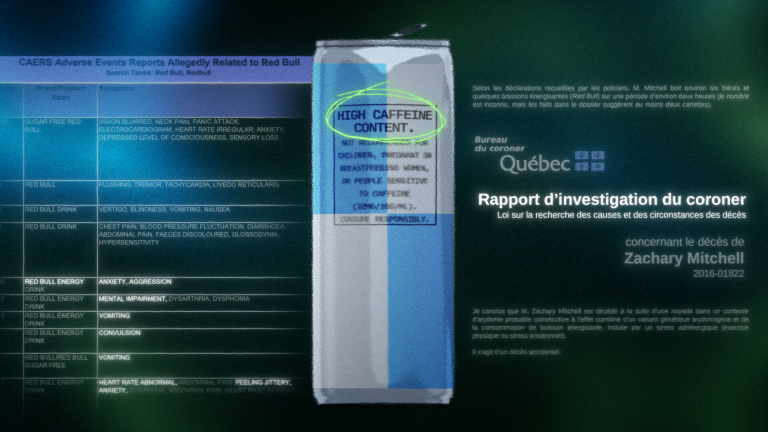
Reports of adverse events linked to energy drinks, particularly when consumed in excess or mixed with alcohol, are well documented. Concerns have centred on cardiac effects, but researchers have also raised questions about mental health impacts, especially among young people, a key market for the industry.
In 2017, 25-year-old Justin Bartholomew from Newhaven, East Sussex, died by suicide after a period of consuming up to 15 energy drinks a day. His family said he had turned to the drinks as a coping mechanism following the breakdown of his marriage.
An inquest into his death heard that Justin suffered anxiety, telling medical professionals he was experiencing overwhelming panic attacks in the days before his death. His father, Keiron, said he believed his son’s heavy consumption of energy drinks had contributed to his declining mental health.
“They should be banned,” he told his local newspaper. “The amount that he was drinking, he was just buzzing. The sugar is the sweetness that makes you [want] more. Caffeine in high quantities is a no-no.”
In 2014, 18-year-old Jayde Dinsdale from Yeovil, Somerset, suffered three cardiac arrests after drinking 10 Jägerbombs — a mixture of energy drink and Jägermeister — in one night. She spent three weeks in hospital and was fitted with a cardioverter defibrillator. Jayde said she was placed in an induced coma to protect her brain.
“I think it’s pretty bad that people sell these drinks,” she told a national newspaper. “You’ve no idea how much caffeine is in them and how dangerous they can be. I hope people will think twice about drinking energy drinks — they could be deadly.”
Similar incidents involving energy drinks have been reported in the UK and internationally. But measuring harm has largely been confined to academic research, with no official method of recording fatalities or health issues potentially linked to excessive consumption.
More than 120 people suffered a range of health problems, such as cardiac events, strokes and seizures, among other conditions, after drinking energy drinks, according to a review of news reports from nearly a dozen countries, and allegations made in lawsuits filed in the US. Over 40 of those people reportedly died. Reports and lawsuits date from the early 2000s to this year, The Examination and reporting partners found.
According to the Office for National Statistics (ONS), the words ‘energy drink’ and relevant variations have been mentioned on a death certificate registered in England and Wales five times between 2001 and 2024: three times where the cause of death was registered as accidental poisoning by and exposure to noxious substances, once when the cause was intentional self harm, and once when the death was related to a heart condition.
These figures were compiled by the ONS following a Freedom of Information (FOI) request by the Cable and are likely an undercount of the number of deaths linked to the consumption of energy drinks.
Some governments, including until recently in the UK, have failed to agree to age restrictions on the sale of energy drinks due to a lack of “scientific evidence”. Some leading academics believe this is in part down to the industry’s influence on academic studies, which governments and scientific committees take into account when considering the potential harms energy drinks cause.
‘Undermined the Evidence’
“When ice cream sales rise, so do the number of shark attacks.” That was the analogy Alford and Verster used in a 2011 editorial titled Unjustified Concerns about Energy Drinks.
Their point was that warm weather brings more people to the beach, increasing both ice cream sales and shark attacks. One does not cause the other. In the same way, they said there was no evidence that mixing alcohol with energy drinks caused the harmful behaviours associated with alcohol.
“It would therefore be unjustified to restrict ice cream sales in the hope of reducing shark attacks,” they wrote. Verster used this same shark analogy when he and Alford gave evidence at the Suffolk County session in 2011.
The academics first collaborated over two decades ago, and became prolific researchers in a field known as AMED — alcohol mixed with energy drinks.
Alford and Verster have longstanding ties to Red Bull. Some of their work has been backed by the energy drink giant, and they’ve even been scientific advisors to the company. While Alford is now retired, Verster continues to work in the pharmacology department at Utrecht University, and, according to his staff profile, remained as a consultant for Red Bull until May this year.
And they’re not alone. They’re part of a wider group of AMED academics who have produced studies funded in part or in full by Red Bull, or who have declared financial ties to the energy drink giant. The key hubs for this research were UWE in Bristol, Utrecht University in the Netherlands and Swinburne University of Technology in Australia.
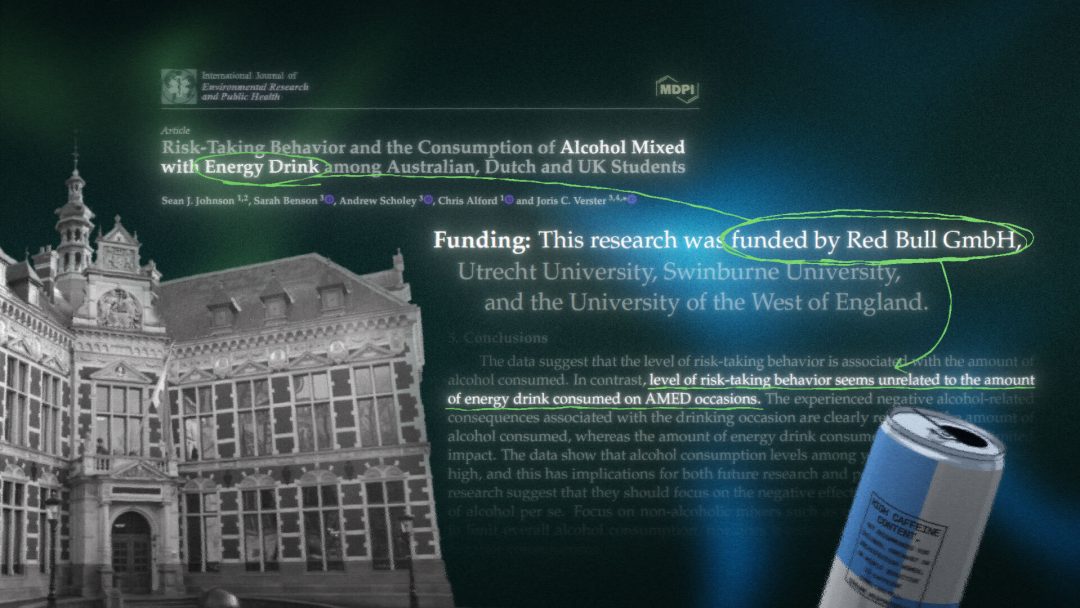
Other academics and leading alcohol researchers argue that some of the studies with ties to Red Bull used methods that downplayed the risks of mixing alcohol and energy drinks.
Peter Miller, a Professor of Violence Prevention and Addiction Studies at Deakin University in Australia, has been an outspoken critic of industry-funded AMED research. In 2013, he wrote an opinion piece in the British Medical Journal expressing concern that research supported by industry “does not consider real-world levels of consumption”.
Those research grants are “an investment using universities’ reputation to be able to influence policy,” Miller told The Examination. “This is a campaign to protect their profits and to avoid legislative intervention.”
Red Bull-funded researchers have “absolutely undermined the evidence base,” he added. “It leads to this doubt where politicians don’t act.”
In contrast to the findings by researchers with links to the company, public health authorities such as the U.S. Centers for Disease Control and Prevention, as well as independent researchers, have found that mixing alcohol with energy drinks is associated with binge drinking, injuries and unwanted or unprotected sex.
A serious challenge to industry-funded AMED research came from Boston University academic Jonathan Howland, who shared his experience with The Examination.
In 2012, Howland and his team backed out of a Red Bull research contract after raising concerns about the methodology. The research was carried out in partnership with Verster, and was intended to replicate research by him and his colleagues in a US context. Verster’s preliminary findings had suggested that mixing alcohol and energy drinks did not cause people to drink more or suffer higher rates of harm.
The key to Verster’s research was that he didn’t look for differences between people who drank only alcohol and people who consumed both alcohol and energy drinks, Verster told The Examination.
Instead, he built his studies around people who did both, comparing outcomes between when they consumed alcohol alone and when they consumed it with energy drinks. This eliminated variables such as personality type and enabled him to test for causality, Verster said.
But the study’s design didn’t sit well with the Boston researchers. Howland and his team were alarmed because the survey that Verster’s team had provided defined alcohol mixed with energy drinks to include only alcoholic beverages consumed within two hours of an energy drink. That could underestimate binge drinking and harm linked to energy drinks, Howland’s team determined. There was no restriction on which drinks were counted when participants drank alcohol alone.
When the team raised their concerns, Verster refused to change his approach. Howland said the message was clear: “If you want the money, you do it exactly the way we tell you.”
In an email to The Examination, Verster acknowledged that the Boston researchers raised questions about the study methodology. He said he didn’t change it because he wanted the findings to be comparable to his earlier research.
Regarding his definition of mixing alcoholic and energy drinks, he wrote that the two-hour limit was meant to exclude energy drinks consumed much earlier in the day, not to limit the number of alcoholic drinks counted.
Five alcohol research experts consulted by The Examination said they agreed with the Boston team that the approach by Verster’s team was flawed. The half-life of caffeine is five to six hours — meaning that five to six hours after someone ingests caffeine, half of it remains in their system.
A Red Bull-funded PhD
Despite the concerns raised, Red Bull’s support of Verster’s research continued.
Later that year, he and four colleagues published a study of Dutch students, funded by the company, that used the disputed approach and came to a surprising conclusion: people were better off when they mixed alcohol with energy drinks than when they drank alcohol alone. When they combined the two, they drank less alcohol and were less likely to suffer harmful consequences, the study concluded.
That methodology also became a blueprint for other AMED research.
From 2016 to 2021, Red Bull-funded scientists published at least five more studies using the same definition of mixing alcohol and energy drinks. All concluded that mixing did not lead to increased drinking or harm. Along with Verster, co-authors of these studies included Alford and Sean Johnson – the data analyst whose studentship at UWE was funded by Red Bull.
Johnson reflects on his earlier AMED research in a commentary that was part of his doctoral submission in 2023. He wrote that research on mixing alcohol and energy drinks seemed to have become politicised: at times, going through the peer review process “felt like you were in the trenches.”
“I may have developed an unconscious bias towards my academic group and industry funders position
“I may have developed an unconscious bias towards my academic group and industry funders position,” Johnson wrote, adding “Red Bull GmbH” in parentheses after “funders.”
Johnson did not respond to the Cable’s repeated requests for comment.
It’s not clear if UWE was aware of the controversy surrounding the methodology contested by Boston University when proposals for the AMED studies carried out there were presented to its ethics committee. Following a series of FOI requests by the Cable, the university said it did not hold records of the decision-making that took place at the time.
UWE initially said that it held no contractual information related to the work by Johnson or Alford and Red Bull, but after the Cable asked for an internal review of its response, the university confirmed “some” contractual information was held. However, the university refused to disclose any related documents as the time it would take to review and redact sensitive information would take longer than the statutory limit for processing FOI requests.
The Cable has now seen a table of contents that explains what contractual information is held in relation to the studies — two research agreements and a studentship agreement — and has requested copies of the documents. UWE is yet to respond to this request.
Despite so far not releasing information that would help demystify the extent of its involvement and decision-making over the AMED studies, UWE did confirm that Johnson’s studies at the university were funded by Red Bull. The funding was awarded directly to the institution in 2012, and Johnson began work on his PhD — which was later changed to a DPhil, a course that can take several more years to complete — in 2014.
In 2017, UWE’s student union (SU) received £43,000 from Red Bull to fund a research post for two years. Charity Commission records show it funded an ‘Alcohol Impact accreditation’ related to Late Night Do It Right – an initiative run by the SU aimed at encouraging students to have a healthier relationship with alcohol. In response to a request for comment from the Cable, the SU confirmed that Johnson worked for the SU at the time but did not say if he was involved in this project.
Asked if UWE received funding from Red Bull for any of the AMED studies, a spokesperson said they could not find evidence of any external funding at all beyond Johnson’s studentship. They added: “It’s possible that these studies were funded internally as a result of the funded PhD studentship, but we do not retain financial information applicable to internally funded research.”
In a separate comment sent to the Cable, a UWE spokesperson said: “Doctoral theses go through multiple layers of review by several individuals before they are published, following requirements that are set by the Office for Students who grant all universities their awarding capabilities.”
From Paper to Politics
While the number of AMED studies with financial ties to Red Bull is relatively small, the body of research has been influential. Reports on energy drink policy by governments or advisory bodies in the UK, Canada, Australia, Spain and Ireland have cited these studies, The Examination found.
In the UK, research with financial ties to Red Bull was cited in a 2012 statement on the health effects of mixing caffeine and alcohol issued by the Committee on Toxicity of Chemicals in Food, Consumer Products and the Environment (COT) — an independent body that advises the government on chemical risks.
It mentions a literature review by Verster, Alford and a colleague from the Medical University of Vienna published that same year, which found “little evidence” that energy drinks antagonise the behavioural effects of alcohol or alter the perceived level of intoxication of people who mix the two beverages.
The COT statement concluded that the current balance of evidence “does not support a harmful toxicological or behavioural interaction between caffeine and alcohol.” But it acknowledged “substantial uncertainty” due to limitations of the available data, and stressed that the conclusion should be reviewed if new evidence emerges.
Research with financial ties to Red Bull has also been influential outside of the UK.
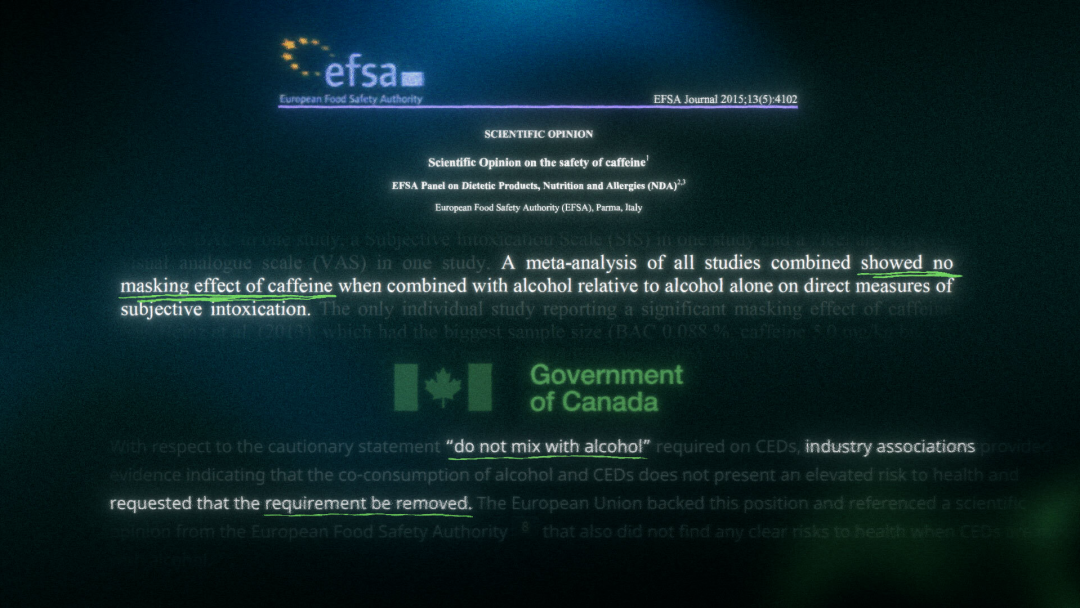
A 2014 review authored by Verster, Alford, and other researchers with financial ties to Red Bull was cited in a 2015 report by the European Food Safety Authority (EFSA). That report broadly endorsed the safety of caffeine and energy drinks.
The researchers reviewed laboratory studies to determine whether mixing alcohol and caffeine caused people to get drunk without realising it, a phenomenon known as “masking.”
They concluded that masking was not a threat. The EFSA report echoed Verster and his colleagues’ conclusion that masking — and more generally, mixing alcohol and energy drinks — was not a serious concern.
For more than a decade, the food authority’s report has been a key reference regarding energy drinks in Europe and beyond. Governments and advisory bodies in the UK, Canada, Germany and other countries have cited it. In 2022, Health Canada cited the report when it removed a decade-long requirement that energy drinks include the warning “do not mix with alcohol”.
Industry has referenced it too. In 2018, when the UK government was considering a ban on energy drinks, Monster Energy submitted evidence to the Science and Technology Committee, a parliamentary select committee responsible for scrutinising UK government policy relating to science and technology.
The energy drink company cited the 2015 EFSA report multiple times, specifically mentioning that governmental organisations, including EFSA, “have repeatedly evaluated and concluded that energy drinks pose no particular risk for children and adolescents.”
EFSA recently said that it would revisit its findings on caffeine and energy drinks, following pressure from the European Parliament. Though it will address safety for children and teenagers, it will not address the risks of mixing energy drinks and alcohol.
This month, the UK government announced that a ban on energy drinks being sold to under-16s will take effect from April 2027. The government said that the ban would ensure that children’s health would be “better protected from the harms linked to high-caffeine energy drinks”.
But the path to get here has been long.
Most major supermarkets introduced a voluntary ban on selling energy drinks to under-16s in March 2018. A year later, the then-Conservative government announced plans for a wider ban following a consultation that it said showed “overwhelming public support” for restrictions on children and teens purchasing the beverages.
But that proposed ban was later shelved. Six years had passed by the time it was revived under Keir Starmer’s Labour government in September 2025, when plans were announced to stop under-16s buying energy drinks from shops, restaurants, cafes, vending machines and online.
“The evidence is clear,” said Public Health Minister Sharon Hodgson in a recent press release. Regular consumption of energy drinks can cause anxiety, affect sleep and concentration, and have “a detrimental impact” on children’s education, the minister added.
In an email to the Cable, Alford noted labelling on cans of Red Bull in the UK indicates that it is not suitable for pregnant women or children, and said he still supports these recommendations.
Karlheinz Neiderreiter, Global Head of Science for Regulatory and Government Affairs at Red Bull, and other Red Bull executives, did not answer questions about our findings, including those about the safety of consuming energy drinks with alcohol.
Neiderreriter wrote: “Health authorities across the world have concluded that Red Bull Energy Drink is safe to consume.”
Time to Look at the Evidence Again
The influence of industry-funded research and lobbying on lawmaking decisions related to energy drinks is not lost on campaigners and academics campaigning for regulation.
Evidence of it, says Amelia Lake, a dietitian and professor of biosciences at Teesside University, can be found in the 2018 inquiry into children’s consumption of these caffeinated drinks, which was carried out by The Science and Technology Committee.
“The committee’s findings were biased to industry,” Lake, who gave evidence to the inquiry, tells the Cable. She pointed to the fact that the inquiry acknowledged that there is evidence that consuming energy drinks is associated with negative impacts on young people’s “executive functions” and carries a risk of hyperactivity or a lack of concentration.
The inquiry concluded that it supported schools, local councils and businesses taking possible actions aimed at reducing consumption among children, in particular to reduce the extent to which they’re consumed in excess. But, “on balance”, it found that the scientific evidence was not sufficient to justify a statutory ban on the sale of energy drinks.
“You don’t sell fireworks to kids… the only difference is the fireworks [industry] doesn’t have a really powerful lobbying body,” says Lake. She recalls appearing on a BBC radio show that received a phone-in from a father who was in hospital with his son, who had overdosed on energy drinks and was in a coma.
“What do you say [to someone in that situation]? It’s happening, but we don’t record it so we don’t ‘know’”, she says.
Asked how she felt about government reports on the safety of energy drinks relying in part on studies with ties to Red Bull, she says: “This evidence requires an urgent review… Additionally, as countries around the world move to restrict the sales of energy drinks to young people, we need clear and unbiased evidence to be in play… It’s time to look at the evidence again and bring [the Behind the Buzz] investigation into account when reviewing the evidence.”
When the UK government confirmed its ban on energy drinks being sold to under-16s, it stated that the new legislation will protect “thousands of children” who drink high-caffeine energy drinks daily. But it’s been eight years since the first consultation was launched, and a proposed ban was shelved.
In that time, a generation of children and teenagers have become hooked on energy drinks. They’ve been exposed to influencers marketing the beverages on social media. It’s not unusual for kids to drink them before or during school – one young campaigner previously described them as the “social currency of the playground”.
Campaigners have welcomed the step to introduce a ban. But after years of delay, caused at least in part by decision-making based on flawed science and industry pressure, for some the damage has already been done.
This story is part of the Behind the Buzz project, an investigative collaboration involving The Examination, The Bristol Cable, Daraj, Investico, Paper Trail Media, Der Spiegel, Der Standard and the Toronto Star.
Aisvarya Chandrasekar, a computational journalist at the Tow Center for Digital Journalism at Columbia University, contributed to the data analysis.
Léopold Salzenstein, a data reporter at The Examination, and Rachel Auslander, a freelance journalist, contributed reporting.







Report a comment. Comments are moderated according to our Comment Policy.