The Bristol Way of Death

Karen Partridge, a humanist celebrant, recalls meeting a man three weeks before his death: “I asked him, ‘How would you like to be remembered?’ And he said, ‘As a world class pianist, but unfortunately, I can’t play the piano!’”
Karen smiles at the memory. “That was the opening I used for the ceremony,” she says. “It made people laugh. It just summed him up.”
Over the past decade, she has officiated more than 350 funerals across the South West, helping families create ceremonies centred on a person’s life, values and character rather than religious belief.
It’s work she describes as both a “privilege” and, at times, “emotionally draining”. She helps terminally ill people plan their own funerals, listens to life stories, supports families through grief and guides people through some of the most difficult conversations they will ever have.
Religion has long helped people make sense of death — some thinkers argue that’s precisely why it exists.
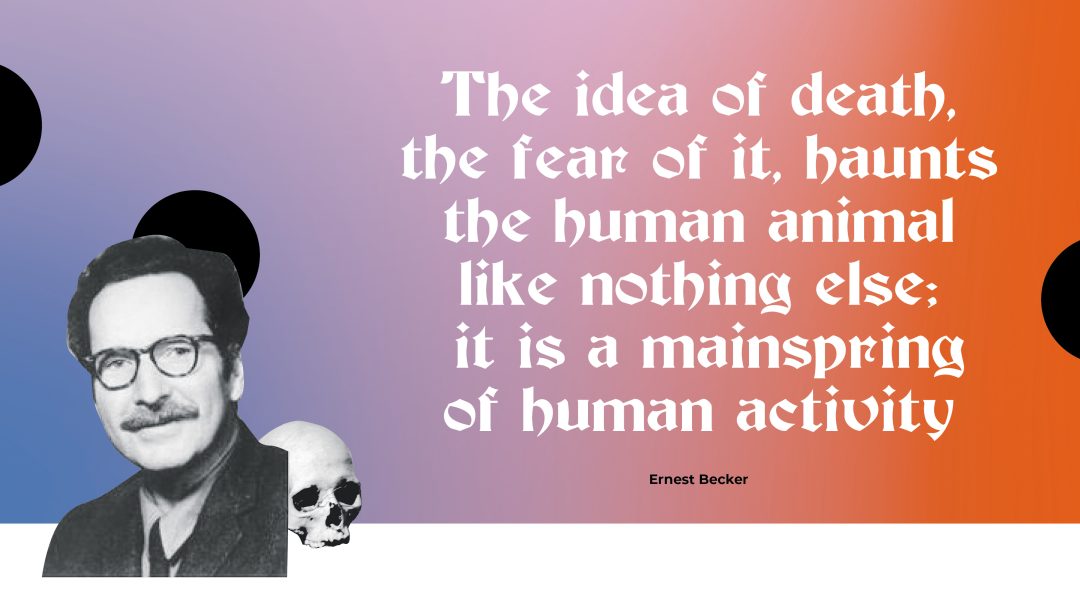
Ernest Becker, writing in the 1970s, who argued that our fear of death — what he called “death terror” — drives the systems we build to create meaning: culture, religion, status, achievement and legacy.
Religion, he suggested, offers the promise of “immortality” — whether through heaven, reincarnation or an afterlife — it provides an answer to the great unknown of what happens when we die.
But in an increasingly secular city like Bristol, where many no longer believe they will “meet their maker”, what do we turn to instead?
Tea and cake at the Death Cafe
Just off Bath Road in south Bristol sits the Victorian-era Arnos Vale Cemetery, the resting place of educational campaigner Mary Carpenter and Hindu reformer Raja Rammohun Roy. Amid this historic setting is a more modern, novel approach to mortality: the Death Café, one of several now running across the city.
“Through listening to other people’s stories and sharing their own anxieties, I’ve seen people change from feeling really frightened about dying, to feeling a bit more comfortable.”
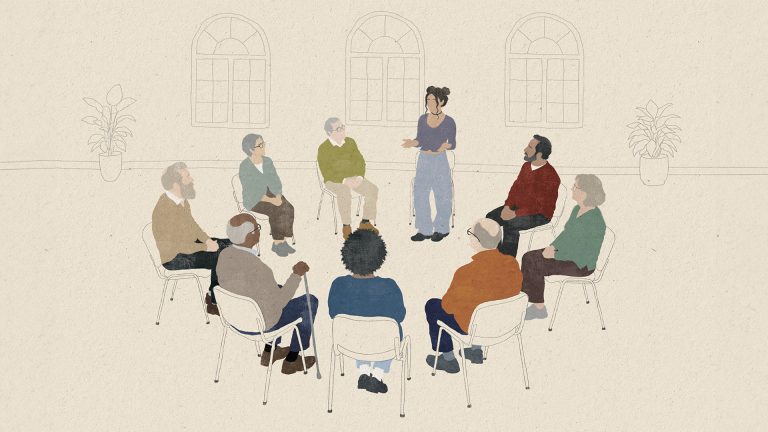
Invented in 2004 by Swiss anthropologist Bernard Crettaz, Death Cafés set out to challenge what he called the “tyrannical secrecy” surrounding death. Informal gatherings where people talk about death — usually over tea and cake.
The room fills and the session begins. Around thirty of us split into smaller groups. Mine discusses lasting powers of attorney, what happens after we die and fear of death.
Well — specifically, my fear of death.
Despite being the youngest in the group, and less than half the age of some attendees, I seem to be the only one visibly unsettled by my own mortality.
Mary Tutaev, the café’s facilitator, has led the Death Café here for seven years, after first attending as a participant. She later reassures me: “We have members who, regardless of age, feel the same way.”
“Some people with real death phobias have shown tremendous courage to come to these meetings,” she adds.
For many, it is easier to talk about death with strangers. “If you try and talk to your family or friends, they can get concerned,” she says. “They might think, ‘Are you feeling all right?’”
“Through listening to other people’s stories and sharing their own anxieties, I’ve seen people change from feeling really frightened about dying, to feeling a bit more comfortable.”
It held true for me: for all the heaviness of the subject, the tone was light. Conversations drift easily between grief and humour, practicalities and anecdotes. And surprisingly, perhaps, talking about death leads us to speak just as much about life.
Burial or cremation?
Spiritual benefits aside, coming to terms with mortality makes practical sense. Not talking openly about death with our loved ones has significant implications.
Last year, according to the 2026 Cost of Dying report by life insurance company Sunlife, more than half of funerals in the UK were arranged by people unsure whether the deceased would have preferred burial or cremation. While 18% didn’t know their loved one’s funeral wishes at all.
A 2025 survey by the Money and Pensions Service found that over half (56%) of adults hadn’t made a will. Last year, the average cost of a basic funeral was around £4,285. With 39% of UK adults having less than £1,000 in savings, bereavement can quickly become not just emotional, but financial too.
And there’s a cultural cost too. For Mary, modern society doesn’t always allow space to grieve. “There’s a feeling of disconnection in the way people are supported after death,” she says. “We’ve learnt to hand over the responsibility and the whole business of arranging a funeral to funeral partners.”
Rethinking ritual
Lockdown restrictions during the pandemic meant that, at one point, only ten people could attend a service — often the people closest to the person who had died. “They don’t need to hear about that person’s life because they’ve lived it,” Dee explains.
She believes this shift has had a lasting impact on how funerals are organised. Eulogy-led ceremonies became less central. Instead, mourners brought objects connected to the deceased, placing them on the coffin and sharing stories through them.
Dee describes this as “a much richer approach” to talking about someone after they’ve died. It is a ritual she and the Divine Ceremony still use today.
Forgoing rigid traditions opens up a world of possibilities for how a funeral can reflect the uniqueness and richness of a person’s life.
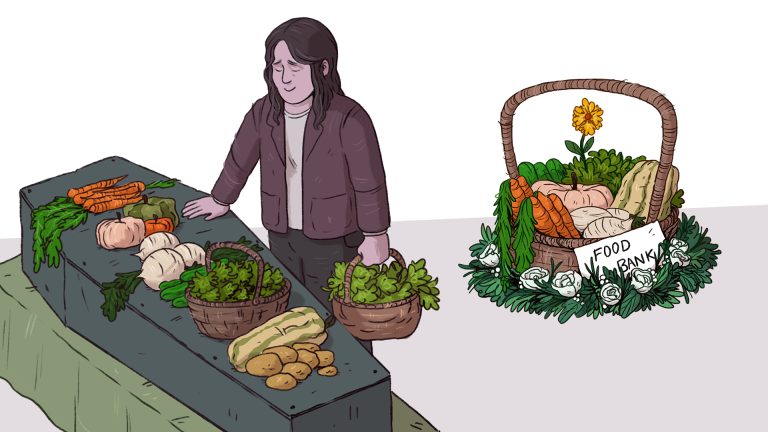
Karen recalls a ceremony she led for a man who loved gardening and spent years growing vegetables on his allotment to share with neighbours. Instead of flowers, mourners brought vegetables to lay on his coffin.
“We had carrots, leeks, some potatoes and cauliflowers,” she remembers. Afterwards, the produce was donated to a food poverty group.
She shares another story from a colleague: a funeral for a man living in a hostel who had died with no obvious community. After learning he had served in the military, the celebrant contacted his unit and the ceremony was filled with retired soldiers from his squadron.
It is the kind of unpaid work celebrants undertake to ensure that even people they have never met receive the best possible goodbye.
Even Lady Di only had a 45-minute funeral
Death is a topic we are, societally, tempted to push aside. I’m no different. Spending weeks talking, thinking and writing about it has been challenging. But I’m inspired by those who are confronting mortality — taking control of how they are remembered and planning for what comes after.
There is a kind of peace in engaging with it rather than avoiding it. Those who confront death often gain a new perspective on life.
Dee recalls watching Princess Diana’s eulogy and realising: “Even if you’re a princess, your ceremony is only 45 minutes long.”
“So if something is not important enough to be spoken about in my 45 minutes, how important is it right now?”
Similarly, Karen says her work has left her knowing more than anything else that life is: “random, unpredictable, and can turn on a sixpence.”
“If any opportunity to do something comes up, I take it and I never miss opportunities to meet friends,” she says. “Because I’m all too aware that life is short.”
Independent. Investigative. Indispensable.
Investigative journalism strengthens democracy – it’s a necessity, not a luxury.
The Cable is Bristol’s independent, investigative newsroom. Owned and steered by more than 2,600 members, we produce award-winning journalism that digs deep into what’s happening in Bristol.
We are on a mission to become sustainable, and to do that we need more members. Will you help us get there?
Join the Cable today