Just over half of Bristol residents said they had “no religion” in the latest census, placing the city among the least religious places in England. Perhaps that won’t come as a surprise. It fits with Bristol’s reputation for being progressive and questioning.
But “no religion” is a broad term; it tells us little about what people actually believe. So what, if anything, is replacing religion in shaping meaning and morality in our lives?
It’s this question — the beliefs of the non-believers — that brings me to a café on Gloucester Road, where I meet Nick Hooper, secretary of Bristol Humanists, a local group linked to Humanists UK, and a man who would himself tick the no-religion box.
“We do not believe there is any kind of guiding figure or spirit,” he tells me. “We are just one of the creatures on the planet.”
For Hooper, humanism is a way of making sense of the world without God. It rests on three ideas: human beings are part of the natural world, we have one life and should make the most of it, and we understand the world through reason, evidence and science.
That might sound cold in a culture where religion has long answered life’s biggest questions: why are we here, what is the purpose of life, what happens when we die?
Hooper sees it differently. “In the big sense, no, there is no reason for existence. But in a smaller sense, yes. Lots of humanists would say we are here to try to make the world a better place.”
Bristol Humanists itself is small, around 65 members strong, running monthly talks with scientists, academics and moral philosophers, alongside social events from film nights and book groups to Watershed gatherings and a humanist history walk.
I joined Bristol Humanists on a walk through the city’s radical freethinking history, spoke to its members about their push for recognition in civic life and heard why they believe religion does not have a monopoly on morality.
Walking through a tradition of dissent
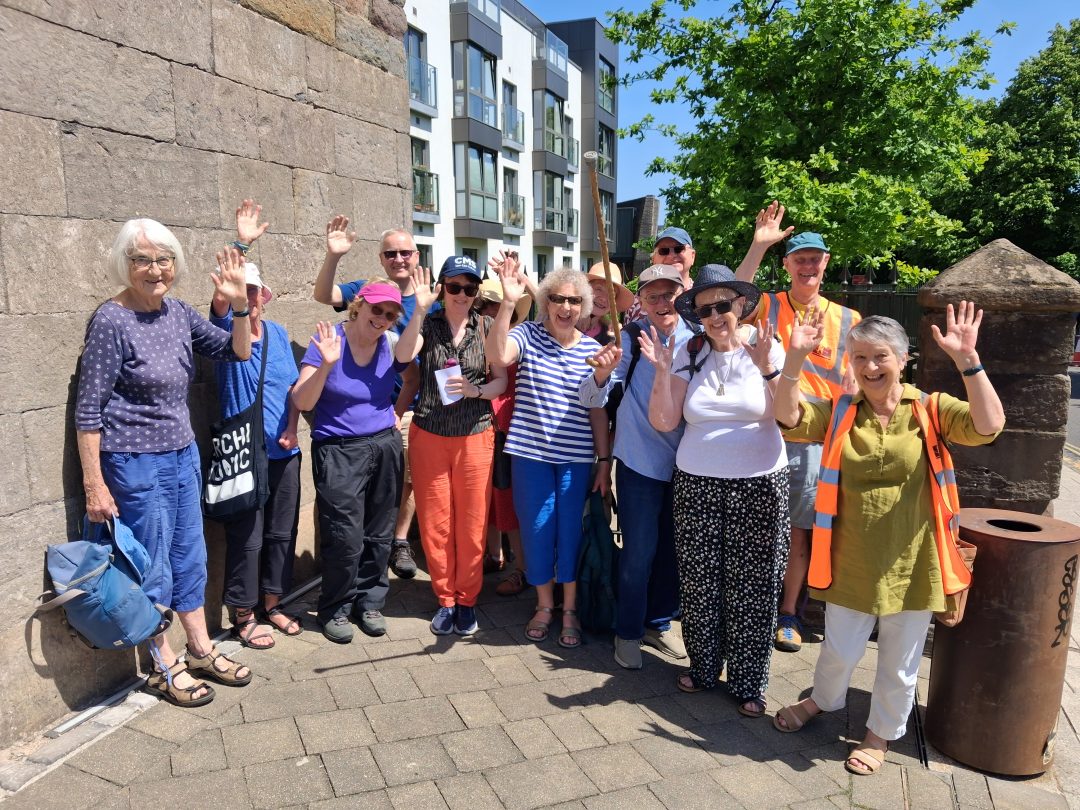
A week after my chat with Nick, I joined a Humanist walking tour through Bristol’s radical political and intellectual past, from the Great Reform Act and abolition to trade unionism, nineteenth-century free thought and challenges to the established church.
We begin in Castle Park, near where the Oracle of Reason was once published. In the 1840s it became one of Britain’s first openly atheist newspapers. Its editor, Charles Southwell, was later imprisoned for blasphemy after criticising the Bible.
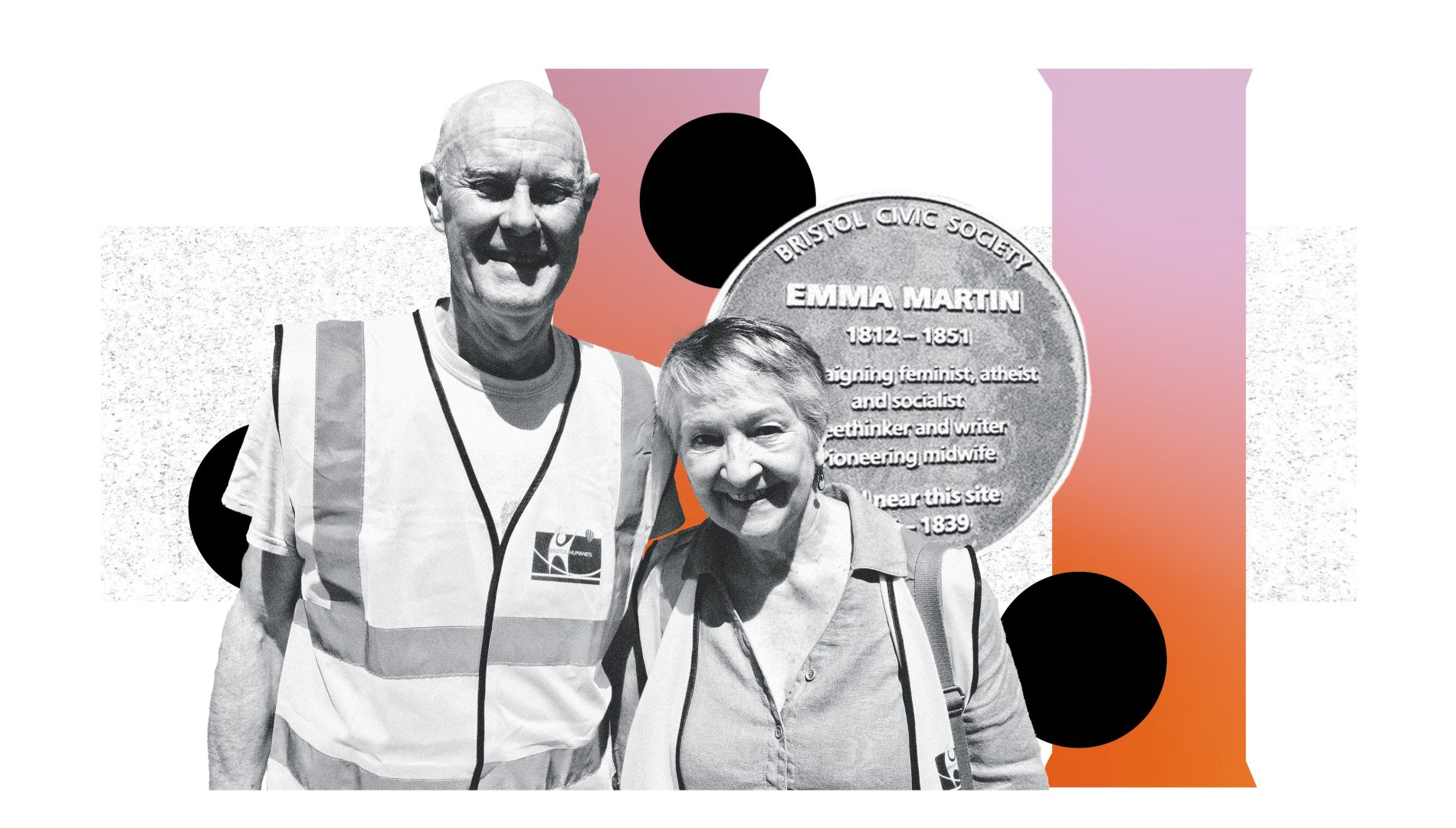
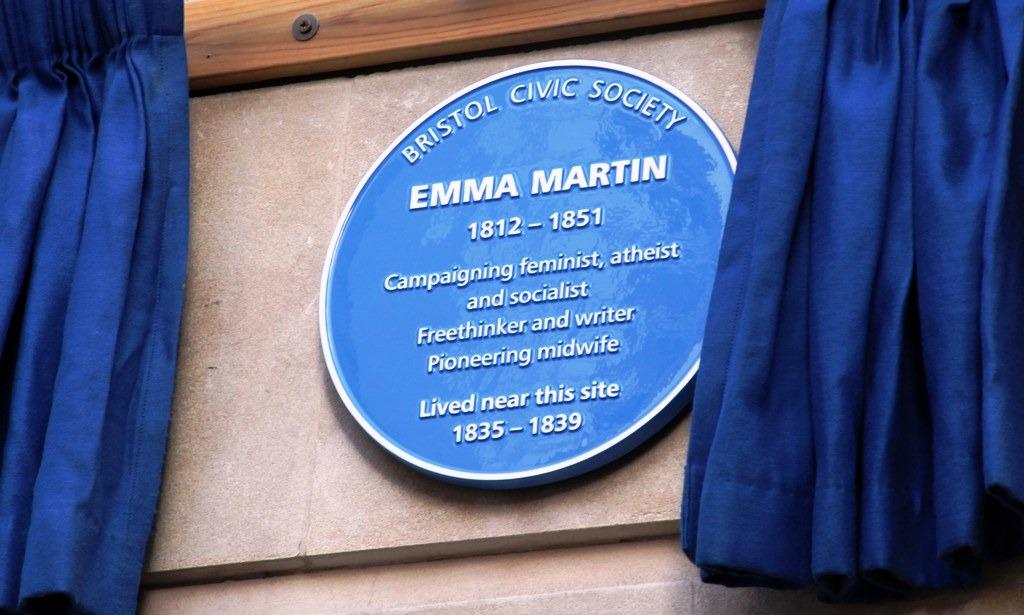
From there, the walk winds into the city centre, stopping where a blue plaque marks Emma Martin, a Bristol-born atheist, socialist and campaigner for women’s rights.
Raised a strict Baptist, she later joined the followers of Robert Owen, the utopian socialist whose ideas challenged industrial inequality and the authority of organised religion.
When I discovered the concept of humanism, it was about living a good life without God, and part of that is helping other people to live a good life as well
Chrissie Hackett, Chair of Bristol Humanists
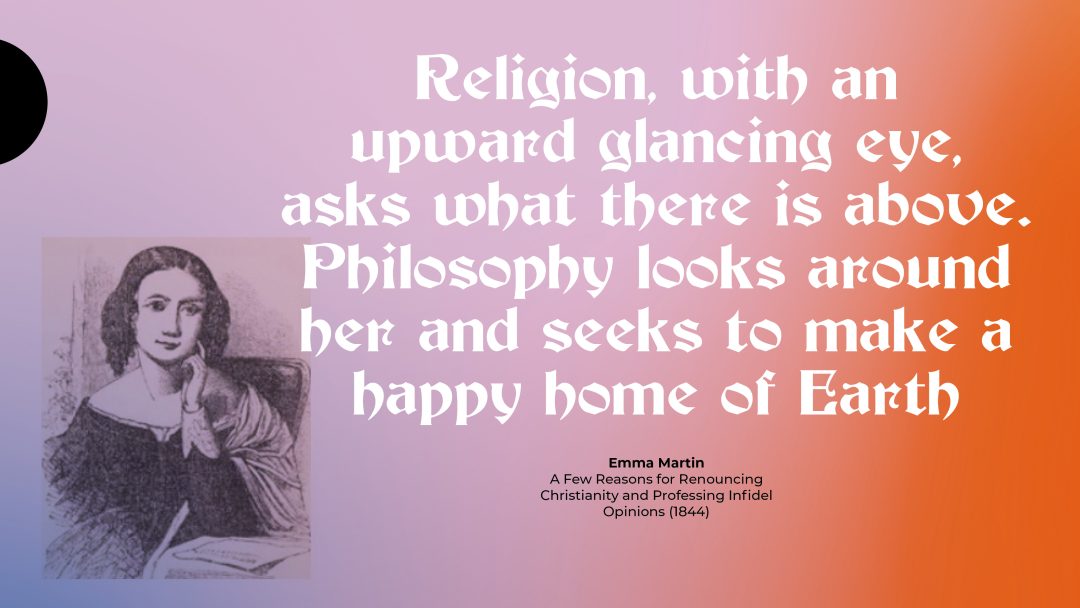
Martin became a well-known public speaker, travelling the country arguing against religion, inequality and restrictions on women’s lives. “She would often speak to thousands of people,” Nick says.
After separating from her husband, she campaigned for women’s property rights before retraining as a midwife. In London, she was barred from working in hospitals because she refused to swear allegiance to God. Instead, she opened a private clinic and continued campaigning.
“She is kind of undiscovered,” Nick says. “We felt it was important to elevate her, to show there’s a significant figure here associated with social change.”
It was Bristol Humanists who campaigned for the plaque, unveiled in 2023. It sits, slightly incongruously, on the Young Men’s Christian Association (YMCA) building near Lewins Mead. “They were lovely about having a plaque to an atheist woman!” Nick says.
The walk ends at the old Bristol Gaol near Wapping Wharf, where Southwell was once imprisoned, a reminder of the price once paid for challenging religious authority.
Recognition in civic life
After the tour, I sat down with Chrissie Hackett, chair of Bristol Humanists. She came to humanism from a Catholic childhood and describes it less as conversion than discovering a name for something she already believed.
“For me, when I discovered the concept of humanism, it was about living a good life without God, and part of that is helping other people to live a good life as well,” she says. “Everything just got clarified more when I realised there was a name for how I think, and it is humanism.”
For Chrissie, that identity shows up most clearly at life’s major milestones, funerals, weddings and naming ceremonies, where humanist practice often first comes into view.
Unlike religious services, these ceremonies are non-prescriptive. There are no prayers, sacred texts or doctrines. Instead, they are shaped around the person and their relationships, led by a celebrant rather than a priest.
Humanist weddings are still not legally recognised in England and Wales, meaning couples must complete a separate civil registration alongside any ceremony. In Scotland, they have long had legal status.
“It’s already on the legislative books,” Nick says. “But governments keep failing to bring it into force.”
The question of recognition extends into public life. In Bristol, that has meant a slow shift in civic visibility.
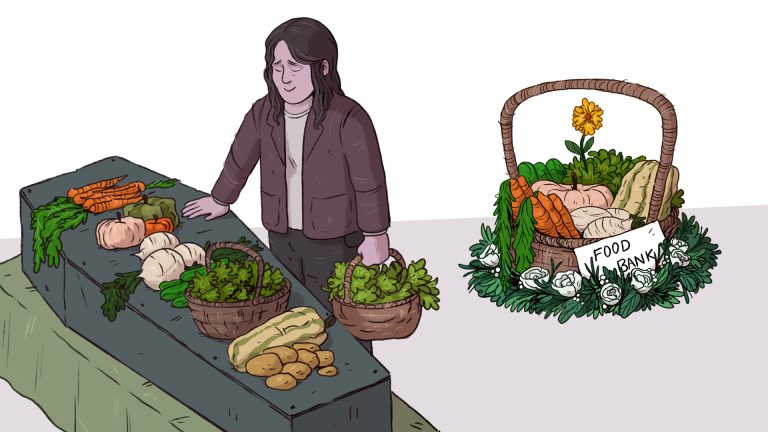
For years, non-religious voices were absent from public ceremonies. At Remembrance events, humanists were first placed at the back of processions, later allowed to stand alongside faith groups and eventually invited to speak.
“We did not want to frighten the horses,” Chrissie says. “It was very much gently, gently.”
Now, Bristol Humanists take part in Remembrance Sunday, offering words on shared loss, peace and human responsibility.
“If we do not go into those spaces, the assumption can continue that the only people who have proper ethical viewpoints belong to a religion,” she says. “You do not have to believe in God to be a really ethical person.”
Representation and belief
Today, Bristol’s non-religious identity is shaped by different forces. Nick points to the city’s younger population, higher levels of education, and its demographic differences compared to more religious parts of the country.
Some critics of organised humanism argue it can appear white and Eurocentric. Nick acknowledges the point directly: “We do not have a diverse membership. That is absolutely for sure.”
But he rejects the idea that humanist thinking is culturally narrow and points to non-theistic traditions around the world, from Confucianism to strands of Buddhism, Jainism and Ubuntu philosophy, where ethics are grounded in community and lived experience rather than divine authority.
Part of the challenge, he suggests, is that many people who share broadly humanistic values simply don’t use the label, even when they live by something close to it.
“I distinguish between capital-H Humanism and small-h humanism,” he says. “Capital-H Humanism is someone who’s signed up to the principles. My partner would never dream of joining Bristol Humanists, but she’d say she shares similar values. So I call her a small-h humanist, and I’m a big-H humanist.”
Both Chrissie and Nick are keen to stress they are not simply “anti-religion”.
“I do not hate religion,” Nick says. “There are many things one could be critical about in religion, which is very different from hating it.”
Humanists are not trying to convert anyone. They are more likely to visit schools, join civic events or host talks.
“We do not want to change your mind,” Chrissie says. “We just want to create the conditions where you can make up your mind for yourself.”
For now, organised humanism in Bristol remains small. But its ideas are everywhere, in the desire for equality, in distrust of inherited authority, and in the belief that meaning is made through relationships, care and action.
In a city where most people no longer identify with religion, the question is no longer whether Bristol is godless, but what people do with that freedom.
Independent. Investigative. Indispensable.
Investigative journalism strengthens democracy – it’s a necessity, not a luxury.
The Cable is Bristol’s independent, investigative newsroom. Owned and steered by more than 2,600 members, we produce award-winning journalism that digs deep into what’s happening in Bristol.
We are on a mission to become sustainable, and to do that we need more members. Will you help us get there?
Join the Cable today